More Publisher’s hat

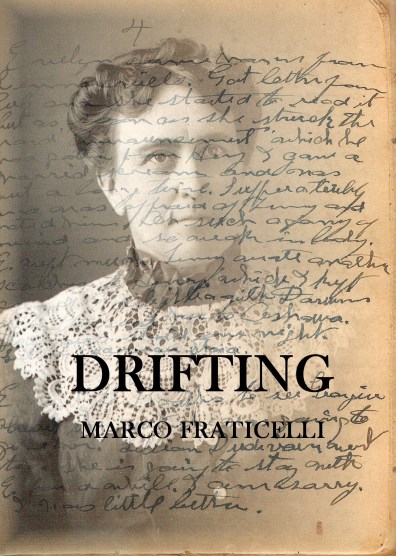
Drifting, Marco Fraticelli  (2013, catkin press)COVER drifting frontWhen I began catkin press, I wanted fiercely to start with publishing poetry by Marco Fraticelli. Any poetry by Fraticelli, and I was sure he was hiding a manuscript or two, or ideas for a manuscript or two, so I asked him. Turned out there was an idea he had been thinking about and working on for a long time. Not the haiku or lyric poetry he was known for, something else: haibun based on some old papers he had found in an abandoned house in the Eastern Townships over 30 years ago.

I was intrigued by the yellowing paper, especially the journal fragments, and the handwriting of one Celesta Taylor, in love with an older man, caring for his children, and the details of a rural woman’s life in the early 1900s.

What Marco did was to edit and use her words as the basis of the prose part of the haibun, adding his own haiku. He has been a haiku poet for many years and is another Canadian haiku master. In a foreword, he explains more about his process, and tells more of her life, garnered from research done by his sister Rina who had made a NFB film based on the same materials.

We came up with the perfect size for Drifting-a little smaller, the right size to tuck into a pocket or purse. Convenient.

Marco Fraticcelli is a lyric and haiku poet, and publisher, from Montreal. For copies, message me on facebook.

Under My Publisher’s Hat

A book that I am extremely proud of having published: Grant Savage’s Their White With Them: Short Poems (2006, Bondi Studios, Carleton Place)

cover front


Grant is one of the Hidden Treasures of Ottawa. His reputation is well known in the haiku/tanka world as he is a master of both forms. Those not familiar with the power of either form should spend time with Grant’s collection.

Some would think these forms are not as important as ‘real’ poetry, which Grant also writes. But to take time with just one of them is to come away the richer.

early morning pond/reflected in its stillness/everything

It’s awkward given the limits of this form of blog, to format the poem into its three lines. But we can still feel not just stillness, but an extraordinary stillness. We find ourselves there by the pond. we’ve gotten up very early, even before the birds begin their sounds perhaps. The surface shines, and clouds might be floating on the water.  The next lines bring in not only the mirror of water, but suggest personal reflection, bringing not only the writer of the poem into the poem, but also everyone else who has ever sat by a pond noting the reflections, and reflecting. we look at the pond and in a sense the pond ‘looks’ at us.  That stillness, a sense that other things are, momentarily, still too.  it’s almost physical, it’s the way we expect magical moments to be. And what is there with you and me and the poet…but everything in existence, the bad and the good, the dark and the light. the more we reflect, the more everything becomes one.

I haven’t even begun to talk about whether it is important that this is a morning pond, to think about the difference in stillness between a morning or an evening, or between a midnight or a noontime stillness, because then we’re really into what this haiku might mean. And what ‘everything’ implies, besides the physical world. what about every emotion, every thought. Now we see that this tiny poem is very large; it has to be to contain everything. To have a copy of Grant’s book, to have hundreds of haiku and tanka withing reach, would be to have in one’s possession a lifetime of reading.  I’ll leave with a tanka to mull over, to grow even as you read it again, and again.

a chorus of birds/ you no longer here/ to sing to them/ or ask me to put names/                             to their answers

The content is enhanced by several of Grant’s nature photographs in colour. You can message Grant on facebook if you would like a copy of Their White With Them

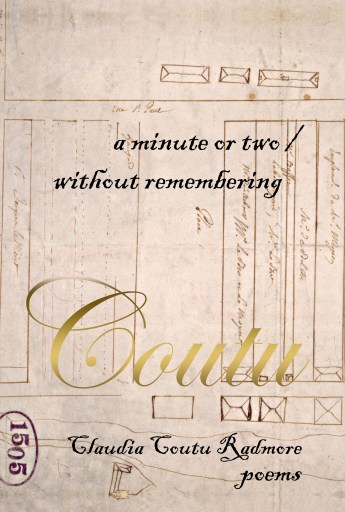
a minute or two/ without remembering

This post is in memory of my father, Gerald Coutu, who right up until he died, remembered bitterly almost daily that the English won New France in 1759.

front cover without flapPoems in a minute or two/ without remembering (2010 Two Cultures Press, North Bay, On) are spoken in the voices of my actual Coutu (Cottu) ancestors, encompassing 120 years of New France history roughly from 1680 – 1800.

What was it like for my 7th great grandmother arriving crossing the ocean to marry some unknown coureur de bois. Twelve years old, and within two weeks as a Fille du Roi, she would commit herself to marriage for life.

This is a family living through Iroquois attack, the deaths of children, going off to war, famine, plague and siege… to end up living under an English king.

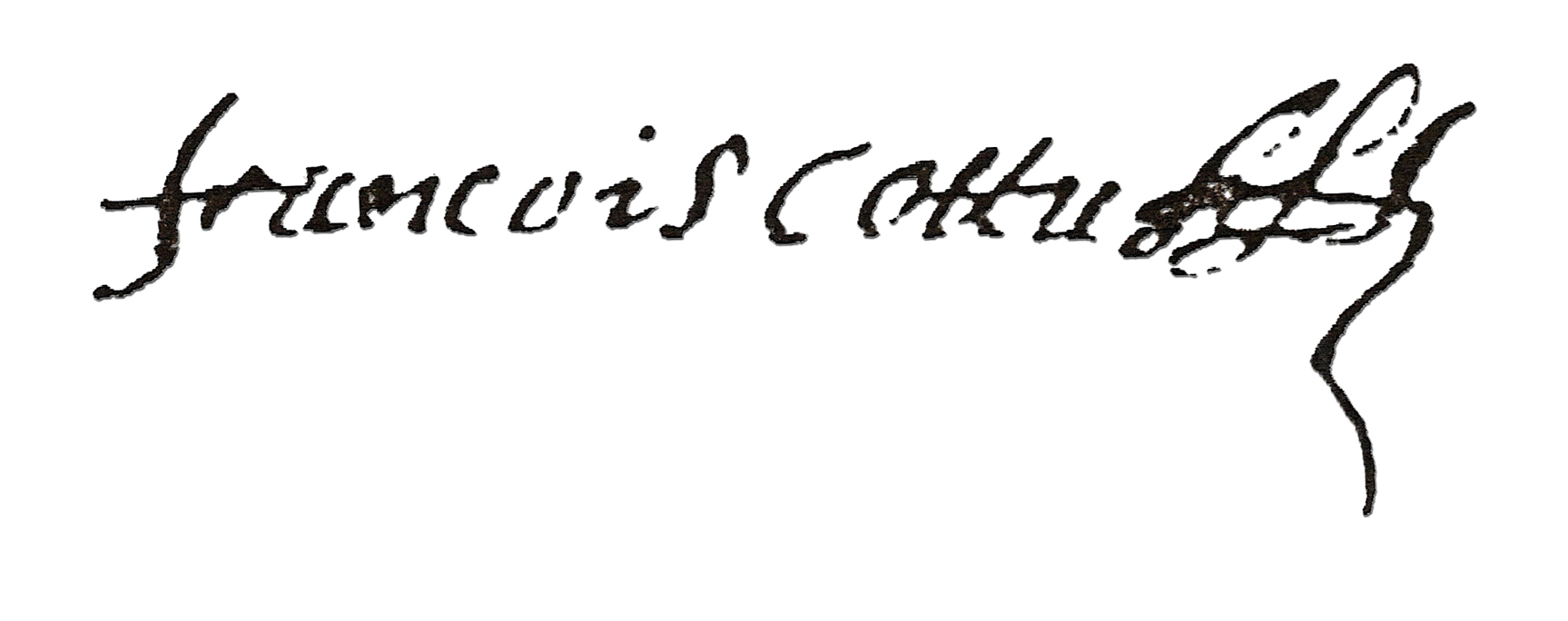
Below is my sixth great grandfather’s signature (from a marriage certificate), published in gold on royal blue under the dust cover above. I wanted it to be there, like the foundation he was, as his arrival in Quebec was the beginning of the Coutu family in Canada. The squiggle after it possibly refers to his noble heritage in Picardy which goes back to Charlemagne. You may bow before me next time we meet, in recognition of my (the Coutu family) royal roots.

signature francois cottu


Country of Contradictions

Students help clean up and repair their high school, Nabangasale Junior Secondary School on on the island of Tongoa. (photo Vanuatu Daily Post, May 11, 2015)

vanuatu daily post, april 15thCreativity expert Sir Ken Robinson challenges the way we’re educating our children. He believes we should cultivate creativity and acknowledge multiple types of intelligence. In today’s schools, he asks, in a Ted presentation, who gets all the brownie points, where are the winners.

On many islands Vanuatu schools temporarily don’t exist anymore.  They were blown away.  Houses are gone, water tanks destroyed, stored crops scattered.  The people need salt, soap, cement to repair rain storage tanks,  water purification tablets, electricity.  Matches.  Corrugated iron.  water, water, water. Fishing boats need repairs, roads need reconstruction, and schools, schools, schools.

Years ago, even such a cyclone would not have been so materially disastrous.  The people expected these storms almost yearly. They knew the signs, they knew to hide in caves, they knew how to build houses in safer areas with roofs low to the ground, how to prepare and store breadfruit for storage underground, where to put the chickens, how to secure the pigs. It was a non-money society, no mortgage, no school fees, few stores.

Cyclone Pam struck at the heart of things – their newly acquired connections to material things. Cell phone and internet links were down. Now that these media are back in operation, things can quickly go back to normal, because life in Vanuatu now depends on money. Even the poorest Ni-Vanuatu will be needing money for school fees.  Others need it for work, or to pay for internet and cellphone plans.  Digicel Vanuatu predicts that by 2017, 98% of Ni-Vanuatu people will have access to cellphones. There will be no place in the South Pacific, a last stronghold, where peace, where silence, can reign.

And in recent developments, the government headed by PM Kilman will “not hesitate to support responsible legislations to control the media”. We can add this problem to rising crime rates (many arrests for crimes to do with marijuana!!!, hard to imagine in a land where cheap kava, much more hallucinatory, is widely available), unstable politics, corruption at all levels, and an economic dependence on tourism. The cyclone has put paid temporarily to the  Amelbati Cannibal Site Tour, The Vanuatu Jungle Zipline, the Kuskus bat tour, the Louniel Beach and Waterfall tour among others.

On the other hand, the country retains its uniqueness. Where else would the courts still be ruling on witchcraft cases, putting the guilty in jail for 15 years. Where else would a man dig up his yam, safe from the hurricane as it had been ‘gestating’ underground for nine months, discovering the metre-long root to have human features, and two arms.

So who has won since we interlopers took over. We, the countries who invest and intrude, seem to have all the brownie points and the Ni-Vanuatu  don’t seem to be winners. Yet.

I have faith in this smiling island people.  Underneath the trappings, underneath trying to join the modern world, there is a great respect for common sense ways, and for the traditional ways.  Okay, I’ll take off the rosy-lensed glasses; the world is advancing on Vanuatu, and it’s too late to save some of the good things.
 

Writing on Writing and Vanuatu

Cyclone Vanuatu (2015, catkin press) A very small book of tanka about Vanuatu and Cyclones.

draft 2 cyclone coverI was in Vanuatu for several years as a CUSO volunteer and had the opportunity to visit many islands and stay in many villages.  I was there through two major hurricanes as these storms were labelled at the time.

rob mclennan, ottawa publisher and writer, asked me ages ago if I would write a piece for his ongoing On Writing series, and yes, I promised to do that. Yet despite many starts, the thing just wouldn’t get going.  (perhaps this will finally be a start, rob…)

Early this year I started to write poems about Vanuatu. Few had ever heard of this South Pacific country until Cyclone Pam in March.  I think it’s difficult for us, pampered and protected as we are, secure in our technological ‘advanced’ societies, to imagine the devastation in such a country. We are better equipped to understand the destruction in a caribbean country like Haiti, one that we, or someone we know, has visited. A country that is somewhat like ours. After all, a former Governor General of Canada was born there.

Vanuatu is so different from us geologically, societally, linguistically. It is very far away, on the other side of the world. I’ve been in touch with linguists from Tanna, looking for details about the local languages there, to use in a series of prose pieces that, hopefully, will form the structure to the poem series. Vanuatu has over a hundred distinct languages, as well as the three official languages of French, English and Bislama, but it is the indigenous languages that fascinate me. the island of Tanna, known for yasur, its live volcano, itself has very many languages. The more linguists share their knowledge of such languages with me, the more intrigued I am. The more I would be a linguist in another life.  Or not. But speaking this morning with other Canadian poet/linguists, the fascination has been fertilized. Hopefully that garden will prove more productive than my actual gardens this year, will produce words that will produce lines that will have meaning and perhaps understandable syntax…

Blackbird’s Throat

blackbird's throat coverWriters of tanka at the Japanese Heian Court (roughly 800 – 1100 AD) often made references to Chinese poetry. It was a way to establish their erudition and status, for education of the period meant study of the Chinese classics.

The tanka in Blackbird’s Throat also refer  to Chinese verse, either ancient or contemporary. While my knowledge of Chinese poetry is elementary, I found that linking with it added depth to my poems, layers of history and beauty I would be unable to match using only my own words.

The tanka are based on a trip to China with fellow teacher Terry Ann Carter. We were helping secondary school teachers with English language teaching methods.

An appendix is alphabetized according to the first lines of the poems, and the Chinese poems referred to.


a minute or two/without remembering

The first 120 years of my ancestors’ arrival in New France, poems spoken in their voices.

The dust cover is a translucent map of Montreal in 1685 or so, overlaid with My father’s family in Gold.  The map shows where my sixth and seventh great grandparents lived between 1690 and 1700 during the worst Iroquois threats. The well they used is still there, (and covered) though the river has been filled in.  It is on the north side of the Pointe-à-Callière, Montréal Museum of Archaeology and History.  When I sit by that well, I  canfeel my seventh great grandmother, Margeurite LeSiege, sitting beside me for a few minutes before carrying her water to the humble dwelling they rented.

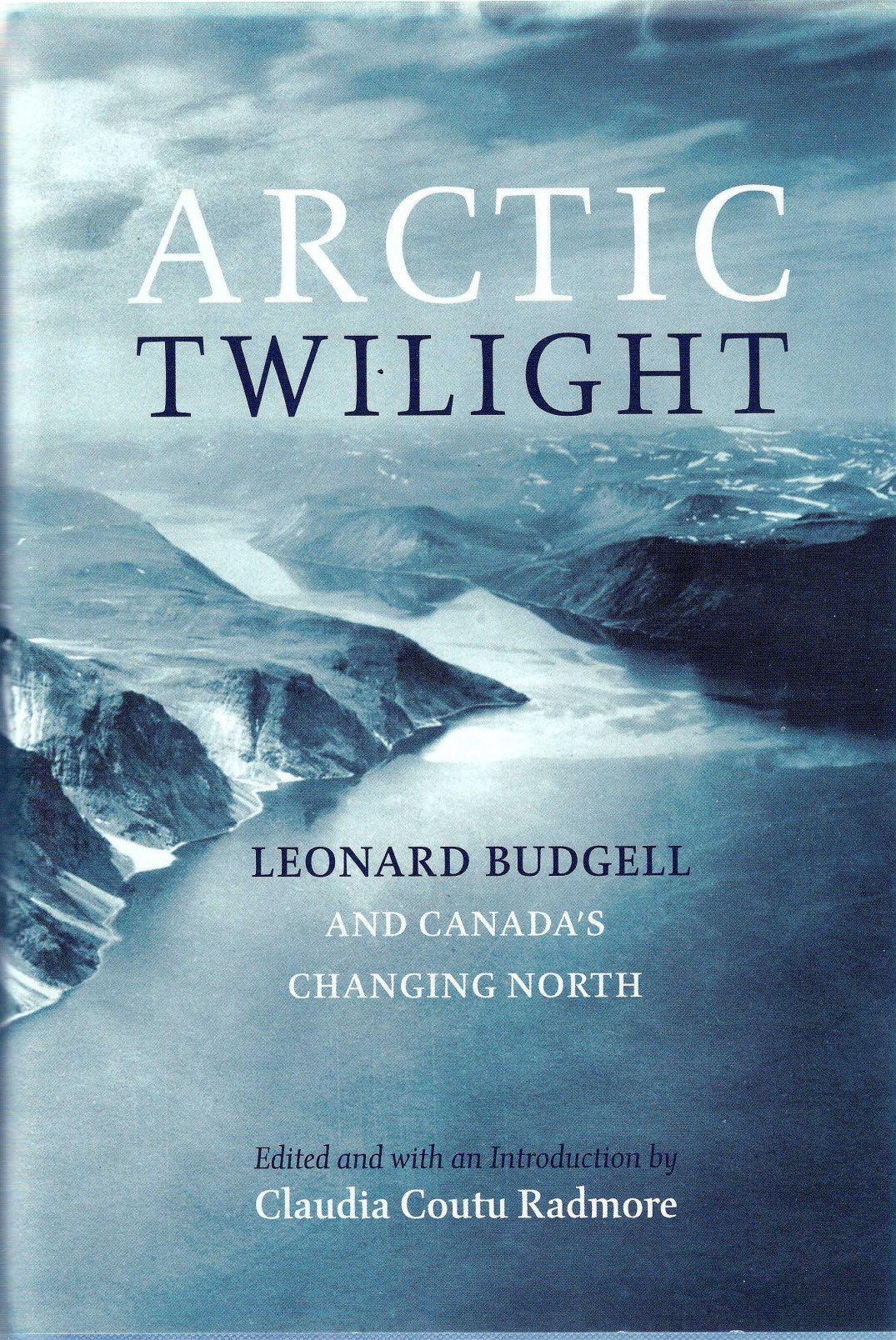
Arctic Twilight: Leonard Budgell and the Changing North

Michael Crummey, author of Galore, Sweetland and Under the Keel, among other prizewinning books:

From isolated postings to starvation camps, from tall-tale hunting expeditions to a dog-sled trip through the Northern Lights in the Torngat mountains, it is the best book about the North I’ve ever read. 

in the acknowledgements for his novel Sweetland, Michael Crummey The community of boat engines was lifted (along with countless other details) from Arctic Twilight by Leonard Budgell.

Bernice Morgan, author of Random Passage and Cloud of Bone:

From isolated postings to starvation camps, from tall-tale hunting expeditions to a dog-sled trip through the Northern Lights in the Torngat mountains, it is the best book about the North I’ve ever read.

Karen Molson, author of The Molsons: Their Lives and Times 

“Over the years I’ve become so jaded by manuscripts that have come my way, even by those on the verge of being published. In Arctic Twilight I surely wasn’t expecting to find (a) excellent writing, (b) subjects that touched me directly, or (c) glimpses of simple, unaffected, literary genius. But all three are here, in abundance.”

A.B. McKillop, author of The Spinster and the Prophet; Florence Deeks, H.G. Wells, and The Mystery of the Purloined Past and Pierre Berton: A Biography

“Leonard Budgell – Arctic adventurer, radio and naval expert, fur trader, raconteur, life-long “Servant of the Bay,” and a whole lot more – provides an illuminating portrait of life in the changing Canadian North during much of the twentieth century.”

Frits Pannekoek; former President of Athabasca University who has published widely in Indigenous History:  

“Len Budgell’s letters are one of the greatest legacies anyone could have left Canada and its people. With incredible insight and sensitivity he painted a remarkable picture, particularly of the aboriginal peoples of the Canadian north and their humanity.”