Sunset at Thunder Cove

Never think Japanese Poetry doesn’t get you anywhere…I offer proof that it can offer glorious unexpected gifts.

If I hadn’t been a Japanese-form poet I would not be part of a most amazing family: Haiku Canada, with sisters, brothers, and cousins one with the aim of writing the best of Japanese forms.

Deep connections allow for the most elegant challenges available in any poetry, along with all the help one needs to learn to write it and/or enjoy it.

It’s like Graphis scripta, the lichen that is like the secret writing of trees. You have to know about it. Getting to know Haiku Canada people, well, it’s the best secret ever, but one we love to share.

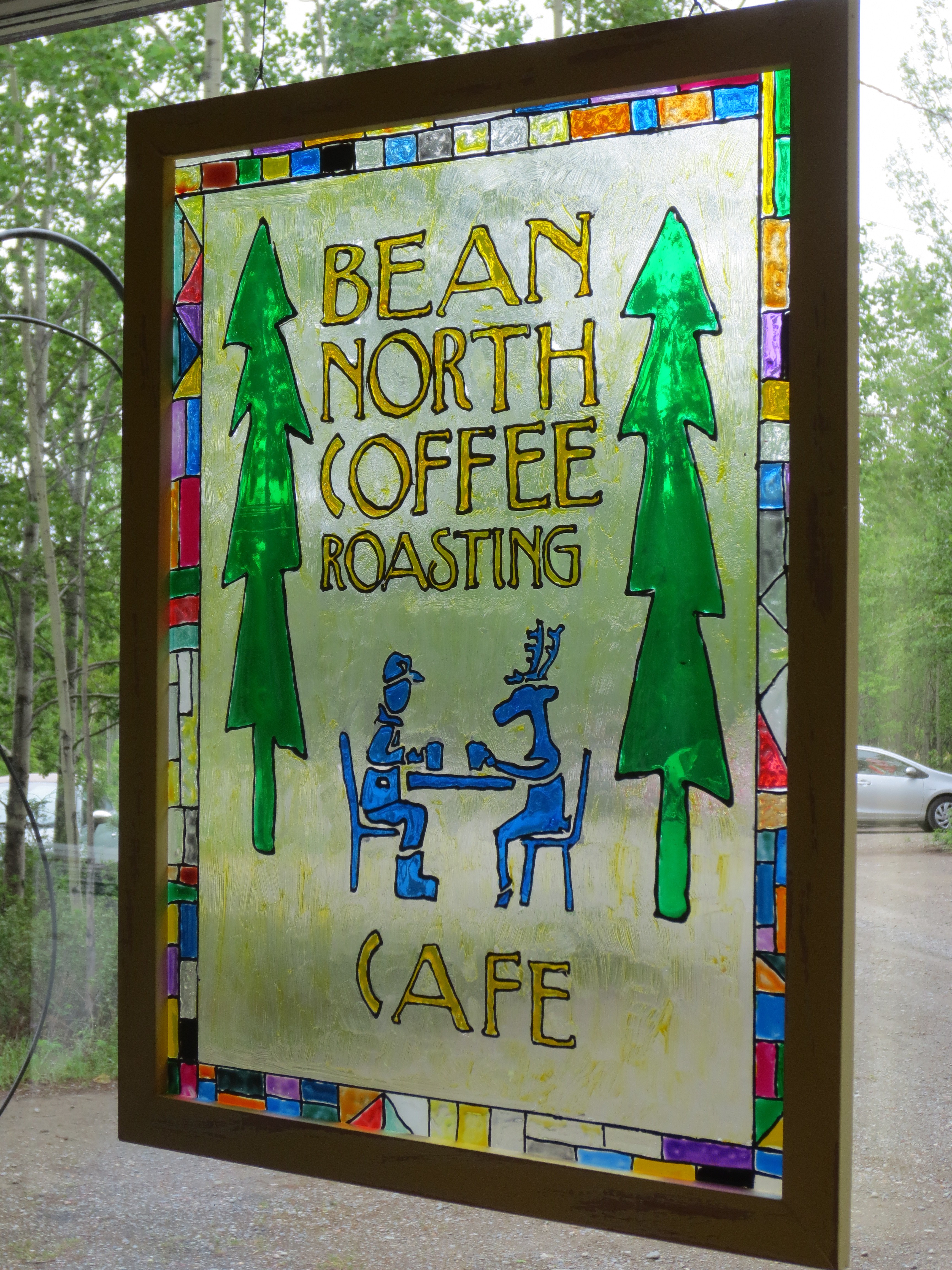
Things happen to make this happen. Every year there is a ‘conference’ held somewhere in Canada, and everyone is invited. But this current year has offered even more opportunities to experience, learn, and/or share these forms. It’s like having access to magic. The coffee, for instance, was magical when some of us met afterwards at Yukon’s Bean North.
Haiku Canada this year was in Lennoxville, Quebec, at Bishop’s University. The presentations were interesting even to long-time poets. For personal reasons, I left early, so I won’t say much about it here, but I would say that you should come to the next one which will be held in Kingston, Ontario. I’ll add a tag to this post.

This year further invitations were extended to join a Maritime Haiku Getaway at St. Stephen’s University in St. Stephen, New Brunswick, and to a Haiku Day in Charlottetown, Prince Edward Island. I was grieving but the best place for me at this time would be with my poetry family. With poets, you mean? Not only poets, I say, but haiku poets.

Mike Montreuil and I would fly to Saint John, rent a car, drive to St. Stephen, planning to drive on to Prince Edward Island for the second event.

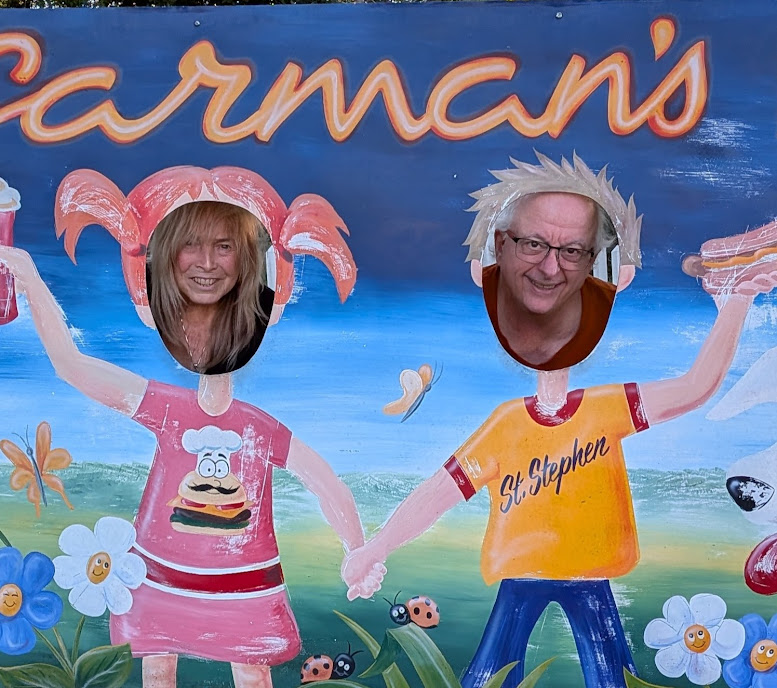
Some of us got there early. We just had to go to the local diner, Carman’s. Loved the juke box on the table and the billboard at the parking lot. The food was pretty good and the service wonderful!

At the University there would be some planned presentations but most of us went into the weekend with open minds as we know that events involving Japanese forms are always stimulating no matter what happens. Participants ranged from long-experienced poets to newer writers. We were offered choices of zeroing in on haiku, tanka or haibun. It gave us the chance to go deeper into a form, spend three or four hours on it, or move around to check out a different form.
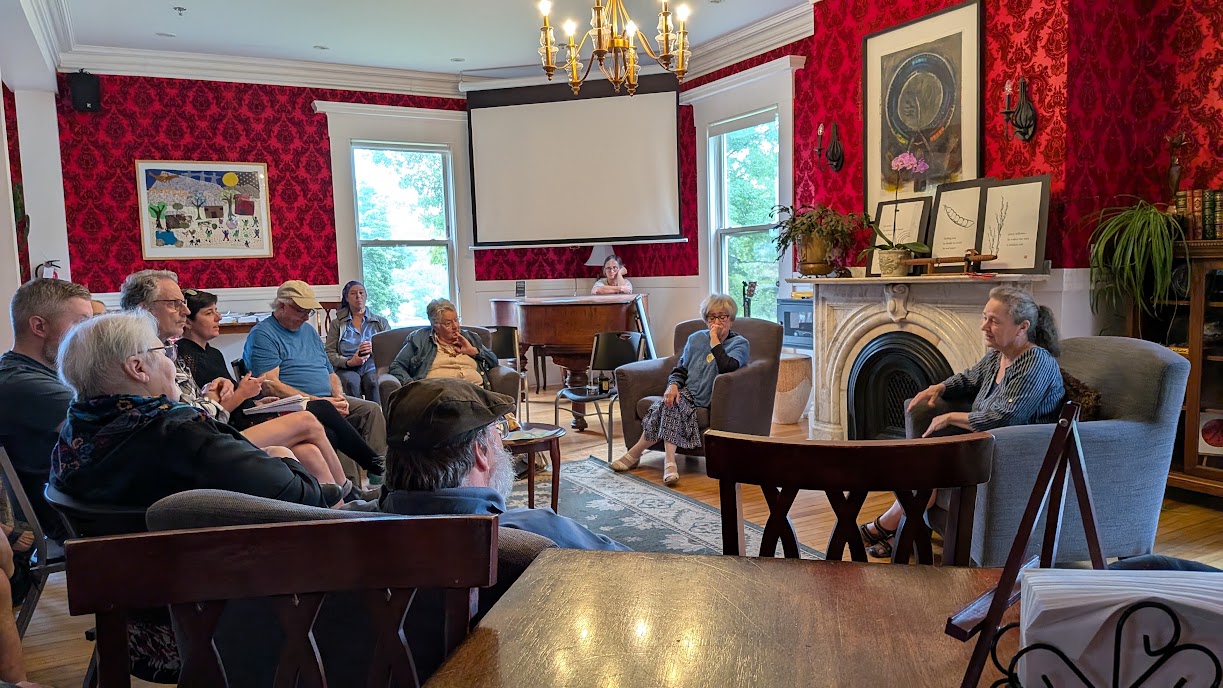
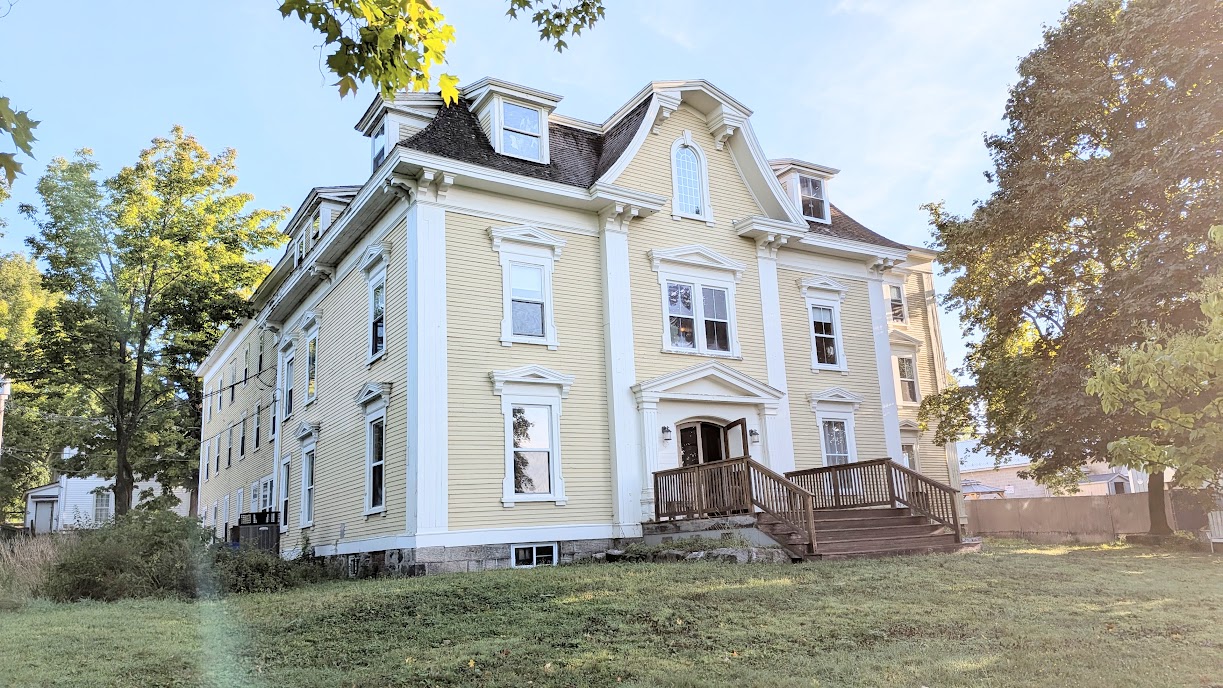
The building itself was so beautiful to work in, and the town so beautiful for casual roaming as well as for a gingko walk. A dynamic presentation by Angela on haiga, a combination of haiku and Art, encouraged us all to try it.

Some of our best poets and organizers were also the best cooks, dishwashers, and servers as this particular weekend was a communal affair, with lots of time for getting to know the other participants, whether over a meal, or hanging out in one of several comfortable nooks. So What if the stove took an hour to cook pasta, So What if I had to wing my presentation because I’d left the PowerPoint file at home. We laughed a lot and discovered each other.
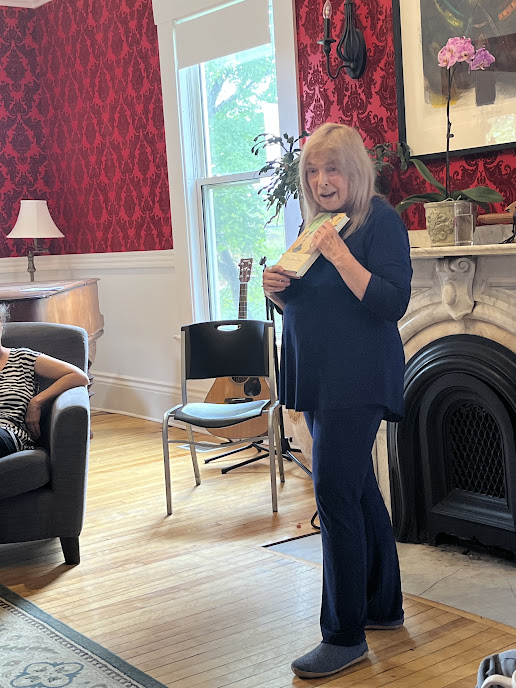
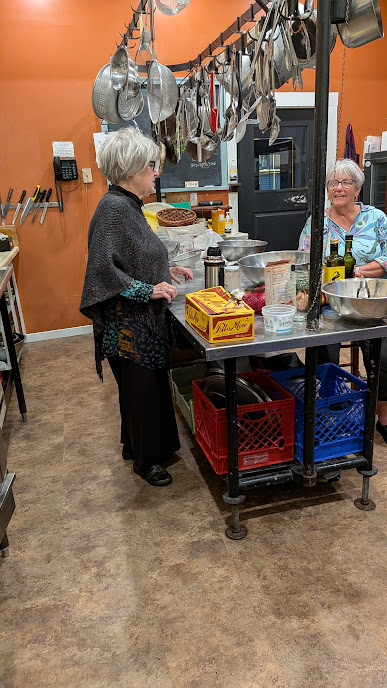
haiku poets at lunch/ an enthusiastic discussion/ of Winnie the Pooh

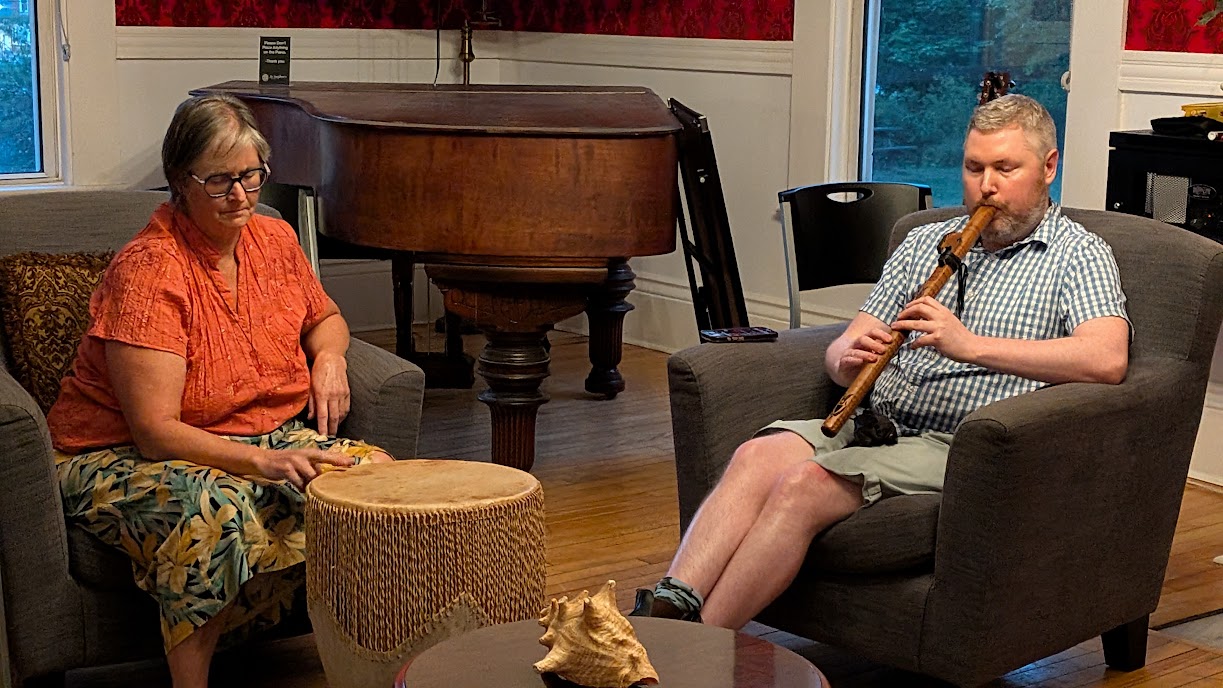
A few of us let down our hair after hours, joining Hans, with guitar, Rob, Sandra, Brendan, and others with flute, drum and tambourine, to belt out hilarious renditions of songs like Ob la Di Ob La Da.

Mike and I then drove through the autumn beauty of Southern New Brunswick, stopping by the water at Grand Manan.

Mike, and some Xanthoria parietina on the rocks at Grand Manan.

We crossed the Confederation Bridge to Prince Edward Island. It was nostalgic for Mike as he’d worked on that construction. Nostalgic for me as I was last there crossing on a ferry more than fifty years ago with my little boy.

This is where the ‘coming close to Nirvana’ kicks in. Nancy and Peter Richards hosted Angela, Caroline and Carole in their home and offered me and Mike a chance to stay in their cottage at Thunder Cove.

They had collaborated with Angela, Caroline, Carole, Mike and me to present haiku for a day to mostly new writers of the genre. As the only two known haiku poets in the province, Nancy and Peter had organized space at the historical Coach House in Charlottetown, another beautiful building. Expecting a few participants, they had to keep adding tables and chairs as early on, the room started to fill up with people INTERESTED IN HAIKU! Sessions on haiku, haibun and tan-renga were presented. It seems these poets plan future meetings in person or on Zoom. A Win-Win situation!
You see, this is the kind of unexpected gift, the Nirvana that Japanese poetry might offer! Thunder Cove was a magic place, the beach long and red with only a few people exploring it. Mike worked a lot on The Haiku Canada Review; we both wrote for hours. I spent hours on the beach in all kinds of weather, even before and after sunrise, and at sunset. 

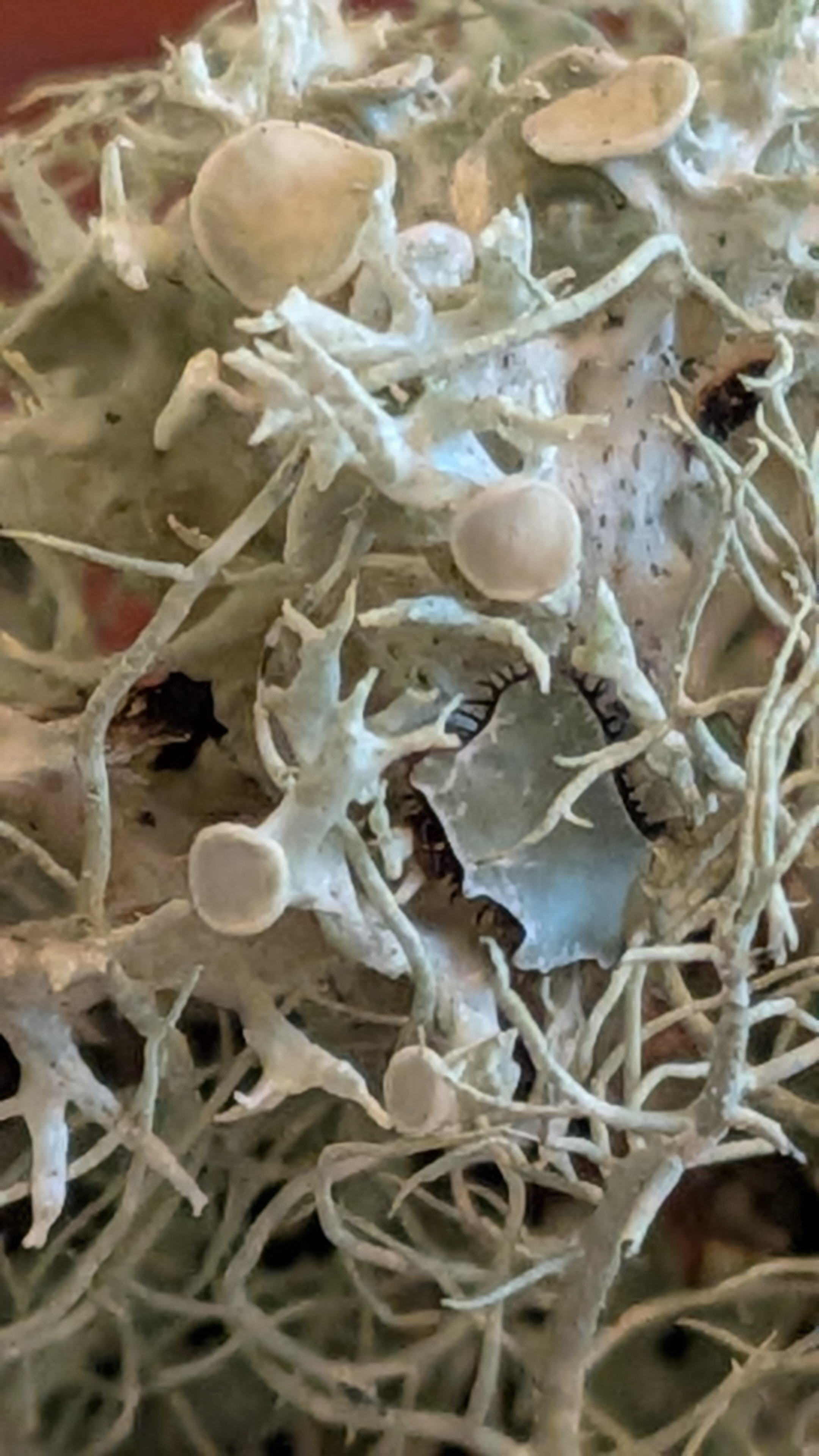
Sunrise and sunset and lichens (Ramaline dilacerata) …there’s nothing more to ask.

From this post you may gather that I am interested in lichens. The identifications may not be perfect. But lichens are similar to the organisers mentioned throughout this post, the participants of these two events, and the haiku world of poetry itself: perfect jewels that continue to surprise with gifts.  

A Reading in Montreal

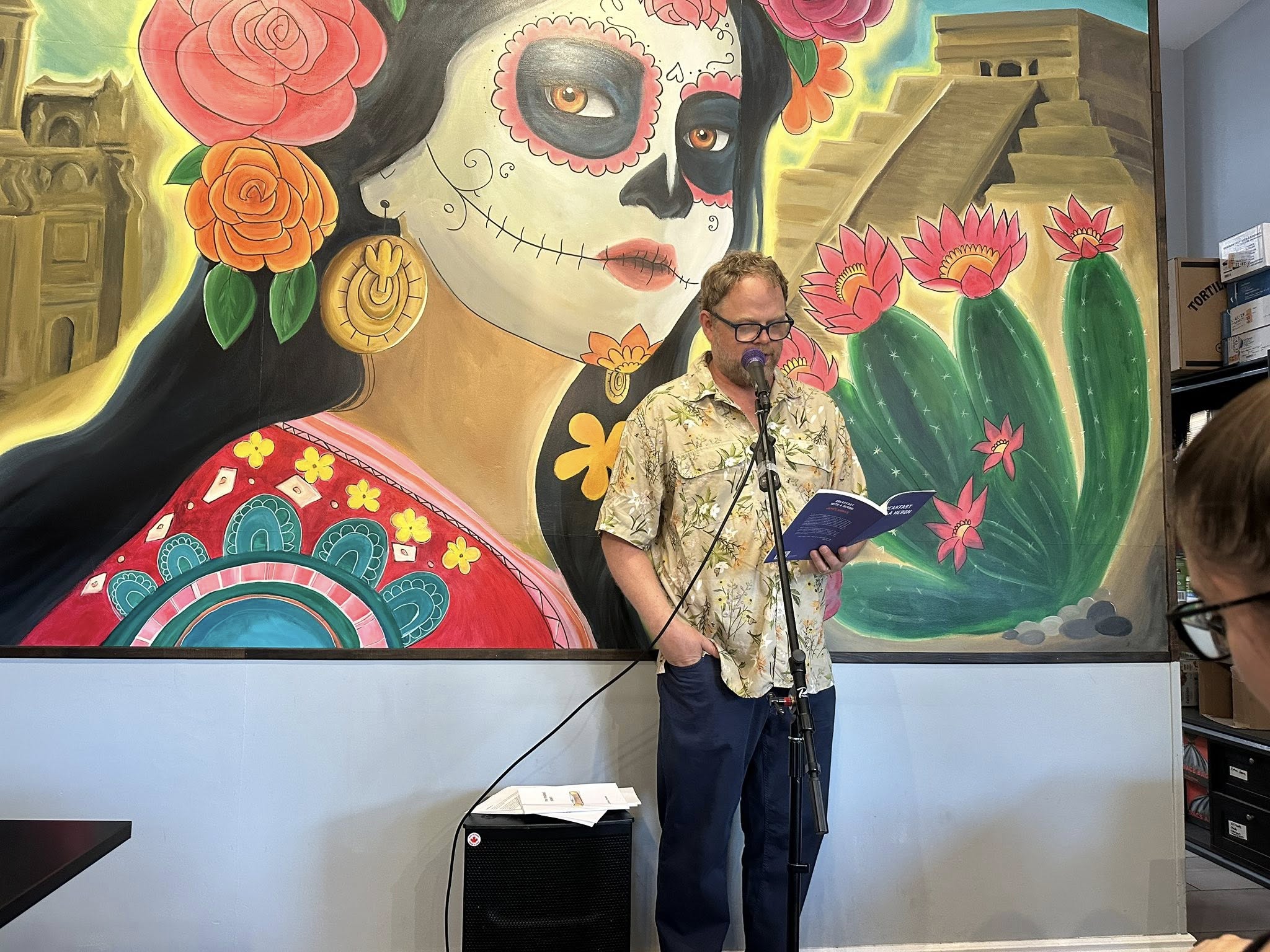
Look at this terrific mural at Café 92 degrés on rue Sherbrooke in Montreal! It was the setting for a reading on August 14th. This post has been a long time coming, as life tends to get in the way. Since then I’ve been at the Maritime Haiku Getaway in St. Stephen’s, NB, and a Haiku Workshop in Charlottetown, PEI.

More on those in the next post.

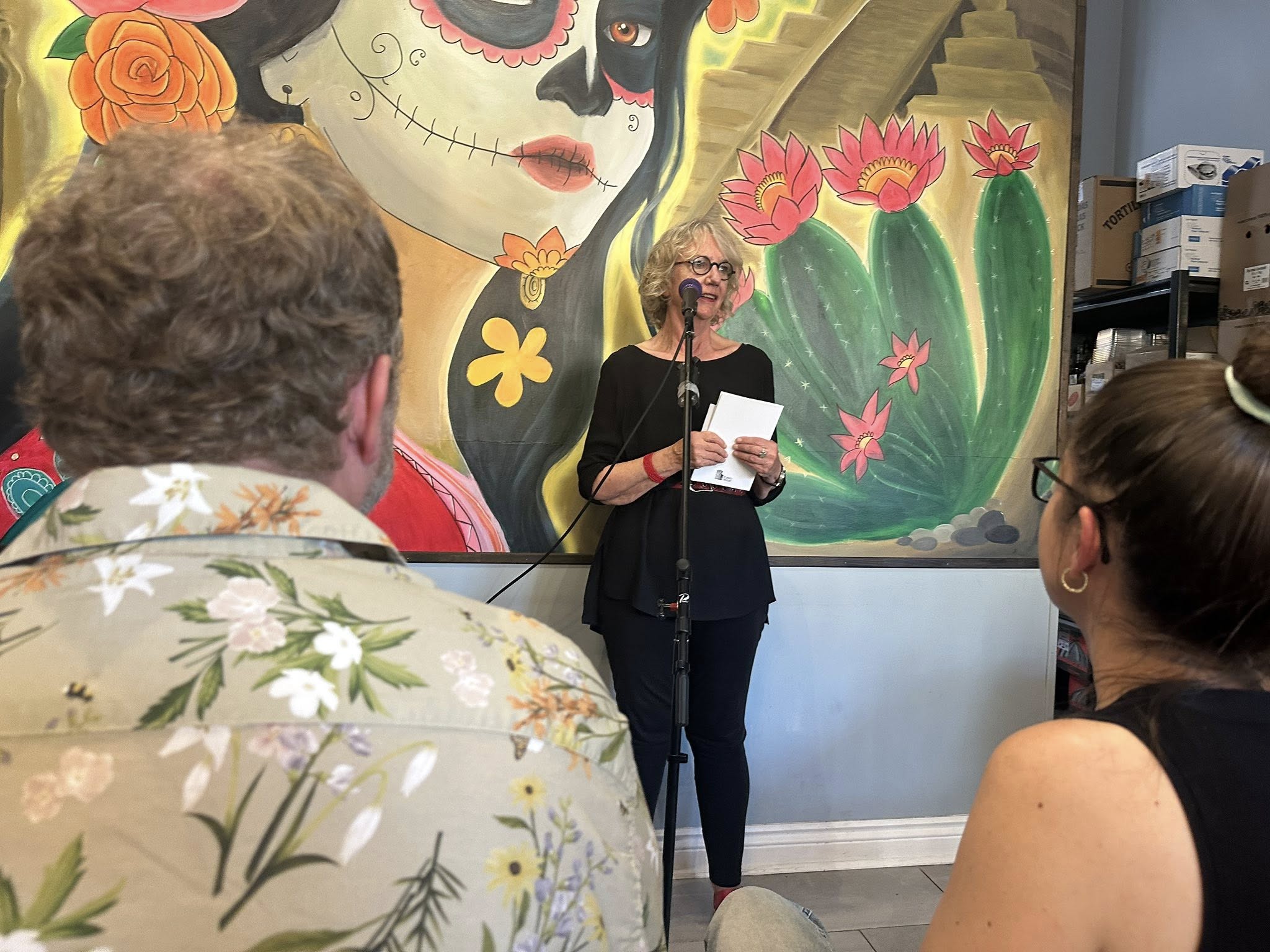
But the four of us poets who were lucky enough to read together Café 92 degrés on rue Sherbrooke in Montreal can warm ourselves with the memory of our Turret House Press reading on August 14th. I was late. It had been many years since I last faced traffic in Montreal at rush hour. Let that be a lesson if I am ever fortunate enough to be at this café again for any reason. And there are many.

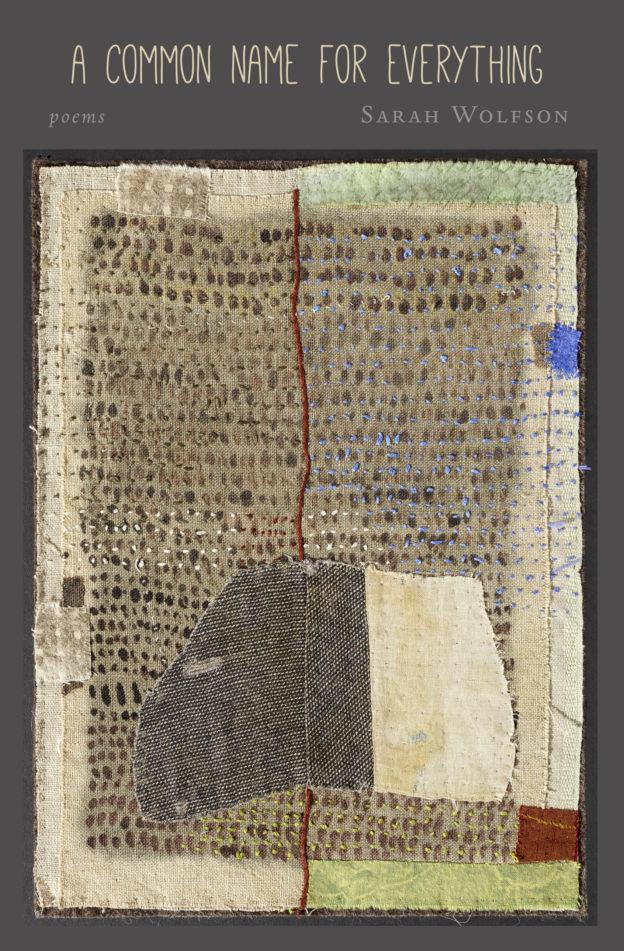
The reading was part of NDG Arts Week, which made me wish I lived in that area as so many cultural events were happening. Four of us read that night. The audience graciously and vigorously applauded poems by Cora Siré, Sarah Wolfson, James Hawes and me from these collections:

Well I am not lying when I say how excited I was to be part of this reading. I regret being late. I would have enjoyed more conversation with people who were in the room. I enjoyed talking with Sarah’s son, and the excitement when a woman came up with a photo on her camera of a bee heavy with pollen just after I’d read about bees sonicating. One of the best parts of the evening was meeting the poets I read with. I’d love to talk about their poetry with them. They seemed to have forgiven me for being so late and stayed afterwards for what I hope was the start of longer conversations. On anything.

My niece Jessica had just been to her first reading and enjoyed the experience. Perhaps I’ve discovered another poetry lover in the family. That would be wonderful. We all waved from the patio in front of Café 92 degrés as James took off on his shiny red moped. He claimed it was his company ‘car’.

Without a place to stay and be fed, I wouldn’t have been able to make the reading at all. Lynn and her poet husband Marco Fraticelli are champions for putting up with me, for putting up with hours of traffic that evening.

Hosts Lynn and Marco had bought several portions of Tres Leches cake at the cafe! None of us had ever tasted it. A treat for after hours of traffic! On the way back to Pointe Claire Marco tossed something over his shoulder to where I was sitting behind him, something I’ve treasured ever since: a black cap from the Café 92 degrés with its logo. The cap and I have travelled to New Brunswick and Prince Edward Island since then; I wear it every day.

I shout out a huge ‘thank you’ to everyone who came that night, such an attentive audience of poetry lovers. Thank you James Hawes, and the Café 92 degrés people who were such gracious hosts. Thank you city councillor Peter McQueen for your comments afterward, and, though I’ve never met you, thank you Olivia Domingues Johnson and Notre Dames des Arts for organizing the evening.

The Tres Leches cake was amazing. I’d return to the Café 92 degrés just for that!!!

How I would love to do it all again.

They are here!!! They are here!!!

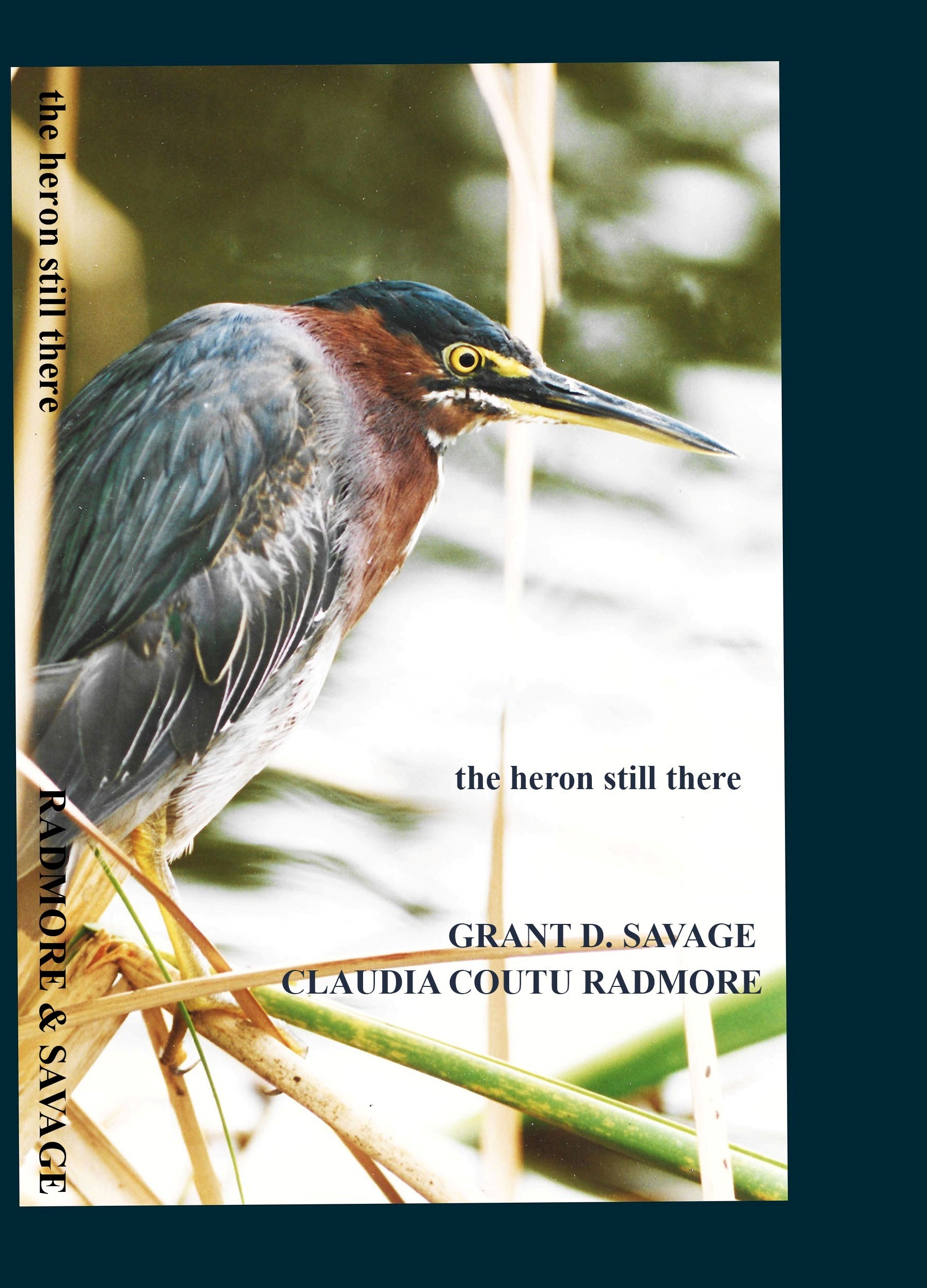
You’d think by now, a new book out would not be exciting! But this time there are two books just out! Sweet Vinegars: Wildflower poems (Shoreline Press, Montreal) and the heron still there, with Grant D. Savage, 500 tan renga poems linked. (Éditions des petits nuages, Ottawa)

To quote from a cover blurb by Greg Santos, “… this mighty collection blooms with playful, surprising, thoughful, and magical observations.” Thank you so much Greg. I’m chuffed to have this from a poet I so admire.

I am so pleased that John Rayner of Carleton Place let me use his photograph of Butomus umbellatus, Flowering rush bareroot, for the cover! When I saw it on Facebook years ago, I hoped that the poems would one day be published with this cover.

From a blurb by Susan Gillis, “Playful or sombre, sometimes both―and more― the poems (like bees after pollen) go to the heart of what it is to be human now, in a world where so much is at stake.” Thank you, Susan, for these treasured words.

The other collection, the heron still there, comes from a year-long collaboration with the fine Ottawa haiku poet Grant D. Savage. (Cover photo by Grant!) Its publisher, Éditions des petits nuages, is one of Canada’s leading Japanese-form poetry publishers. Grant and I are so fortunate that Mike Montreuil took on this unusual collection. Thank you Mike!

These are linked tan renga (short linked) poems, and I am so in awe of Grant’s great all-round knowledge and erudition. I never knew what kind of link would happen as it could come from his Science, Math, literature, or poetry (and more) background. The idea of the tan renga is to add a verse that is linked to the previous one, but which veers in a different direction. It was so much fun, and a super challenge to write tan renga with him.

The form requires attention from a reader as there is a ‘game’ aspect in figuring out what the links are, and where the next verse is going. There are many allusions (mostly noted at the end of the collection), and many fun lines, always unexpected.

I hope readers enjoy all aspects of either/both collection(s). Sweet Vinegars is available through Shoreline Press, but also from me at claudiaradmore@gmail.com.

a year and more away from my blog

It’s not that it’s been a terrible year, in fact we’ve had the joy of a new grandchild, Callan, not yet two months old.

But there have been deaths, and sadness as well. Writing has taken a lower place on the ladder of life, but just for a while. I am proud to have published books and chapbooks with my Catkin Press, though fewer than usual.

‘Dérive’, by Marco Fraticelli is the French translation of his best selling ‘Drifting’, haibun based on the journals of Celesta Taylor, woman of many merits from the Eastern Townships of Quebec, whose story is unique and all encompassing. Copies of either are available from Marco. (marcofraticelli.com) (He’s also the author of ‘Dear Elsa’, another run-away best seller! ( The best introduction to haiku I know. It’s step-by-step clear, in a touching pen-pal correspondence between fifth graders, which will have you aching with laughter) (Red Deer Press | 2023/ $14.95. Available through Red Deer Press , or your favourite bookseller. His email is on his website.)

The next beautiful book, ‘Stone Garden,’ by Rich and Zo Schnell recounts the transformation of their garden into a spiritual place. As the second part of the title suggests, it is a place of meditation and poetry, with the work of many poets who write in Japanese forms. Truly beautiful in every way. Available at richschnell73@outlook.com

I asked Pearl Pirie if she had haiku lying around as I would like to do a chapbook, and of course, she did. This collection, so sensitive to her world, invites you in, and somehow you find yourself just settling in with the poems.

And Susan Atkinson was running out of copies of her haibun collection, ‘The Birthday Party: The Mariachi Player and The Tourist’, but asked for an edited version with her alternate choice of cover colour. It was ready for her to read from at the Manx, so many other fortunate people got copies.

I have been writing, writing, and meeting most weeks with the Ruby Tuesday poetry group. We have lost a dear member this year. I think of Jacqueline (Bourque) often. We miss her very much for many reasons, not least her poetry. Her posthumous collection will be coming out with McGill-Queen’s University Press, which made her very happy. She knew joy to the last.

I have been writing, though I can’t prove it as yet. My own book of wildflower poems, ‘Sweet Vinegars’ will be published in Devon, UK, in 2024, and editor Susan Gillis has been wonderful as I plow through the manuscript for ‘The House on Fanning Lane’. But I have been slow to send the second part. It’s all my fault.

Admitting this next project in a public blog will make it happen: a collection of haibun called ‘Désirée/ Life, Laughter, Loss’, (working title). It is written, in pencil, something I haven’t done for a while, and I hope I can read my writing in order to dictate it into Word. It was written day by day after my lovely little parrot died. It will be the third collection after ‘Désirée/ nude in sunlight’ and ‘Désirée/ air bone feather’. How much joy this gorgeous little lorikeet gave me and Ted over the past 23 years! (Is still giving us…)

I have also lost Cynthia French as a dear Poet friend in Nova Scotia. She was, with Les, a magnificent host, but more to the point, a lover of words who put them into poems I like to keep by my bed. ‘Remedy’ is a collection and a work of art ‘within and without’ to use the words of George Harrison, as it is printed on papers handmade by her daughter, Nancy French, (lindenleapapers.com).

I have been writing. I have. Keep checking this blog and please hold me to account.

I wish all of you a tremendous 2024 with a muchness of joy and creativity to help get through the harder bits.

À la prochaine…

it’s spring and poetry month and so a poem about/from my parrot

This is Desirée who came to live with me 18 years ago. She is a Green-Naped Rainbow Lorikeet, Trichoglossus haematodus, a species of Australasian parrot no bigger than a crow. Eighteen years is a long time for this particular kind of parrot to live. The larger a parrot, and therefore its brain, the longer her life span.  Desi’s is about twenty years. I have been fortunate to live with four birds of this species, all of them rescues, since 1986.

I’ve written two chapbooks of Desirée poems, still enchanted by her, amazed at her accomplishments, particularities, biology and personality. (Can a bird have a ‘person’ ality, I wonder.) She does. She’s funny, gorgeous, affectionate and at times, destructive with that sharp beak. She also uses it to brush up against my cheek and to kiss me on the lips each morning.

those zygodactyl feet

your toes and claws
two facing forward on each foot, two back
my gut flutters to realize that as hatchling
you were like other baby birds
how in becoming parrot your outer digits
rotated to the back
and your ankle! turning backwards
when you walk
that sweet scaly footskin
pearlgray as a lady’s gloves
and the little metatarsal pads
cushioning the tiny bones of your feet
oh, my heart
your pigeon-toed walk!

The next poem follows Desirée the time she escaped from my screened porch north of Sharbot Lake. It was August. She was two years old, and had never really experienced the outdoors. In the next twenty-four hours she, who had never flown farther than from cage to table, flew over 40 kilometres across the sparsely inhabited Canadian Shield, coming to rest at a resort in Westport, sliding into the punchbowl at a Teacher’s Alumni Barbecue. She is a fruit eater and nectar sipper in the wild environment of her origins, depending on sugar for nourishment, so, as she would not have eaten or had anything nourishing to drink for 24 hours, she’d headed for what looked like juice.

This poem tracks her through the biology of her eyes, how each part of them functioned as she flew across tree, rock and lake, to land at the resort..

eye parts/ a shine of blue

she chews through
the gazebo screen
new use for eye
how far to green
what is this
constantly changing non seeable
between here and there
a resistance that
supports the moving wing

1. tectonics

a sclerotic ring of bony plates
encircles the cornea
holds her eye rigid
but allows angle adjustment
tilt down to confusing variety
of hard edge shape, defined curve
straight line
tilt up to formless blue
amorphous whites
the security of height

2. view

her eyes are one thirtieth
of her body weight
should we have eyes as large
they’d look like soup plates
on either side of our head
two foveas for each eye
allow simultaneous sharpness
ahead and to the side
instinctive direction
toward green
pull of east, of south
to absence of human creature
from treetop to treetop
over flatshape blueshine
pull of joy
of life

3. lens

the pupil seems dark
at the centre of the eye
an oval transparent lozenge
lets light in to her retina
zonular fibres attach ciliary muscles
that reshape the lens
there can be no grey–
she sees or she does not see
nightfall
black in black on black
scratchings, rustlings in her tree
claw over claw her panicked crashings
into things she can not see
at night the hairlike muscles
let her down
where is the towel she sleeps in

4. cornea

a curved lens
her cornea takes in light
bends and directs it
vitamin A filters out harmful rays
at death the cornea will collapse
this strong thin protector
as insubstantial as water
dawn wakes her
she has never before known
this slow waxing of brightness
its brilliance dazzles
she melts into morning as it breaks
til light persuades her into flight
but where are her people

5. photoreceptors

on a smooth curved retina
rods interpret light
cones read colour
neuron and blood vessels nourish
many more photoreceptors than in humans
ultraviolet-sensitive cones
in tetrachromatic eyes
pick up radio waves, microwaves, infrared light
every surface distracts
where in this pattern upon pattern
colour upon colour does a bird find food
so many airmiles in this heat,
she falters, stops more often
fears escalate as random sputterings
of fluorescence turn phosphorescent and she’s tired–
when she falls into it, the shine of blue
is water

6. eyelids

eyelids are three:
transparent nictating lids
in the inner corner of each eye
work sideways with tears
upper and lower lids come together
horizontally over the cornea
in blissful states they meet
in an upwards curve
but now the top lid is heavier
she’s crawled from the water
but oh, the weariness
warm sun on rock, mat of soft grass
her eyes will not stay open
dream memory: eyelids stuck together
she’s curled up inside thin white walls
light is coming through them
she’s so small, so small to struggle
peck pecking with her special tooth
(whatever happened to that tooth?)
her wet body inches out of the shell
her lids’ first puzzled parting

7. structure

the muscular sclera pockets her eye
an egg-shaped envelope of tissue
with a vertical lens to divide the interior
watery aqueous humour
in the front
jelly-like vitreous humour
on its deep skull side
crampton’s muscles
shift shape of cornea
so Desirée can see
what she needs to see
when her feathers dry

8. iris

her round aposematic iris
has sphincter and dilator muscles
that tighten and loosen
to control the amount of light
that goes into her eye
this bright red iris looks charming
but when it pins and flares
Desi is about to draw blood
any human who grabs her
needs to learn this–
even a cook who saves her–
she takes a piece out of his hand

9. field

all day the pecten
like a folded tissue
on the outside of the retina
has shaded her habitual 360 degree
field of vision
just one moment of weakness

10.

there’s still enough light to fly
after a flight of forty-five kilometres
over Canadian Shield rock, lake, forest
and she’s starving
twenty-four hours without food
then the clearing, humans!
smell of hamburger!
large bowl of what looks like juice!
she lands on the rim
slipslides into the punch
it’s deeper than her bath
and her eyes sting

11

her eyes betray her now
at the optic disc there is a blind spot
the young cook scoops her
out of the punch bowl
her nictating lids work
to wash away the sting

12. eyelashes

he’s understanding
takes her home, entranced
he notices that each upper and lower eyelid
has miniscule lashes–not hair
but vestigial feathers without barbs
curled
the bird is startled
to find his human eyes close
examining her eyes
past caring
she looks past him
past this place

I’d put an ad in our local paper, distributed in the Sharbot Lake area. The cook, though he wanted to keep her, realized someone who cared for her had lost her, and put his ‘found’ ad in the local Westport paper.  The two distribution areas overlapped so there were about eight households who received both papers, put two and two together, and several people phoned me. Desirée and I were reunited in the resort kitchen, where they’d been trying to feed her with seeds. She, however, is a sugar bird, needing sweets and carbs, so after four days, she dived into the french fries on the table, and then into a butterscotch cream pie before she fell asleep on my shoulder, her beak all sticky with potato and pie mush.

she hops up on my shoulder
stops being a wild thing, submits
once more to being a loved thing

And if you’ve been heroic enough to follow this post all this way, my congratulations. At the moment Desirée is asleep in her favourite place, in one of my dresser drawers, on a towel.

(Heading in for a nap. See you at lunch.)