Sunset at Thunder Cove

Never think Japanese Poetry doesn’t get you anywhere…I offer proof that it can offer glorious unexpected gifts.

If I hadn’t been a Japanese-form poet I would not be part of a most amazing family: Haiku Canada, with sisters, brothers, and cousins one with the aim of writing the best of Japanese forms.

Deep connections allow for the most elegant challenges available in any poetry, along with all the help one needs to learn to write it and/or enjoy it.

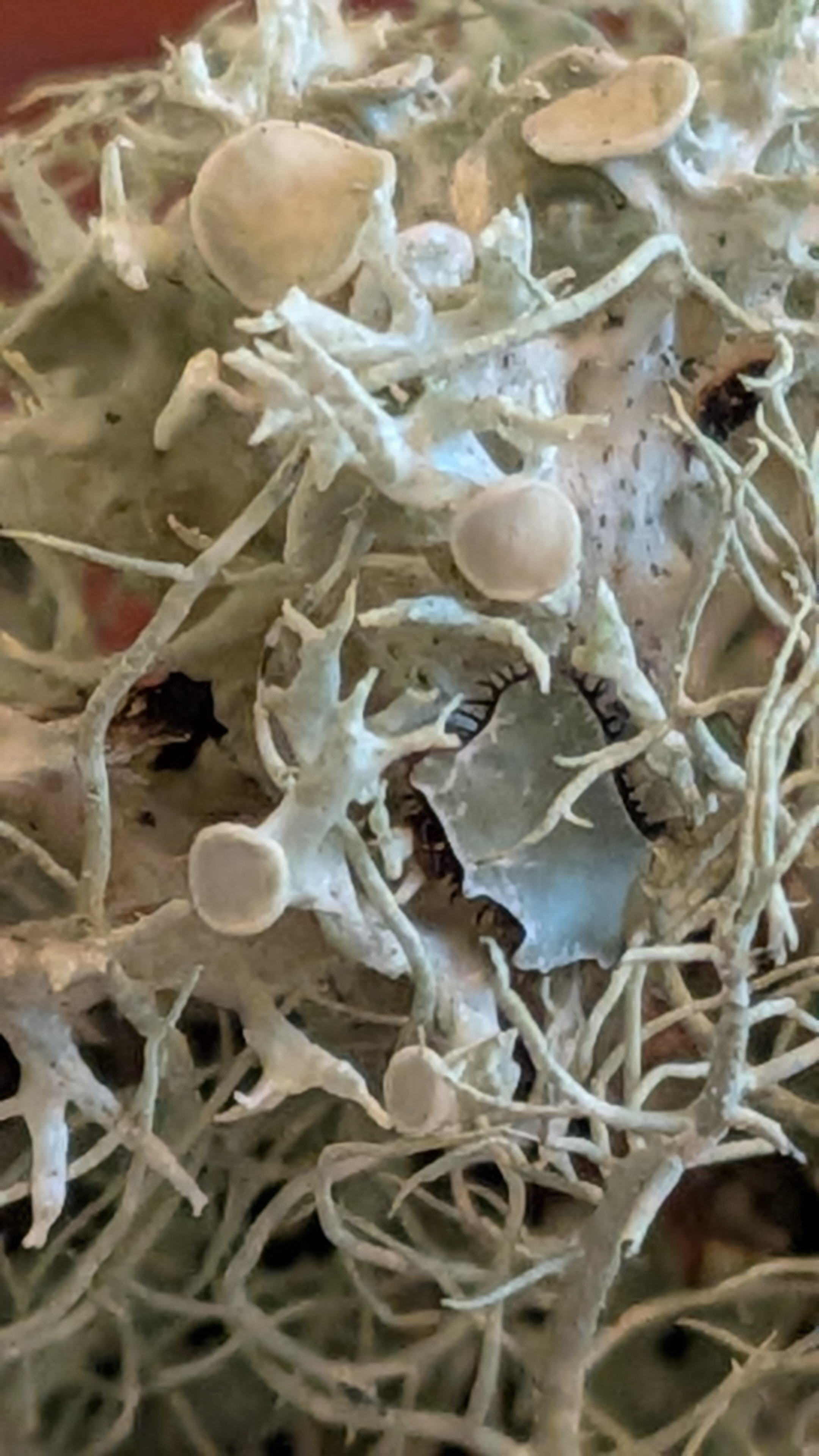
It’s like Graphis scripta, the lichen that is like the secret writing of trees. You have to know about it. Getting to know Haiku Canada people, well, it’s the best secret ever, but one we love to share.

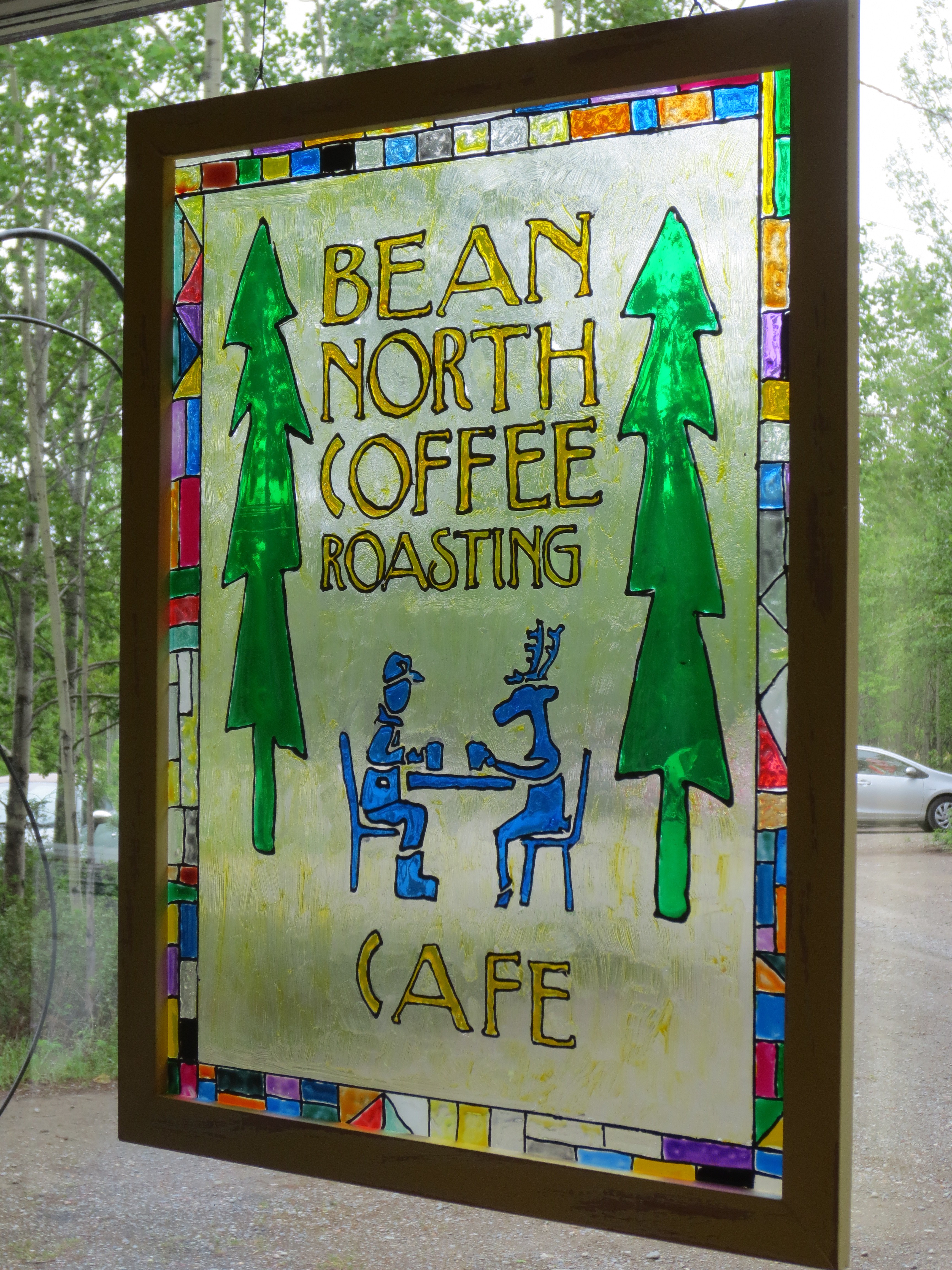
Things happen to make this happen. Every year there is a ‘conference’ held somewhere in Canada, and everyone is invited. But this current year has offered even more opportunities to experience, learn, and/or share these forms. It’s like having access to magic. The coffee, for instance, was magical when some of us met afterwards at Yukon’s Bean North.
Haiku Canada this year was in Lennoxville, Quebec, at Bishop’s University. The presentations were interesting even to long-time poets. For personal reasons, I left early, so I won’t say much about it here, but I would say that you should come to the next one which will be held in Kingston, Ontario. I’ll add a tag to this post.

This year further invitations were extended to join a Maritime Haiku Getaway at St. Stephen’s University in St. Stephen, New Brunswick, and to a Haiku Day in Charlottetown, Prince Edward Island. I was grieving but the best place for me at this time would be with my poetry family. With poets, you mean? Not only poets, I say, but haiku poets.

Mike Montreuil and I would fly to Saint John, rent a car, drive to St. Stephen, planning to drive on to Prince Edward Island for the second event.

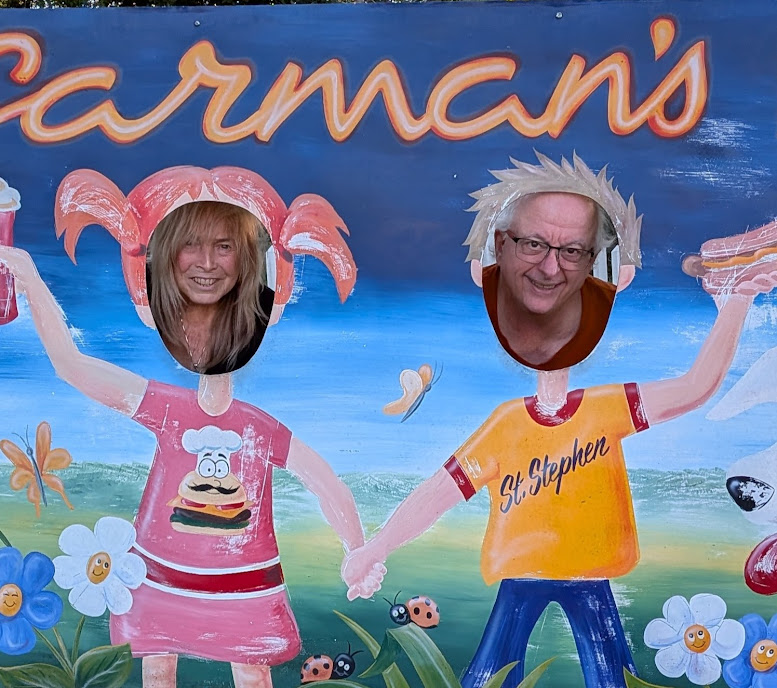
Some of us got there early. We just had to go to the local diner, Carman’s. Loved the juke box on the table and the billboard at the parking lot. The food was pretty good and the service wonderful!

At the University there would be some planned presentations but most of us went into the weekend with open minds as we know that events involving Japanese forms are always stimulating no matter what happens. Participants ranged from long-experienced poets to newer writers. We were offered choices of zeroing in on haiku, tanka or haibun. It gave us the chance to go deeper into a form, spend three or four hours on it, or move around to check out a different form.
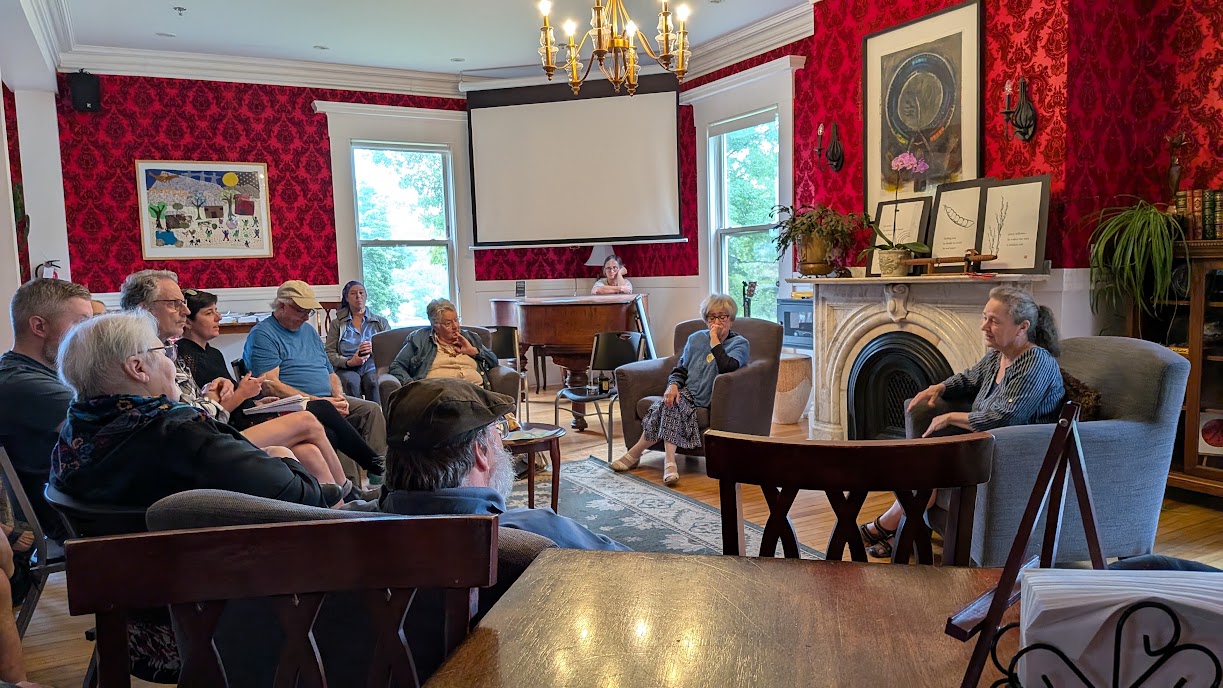
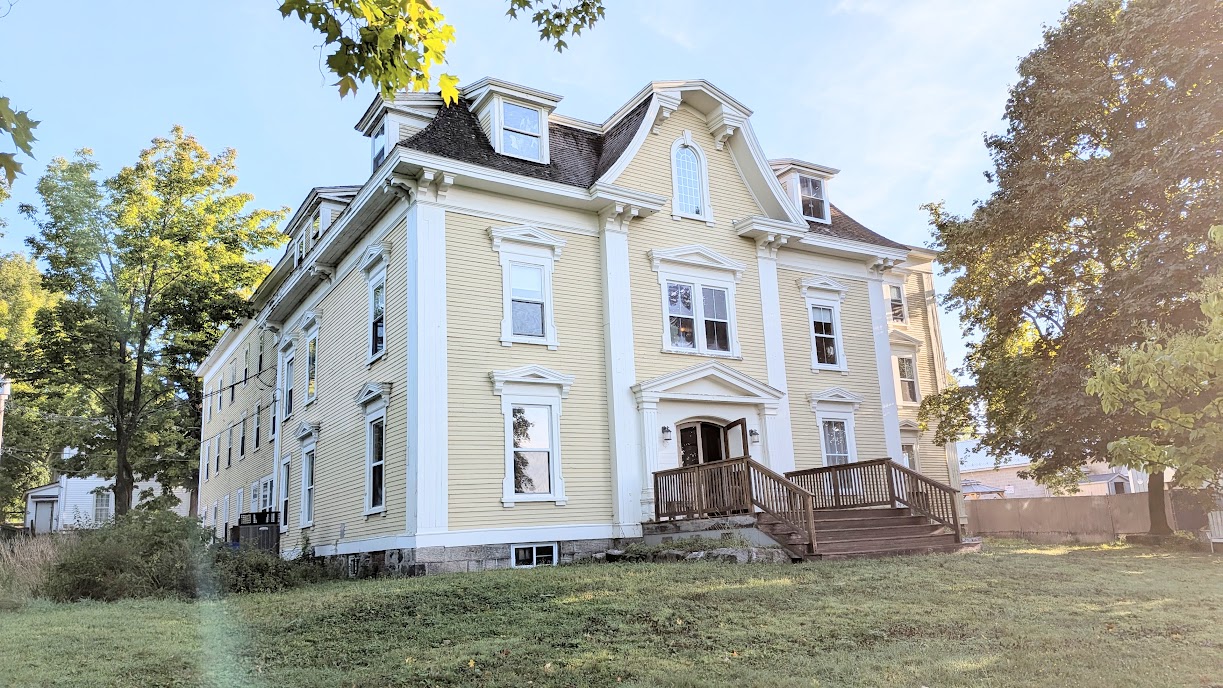
The building itself was so beautiful to work in, and the town so beautiful for casual roaming as well as for a gingko walk. A dynamic presentation by Angela on haiga, a combination of haiku and Art, encouraged us all to try it.

Some of our best poets and organizers were also the best cooks, dishwashers, and servers as this particular weekend was a communal affair, with lots of time for getting to know the other participants, whether over a meal, or hanging out in one of several comfortable nooks. So What if the stove took an hour to cook pasta, So What if I had to wing my presentation because I’d left the PowerPoint file at home. We laughed a lot and discovered each other.
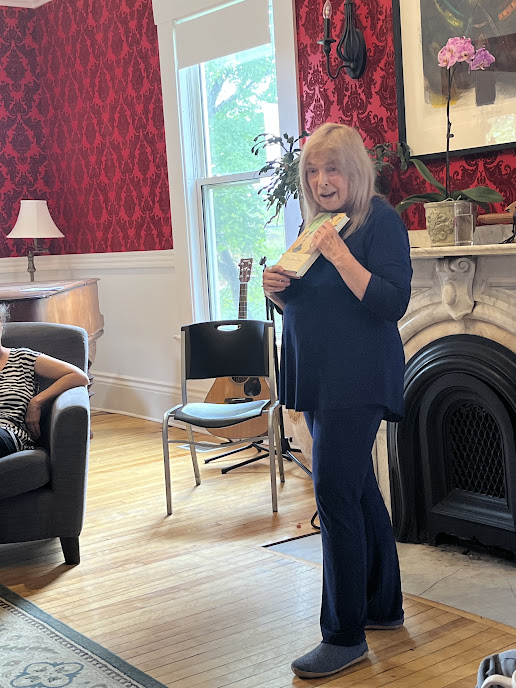
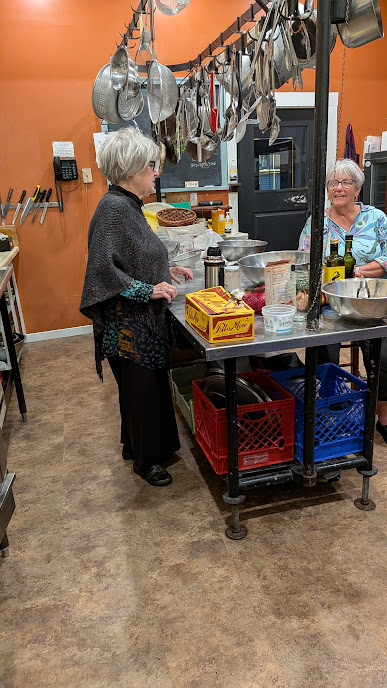
haiku poets at lunch/ an enthusiastic discussion/ of Winnie the Pooh

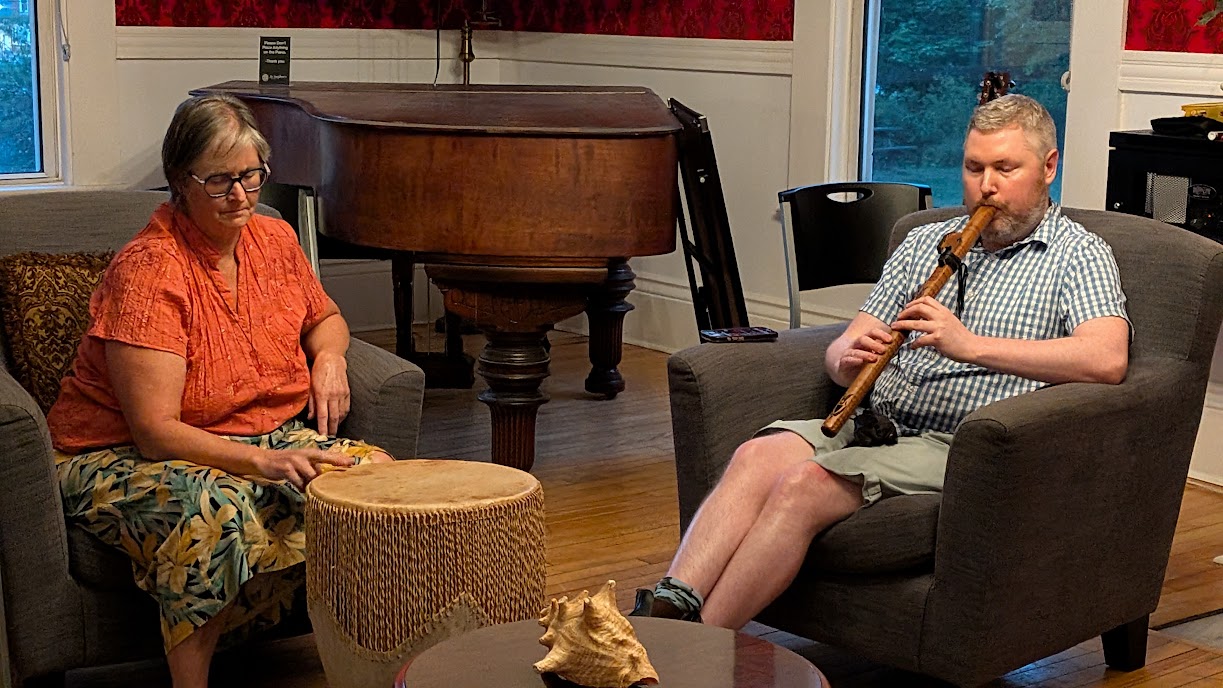
A few of us let down our hair after hours, joining Hans, with guitar, Rob, Sandra, Brendan, and others with flute, drum and tambourine, to belt out hilarious renditions of songs like Ob la Di Ob La Da.

Mike and I then drove through the autumn beauty of Southern New Brunswick, stopping by the water at Grand Manan.

Mike, and some Xanthoria parietina on the rocks at Grand Manan.

We crossed the Confederation Bridge to Prince Edward Island. It was nostalgic for Mike as he’d worked on that construction. Nostalgic for me as I was last there crossing on a ferry more than fifty years ago with my little boy.

This is where the ‘coming close to Nirvana’ kicks in. Nancy and Peter Richards hosted Angela, Caroline and Carole in their home and offered me and Mike a chance to stay in their cottage at Thunder Cove.

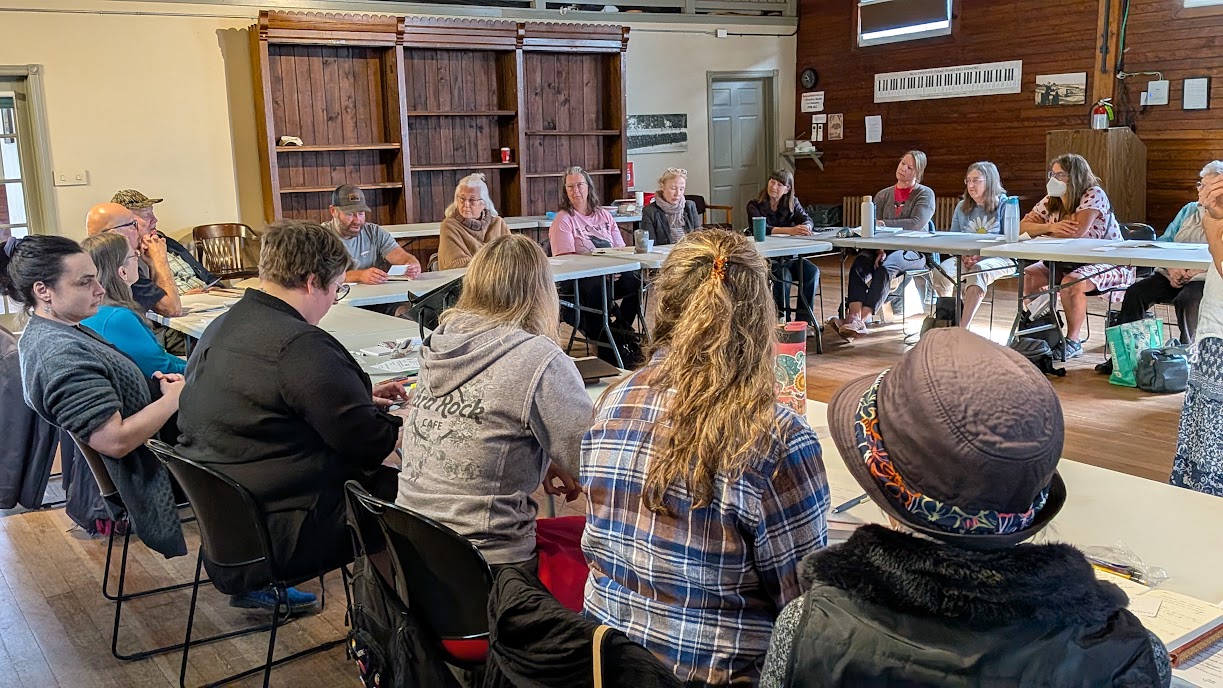
They had collaborated with Angela, Caroline, Carole, Mike and me to present haiku for a day to mostly new writers of the genre. As the only two known haiku poets in the province, Nancy and Peter had organized space at the historical Coach House in Charlottetown, another beautiful building. Expecting a few participants, they had to keep adding tables and chairs as early on, the room started to fill up with people INTERESTED IN HAIKU! Sessions on haiku, haibun and tan-renga were presented. It seems these poets plan future meetings in person or on Zoom. A Win-Win situation!
You see, this is the kind of unexpected gift, the Nirvana that Japanese poetry might offer! Thunder Cove was a magic place, the beach long and red with only a few people exploring it. Mike worked a lot on The Haiku Canada Review; we both wrote for hours. I spent hours on the beach in all kinds of weather, even before and after sunrise, and at sunset. 

Sunrise and sunset and lichens (Ramaline dilacerata) …there’s nothing more to ask.

From this post you may gather that I am interested in lichens. The identifications may not be perfect. But lichens are similar to the organisers mentioned throughout this post, the participants of these two events, and the haiku world of poetry itself: perfect jewels that continue to surprise with gifts.  
writing in the yukon

It comes to this: haiku poets travel to Whitehorse, Yukon, because they are poets, because they are curious about the Yukon, and/or want to meet other haiku poets, because they want to broaden their knowledge of the world of Japanese-form poetry, because they enjoy conferences, (and this will be The 2016 Haiku Canada Weekend!) because, just because they look forward to rubbing shoulders with members of Haiku Canada who are are the best people to be around, ever.  They’ve been to one of these Weekends, or more, and just have to be at another, or they are intrigued by the idea that poets will travel that far, from New York, Quebec, California, New Mexico, to spend a weekend based on poems that can be expressed in ‘one breath.’

True, we are a bit crazy, but we also know that secrets/surprises will unfold during this weekend, and we want in on them.  So here’s what happened: many people got there early or stayed longer to see the area around Whitehorse. Some got all the way to Skagway and Dawson City to drink a Sour Toe Cocktail, and to experience the Alaska Highway and Kluane National Park. Some went on Elisabeth Wiegand’s wonderful Black Bear Adventures Tours. Some rented a camper. Some were billeted by the most gracious and generous hosts. All that alone was worth the trip.

Highway sign to Bean North Coffee
Highway sign to Bean North Coffee Roasting on the takhini Hotsprings Road

But we are writers.  Writers who know the difficulty of putting such a weekend together. This time it was Kathy Munro and her team, many from her Solstice haiku group, many from the Bean North Wednesday Writers who meet way out in those bear-filled woods at Bean North Coffee Roasting Ltd., a delightful café that’s been going for about 15 years. You’d never expect to find such a place, complete with its own roaster, with organic food and Free Trade coffee and chocolate and simple lunches so good you might dream about them later.

Kathy Munro had written to The Commissioner of Yukon, Hon. Doug Phillips, requesting that the week be called Haiku Week in the Yukon; he signed a proclamation, and it was so. Haiku Week in the Yukon! The Cultural Services branch paid for all the ads in the papers! The City of Whitehorse got in on the act, getting out the trolley a couple of days earlier than usual so conference members could be clanged through town to the Northern Front Gallery. The MacBride Museum of Yukon History hosted a related reading, as did the Library, which also gave space for a display (more on this later…) and a reading; bookstores gave discounts and one gave super window space to a Haiku Book display; a coffee shop too, had discounts. Newspapers and radio gave space.  CBC on the radio and on CBC Yukon’s Facebook page gave information on the weekend. Everything seemed intertwined, the paper maker and the reporter attending the conference, the novelist putting copies of her novel Ice to Ashes on the ‘Free’ table. (Yes, haiku poets always have a ‘free’ table! Imagine!) Haiku Canada was everywhere.

The Wednesday group is known also as The Whitehorse Poetry Society and Local Writers, associated with Yukon Writers Collective, but members sometimes refer to themselves simply as The Bean North Writers.

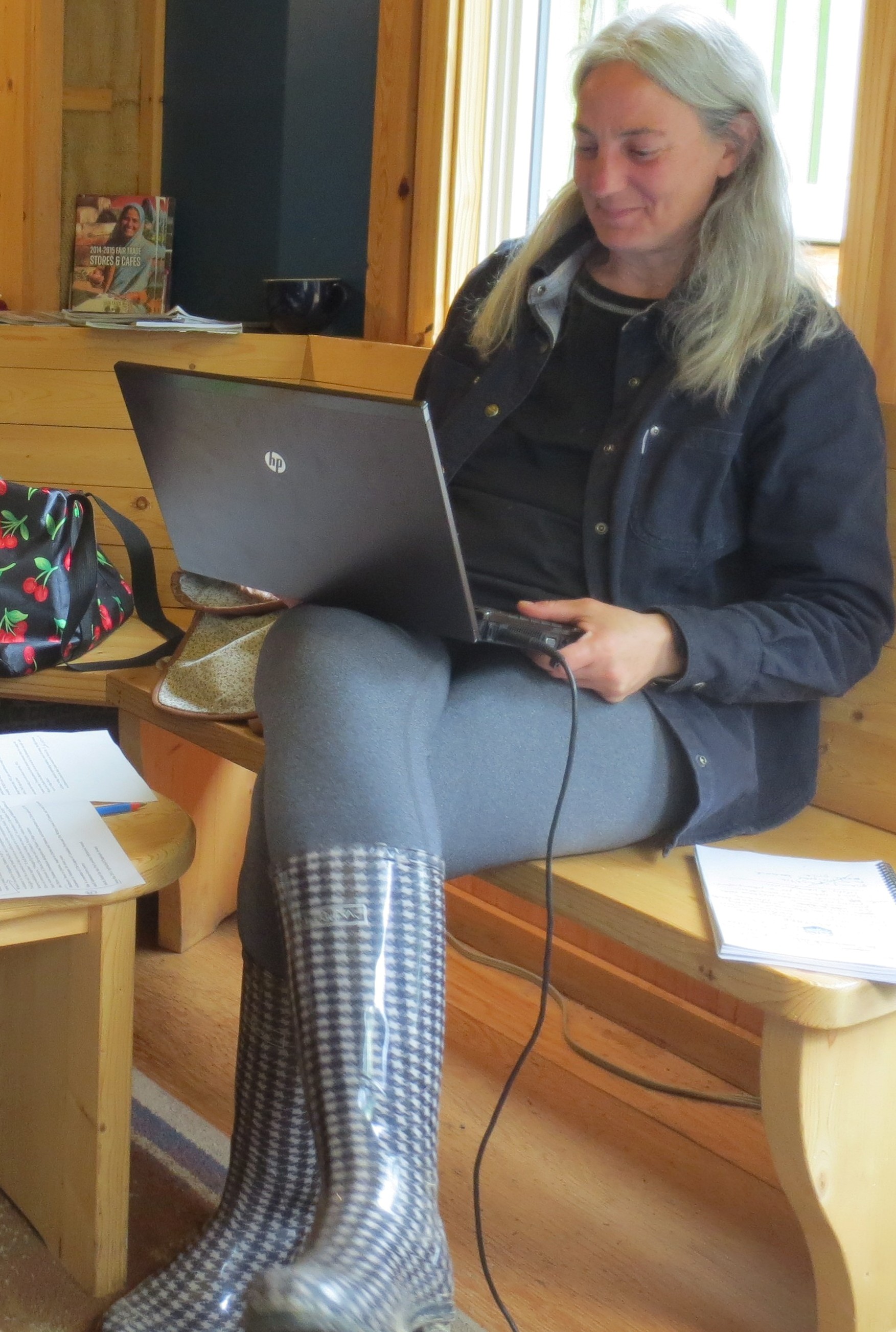
Jessica Simon. reporter/novelist at Bean North
Jessica Simon. reporter/novelist
at Bean North

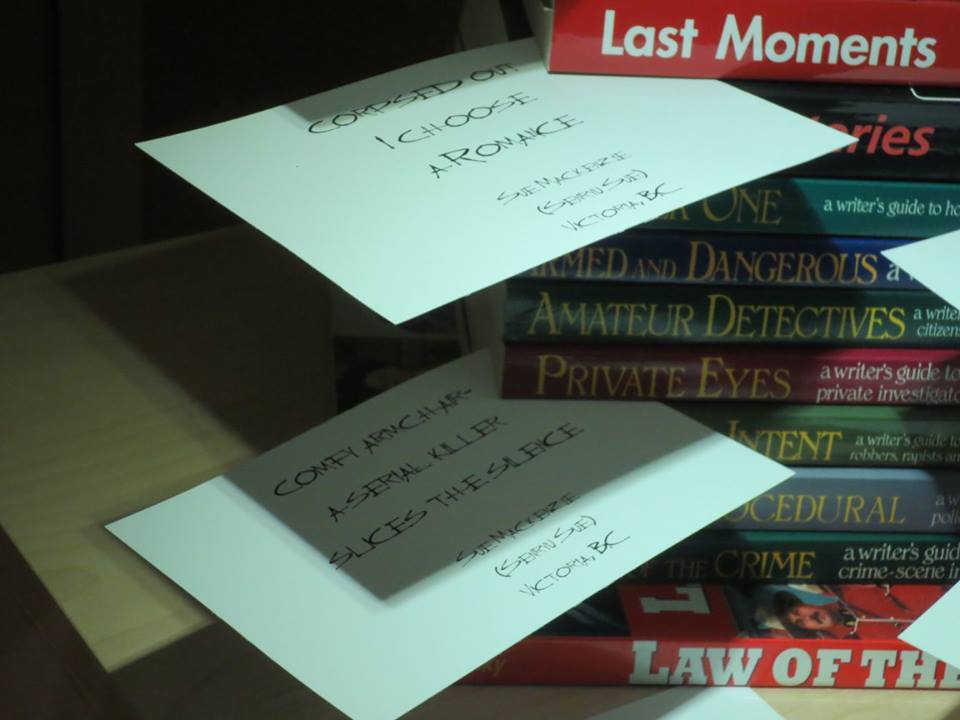
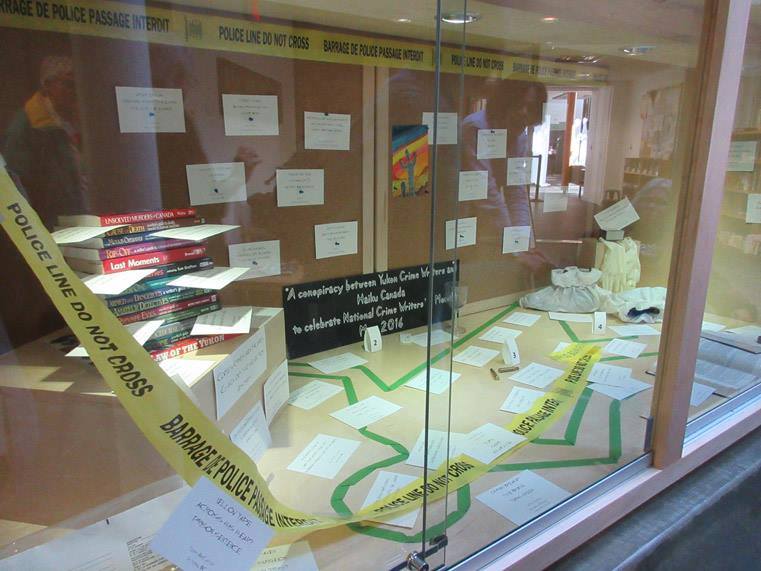
They gather, some with paper, others with laptops, in the little perfectly-chosen-blue room up front, with big windows that bring that Big North Feeling into the room, into the writing. Haiku writers work on Japanese-form poems, prose writers work on novels and short stories and newspaper articles. Plans get hatched. Two writers, reporter/crime novelist Jessica Simon, and Kathy Munro came up with one of those ‘extras’ that made the weekend extraordinary: Why not send out a call for ‘crime haiku’ and display the results in the Whitehorse Library. No sooner hatched, the path to realization had begun. The final display on ‘Killer Ku’ was magnificent.

crime pic 2 vancouver haiku group

So there was a team, and all the parts of the Weekend came together. I haven’t started, and won’t because this is a blog and not a book, to mention all the people and the planning that made the Weekend happen. And a report of everything that happened at the conference, as well as the agenda, will soon be up on the Haiku Canada website.

There are a few quiet volunteers and donors who might be missed though; Laurel Parry, calligrapher par excellence, who also made opening remarks for the conference, gave hours to making calligraph, name cards on the spot, putting them into name-tag holders scavenged by Kathy’s husband at a geology conference, holders that are much more chic than what we normally call name-tags.

Helen O’Connor, paper artist, who curated an exhibit called Words at The Northern Front Gallery, (handmade paper art that included poetry or other word applications) was another team member as she and Ms. Munro collaborated to have the show opening sync with the conference and three haiku poets had pieces in the show. Ms. O’Connor also gave us paper-making, calligraphy and book binding workshops. She also donated hand-made paper for the name tags…

stinging Nettle Knickers, byHelen O'Connor
stinging Nettle Knickers, by Helen O’Connor, image from the WORDS exhibition catalogue

But I wanted to zone in on the writers who meet regularly, their spirit and the way they connect at Bean North, and how central they can be to setting cultural atmoshpere in a far away northern city. When they get together in that blue room, writing is simply in the air; you can almost see it, and you can certainly feel it. I was only there for a couple of hours, but the ease of camaraderie among these wordsmiths reminded me of that famous house in Toronto where members of the Group of Seven painters had their studios, how they would work, but also roam around, comment on each other’s paintings, have coffee.

This writers’ group acts as a think tank, some of the creative people of Whitehorse, who interact in various ways, who are connected through words, through Art, through book clubs. My feeling was if you have anything to do with writing, newbie or seasoned, you’re invited and included as part of the group. Whitehorse is an ‘alive’ place to be an artist or a writer, and since live things grow, and are dependent on supports of various kinds, this is the place to be on Wednesdays. The best part is that, though it is not formally a critique group, that can happen if a writer is looking for input.  So there’s no stress involved. You don’t have to ‘come up with something’ to share. But if you have something to share, you’re in the right café.

And if you want to know how to get things done, writers often have the skills and connections to make something happen, as witnessed by the whole of Yukon in the papers and on the radio. In all my years with Haiku organizations in North America, the Whitehorse experience made more use of the media, including social media, and of the cultural and physical aspects of an area than ever before, including respect and appreciation for the use Whitehorse citizens have of First Nations Land.

That ‘Killer Ku’ exhibit at the library will likely become a book, for example; the writers are already working on that project. So I would suggest, if for any reason you are going to Whitehorse, and are a writer, that you connect with this group. You never know what will come of it, and the least that could happen is that you meet some amazing people who happen to write. And if you are lucky, you will connect with Haiku Canada at http://haikucanada.org whether you write haiku or not.

I for one, recommend going to Whitehorse for many reasons, and my best dreams would be of being quiet among those sacred mountains. With all the creative and hospitable people that live there.


.