haibun/ tanabata


KONICA MINOLTA DIGITAL CAMERA
Jim Dine Hearts in front of Montreal Museum of Fine Arts

The haibun is a satisfying form. It combines the fullness of story, the various forms of narrative, the objective descriptions of place, the histories and herstories of life, of the world with its wonders, and its sorrows.  But more than that, it edges in, with a haiku, yet another angle to what is happening in the prose.

one jim dine heart/ touches another/July heat

It lets the writer and the reader step outside the prose, do some sideways thinking. It means acknowledging that whatever story we think we know, there are worlds attached that we cannot know. The haiku is an attempt to understand the prose more deeply and to be even more involved in it.

alice puzzledalice steps through/ astonishes/ her self

When we write our own prose intending to create a haibun, it’s a game we play with ourselves. We write ourselves out, then leave what we wrote, sometimes abruptly, and go away for a while. It may be for just a few seconds, but we return with something that might have been floating through our minds, and only reminded of by sitting on cool grass, or when spooning brown sugar, or by an ornament on your mother’s mantel.

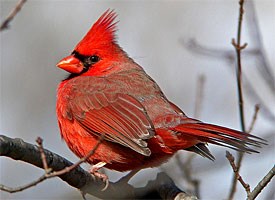
northern_cardinal_glamourfrom cardinal’s beak/ to hatchling/ a future

It’s an invitation to join in, to pick the next card, complete the Royal Flush. But is also a reminder that all things in the world are connected; it’s up to us to figure out how. Not that I know what I’m talking about in mentioning a poker term, not everyone knows how to play every game. In a haibun the next card is more a suggestion to consider how it fits, like a puzzle piece, into the larger picture.

A haiku may initiate the prose. It can be like that piece of cloud you pick up first, the one you have no hope of matching up, until something twigs, and Oh yes, that blossom scent reminds me of the lime Jello Aunt Bessie used to fill with pineapple and tiny marshmallows, and that time we went to Paris together... so the narrative begins, perhaps to end with another haiku.

eiffelcaught/ in metal struts/ bits of sky

The free flow between two different ways of thinking, the brain switching from prose mode to haiku mode, is what makes haibun intriguing.

The form can be perplexing. Why stick that last ‘bit’ on, those three lines that seem to have no reason for existing, that are confusing in themselves.  Bits of idea, image upon image. It has nothing to do with the story!  The story is about a temple…Why is the haiku about a dream? And it doesn’t even finish the story!

In haibun, the short poem parts shouldn’t immediately be apparent. A space intrudes between the parts, a space that says Take a moment before continuing this poem, the same function it has in lyric poems. In haibun it also prepares the reader: don’t expect this poem to continue in the same vein as before.

a turtle dove rests/ in an empty bird feeder/ evening light

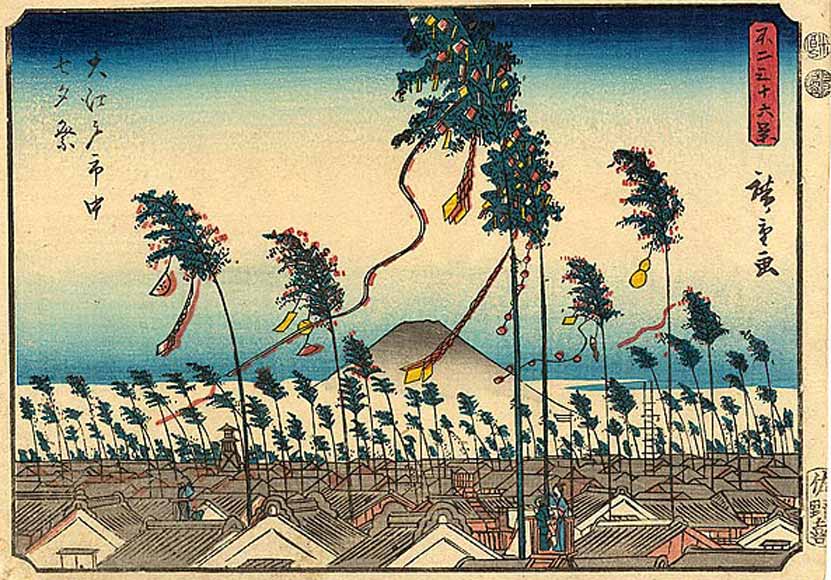
hiroshige tanabataThe trick is to think about both parts and think about where they both could meet, whether is space, time, commonality, atmosphere, emotion, weather… as if one part has been longing for the other, and each only fulfilled, like the weaver girl and the cowherd, when they have found each other. (The image is the City Flourishing, Tanabata Festival, 1857 woodcut by by Hiroshige)

The Open Mind website quotes Nicolas Tesla: “When wireless is perfectly applied, the whole earth will be converted into a huge brain, which in fact it is, all things being particles of a real and rhythmic whole…” The paragraph is about Tesla describing a cellphone in 1926, but can be taken as another way to think about the haibun creating process: one section of a writer’s brain connecting with another part of itself that can only be accessed through an alternate route.  One part of mind reaching for another, conversing.

typos/ distraction to destruction/ bitter

This senryu from Strange Type, a poem by Malcolm Lowry.

literature into poetry and song/alexandra leaving

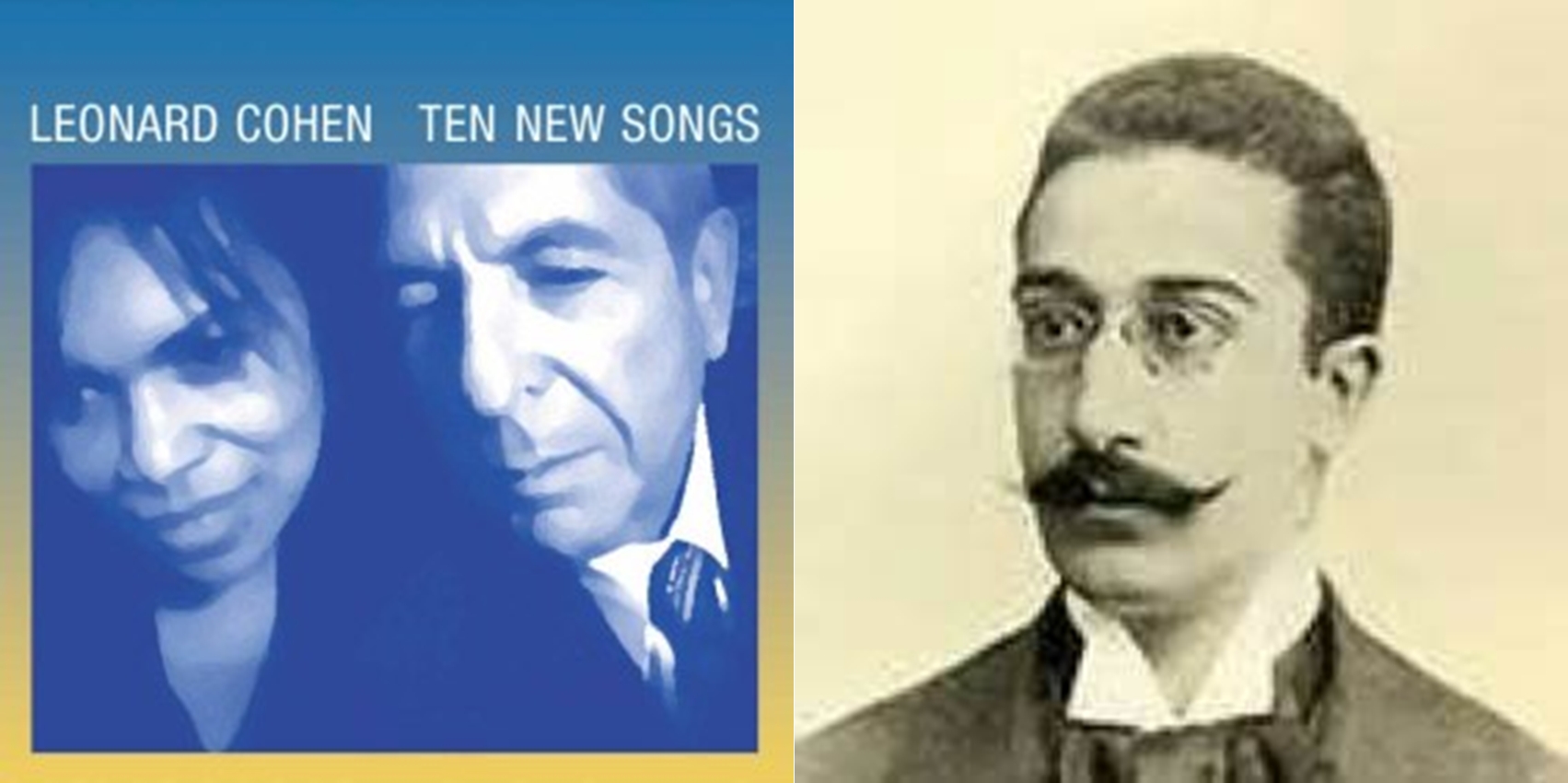
That Leonard Cohen and Sharon Robinson used Constantine Cavafy’s poem “The God forsakes Antony” written in 1911, as inspiration for their song/poem “Alexandra Leaving” is not news.cohen cavafyThe first surprise is how the songwriters have taken Cavafy’s historically based poem and transformed it into a love poem. Antony, of course, is Marcus Antonius, Cleopatra’s husband. When I compared the Cavafy poem with Cohen’s new creation, I was struck by just how much of the poem/song was made from direct and associative borrowings from Cavafy’s poem. I’ve copied both pieces below; you’ll probably find even more relationships between the two than I have.

In both we find similar words and phrases: suddenly, exquisite music, forms of the word ‘deceive’, voices, dream (ing), courage, long prepared, say(ing) good-bye, go firmly to the window, coward

Cohen and Robinson transformed phrases like ‘the Alexandria you are losing’ to ‘Alexandra lost’. They take the title idea of a god, use it in the second line as ‘some deity preparing to depart’, and as Alexandra ‘leaving with her lord’. They write lines like “Do not choose a coward’s explanation” from “don’t degrade yourself with empty hopes like these”.

The whole tone of Cavafy’s poem is echoed in couplets such as: “Do not say the moment was imagined/ Do not stoop to strategies like this”.

There is play with homonyms: from ‘whine’ to ‘wine, and from ‘mourn’ to ‘morn(ing)’.

All the desire of Antony for Cleopatra and the consequent sadnesses and the loss of the Alexandria Donations comes across hauntingly in Cohen’s love-based poem. The phrase “crucifix uncrossed” may have been inspired by Cavafy’s first name of Constantine, as the Emperor Constantine’s mother is supposed to have discovered the True Cross.

It’s as if Leonard and Sharon cut up a copy of the poem into all its disparate parts, shook them up in a paper bag and poured them on to a tabletop next to a bottle of ouzo. It’s cool in the white- plastered room, and the shadows outside run from blue to deep purple as they work. They are excited about the idea they’ve come up with, and immerse themselves immediately in the self-delegated task of making something new, humming along as musical phrases come to them, making a game of it to see just how much of “Alexandria” they could integrate into “Alexandra”.

We poets/songwriters all do this, take poetry or music with us from the country we are visiting to try to come closer to the heart of that country. I took Chinese poetry in my suitcase when I went to China, sat reading John Ashbery and Kenneth Koch in bars on a trip to New York. Unfortunately, I didn’t come away with anything like Alexandra’s Leaving. But masterpieces or not, good poems can be made in this way, and writers should not shy away from looking at the fine writings of others, whether novel, poem, or article on poetics as grist for the mill.

I’m intrigued by the richness that can be developed by getting into the works of other creators, and how that richness can come out as completely different works. Ekphrastic poems look at Art from the inside out.  Many great poems happen while the writer is lost in a favourite piece of music, when the music muse suddenly becomes the writing muse. Now the original feels more intimate and important to the writer who has delved into it, examined it, tried to climb inside to see how and why it worked.

When I look at how closely and caringly Cohen and Robinson examined Cavafy’s poem, and how they dared to turn the parts of the original into something completely different while not losing the dignity and solemnity of the original, I see how this transposition validates a certain Japanese way of thinking.  The Japanese venerate their master artists and writers by recognizing their mastery, by not making ‘originality’ sacrosanct.

I leave you with Leonard Cohen, Sharon Robinson, and Constantine P. Cavafy.

Leonard Cohen/Sharon Robinson – Alexandra Leaving

Suddenly the night has grown colder.
The god of love preparing to depart.
Alexandra hoisted on his shoulder,
They slip between the sentries of the heart.

Upheld by the simplicities of pleasure,
They gain the light, they formlessly entwine;
And radiant beyond your widest measure
They fall among the voices and the wine.

It’s not a trick, your senses all deceiving,
A fitful dream, the morning will exhaust –
Say goodbye to Alexandra leaving.
Then say goodbye to Alexandra lost.

Even though she sleeps upon your satin;
Even though she wakes you with a kiss.
Do not say the moment was imagined;
Do not stoop to strategies like this.

As someone long prepared for this to happen,
Go firmly to the window. Drink it in.
Exquisite music. Alexandra laughing.
Your firm commitments tangible again.

And you who had the honor of her evening,
And by the honor had your own restored –
Say goodbye to Alexandra leaving;
Alexandra leaving with her lord.

Even though she sleeps upon your satin;
Even though she wakes you with a kiss.
Do not say the moment was imagined;
Do not stoop to strategies like this.

As someone long prepared for the occasion;
In full command of every plan you wrecked –
Do not choose a coward’s explanation
that hides behind the cause and the effect.

And you who were bewildered by a meaning;
Whose code was broken, crucifix uncrossed –
Say goodbye to Alexandra leaving.
Then say goodbye to Alexandra lost.

Say goodbye to Alexandra leaving.
Then say goodbye to Alexandra lost.

  //
Songwriters: COHEN, LEONARD / ROBINSON, SHARON
Alexandra Leaving lyrics © Sony/ATV Music Publishing LLC
from Ten New Songs, 2001

The God Forsakes Antony

When suddenly, at midnight, you hear
an invisible procession going by
with exquisite music, voices,
don’t mourn your luck that’s failing now,
work gone wrong, your plans
all proving deceptive—don’t mourn them uselessly.
As one long prepared, and graced with courage,
say goodbye to her, the Alexandria that is leaving.
Above all, don’t fool yourself, don’t say
it was a dream, your ears deceived you:
don’t degrade yourself with empty hopes like these.
As one long prepared, and graced with courage,
as is right for you who were given this kind of city,
go firmly to the window
and listen with deep emotion, but not
with the whining, the pleas of a coward;
listen—your final delectation—to the voices,
to the exquisite music of that strange procession,
and say goodbye to her, to the Alexandria you are losing.

– Constantine P. Cavafy (1911)

Translated by Edmund Keeley and Philip Sherrard

Urban haiku/ a commuter’s world

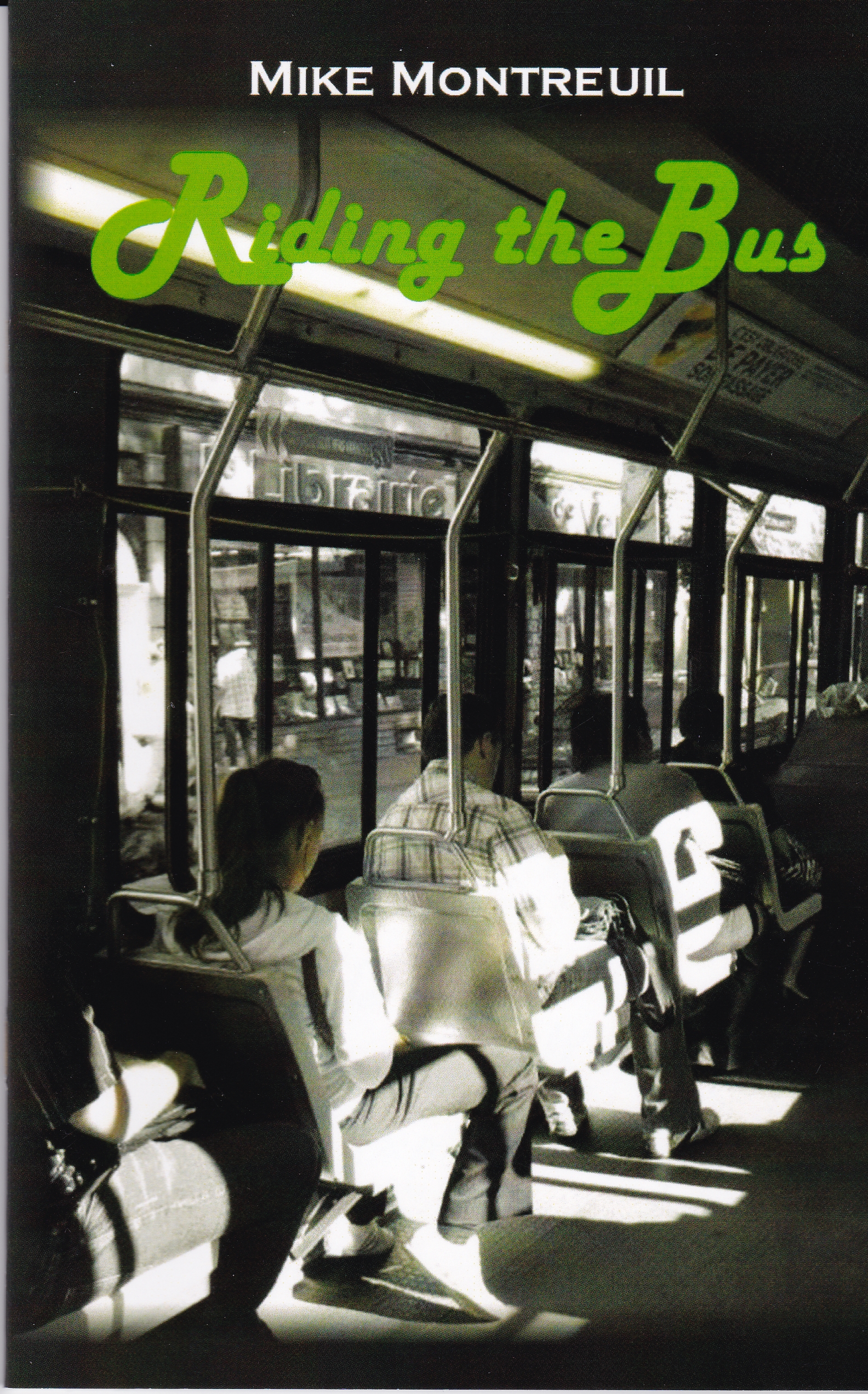
Riding the Bus, by Mike Montreuil (2011, Bondi Studios)riding the bus coverWhen Mike Montreuil took the bus every day to work in Ottawa, he was often thinking poetry, looking at his world through a haiku poet’s eyes. Contrary to supposed tradition, his haiku often had no season word from nature. There were not too many dandelions growing in the aisle. He had to look elsewhere.

These are urban haiku.

skateboard in hand/ he walks his children/ home from daycare

At first it seems no more than a casual observation seen from the bus window. Except, yes, there are possible season words here: skateboards can be used in three seasons, and daycare is open all year round. So, season word of a kind. What I like is the scene of young children with a father who is not all that much older than they are. You can almost hear a conversation. What might they be talking about, and why is the father not at work.  If he isn’t working, why isn’t he taking care of the children. There are a thousand ‘ifs’ and ‘mights’ in the scene, but that’s what is intriguing about it. Mike has told many stories in a few clear words.

city intersection/ two women in a truck/ kiss

No season word, and a few seconds only of seeing the two women. The poem in context of 2011 is poignant. New laws, the media and social media slant the  scene.It’s a tender moment. There isn’t much time at a city intersection to kiss, but they’ve seized the moment. It’s tender too as we know nothing of the two women. They could be sisters or mother and daughter, or friends. I like the open-endedness of the haiku.  There is a lot left up to the reader. While most readers will think ‘lovers’, many would disagree. One thing is evident: the scene is not, in 2011, considered outrageous.  And Mike may have been the only person to have even noticed them.

morning light/ the split ends/ in her hair

Tiny details usually pass unnoticed.  As an overly sensitive teenager, I used to worry about what other passengers on the bus thought of my appearance.  Of course, probably nobody even noticed me.  This haiku offers atmosphere, a fuzziness perhaps. The morning light is so soft, or, equally, overly harsh. We on the bus are not even fully awake. It’s as if in trying to wake fully, the poet just happens to notice someone’s hair, and before his gaze moves on, that one little thing sticks in his consciousness: split ends.

Family experience tells him that women are not happy if their hair has split ends. This is where the poem opens up.  Whose hair.  Why split ends. What is this woman’s life like. Does she care about her hair. What connections is the poet making. Or is the poem simple observation, like looking at a photograph or painting, possibly in a half doze. The difference here is the attention given to the experience.

long winter/ the stretched seams/ of her spring skirt

Can you picture this person, so tired of wearing her heavy winter clothes? As if by wearing her new spring clothes she will bring spring on more quickly? We know season here, the spring skirt as Canadian entry in a saijiki or kyose. (A saijiki has a list of kigo, (seasonal terms), as well as a description of the kigo itself, a list of similar or related words, and some examples of haiku that include that kigo; a kyose is simply a list without the.)

In the ‘skirt’ and its stretched seams, sketched in nine words, the poem suggests a national weariness with winter, as well as a glimpse of the wearer, someone who, perhaps, has had to buy an inexpensive skirt, or one that does not fit as well as it could.

This chapbook collection, with its perfect photograph on the cover by Carole Daoust of Montreal, tells writers not to let the moment pass. There can be a world in a few seconds, whether in split ends, in a glimpse of a skateboarder or through a truck window. It’s as if William Blake were on the bus.

Next time you are on a bus or train you may notice something quite small, like this, that deserves its own poem:

sunshine on her feet/ the blond/ toe hairs

Thank you Mike, for this view of the city.


From Literature to tanka, Part II

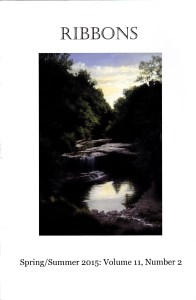
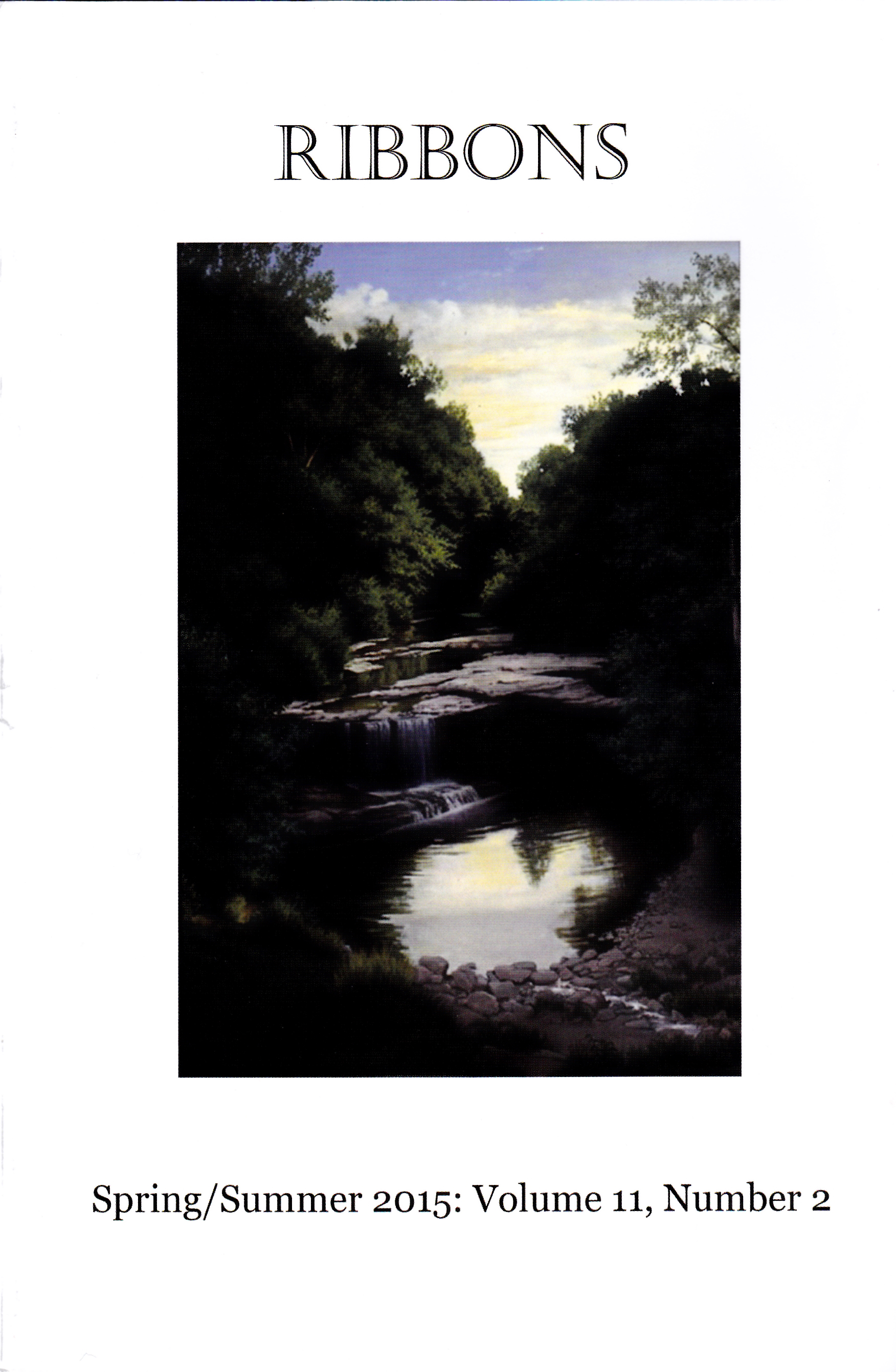
More from the Spring/Summer 2015 issue of Ribbons, the Tanka Society of America Journal, and its theme of tanka based on novels.

ribbons spring summerFor those willing to let themselves feel it, any story leaves behind something at the center, other times at the edge of perception, and poetry’s work is in part, to take up that residue and remnant.

In her tanka, her own identification with the protagonist of a novel by Nina Schuyler, Amelia Fielden courageously writes:

The Translator: / how much like Hanne’s story/ might mine have been/ had I chosen to stay/ with a Japanese lover

translatorI’m impressed by Fielden’s honesty; her life experience means that her tanka are never dull. It’s clear that not choosing to stay with her Japanese lover was a pivotal experience in her life. One of the things I like about tanka in general is the opportunity to let down your hair, let others know who you are, share the richness or poverty, physical or emotional, of your life. Tanka readers are listeners. You know there will be a listener.

That ‘might’ may indicate simple nostalgia, simple memory, or regret. I like its open endedness.  This poem could be about a secret she has been longing to share; I can imagine her intensity as she was reading The Translator, how well she must have understood Hanne’s emotions and her struggles. In five lines Amelia Fielding has said all that.

Linda Jeannette Ward goes into the psychological center of one of the characters by writing:

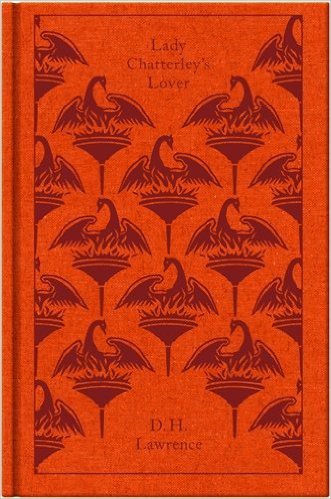
at the thrift shop/ Lady Chatterley’s Lover/ is falling to pieces/ I see she contains herself/ no better than I

chatterlyWard’s three choices of phrase, ‘falling to pieces’ and ‘she contains herself’ and ‘no better than I’ puts you right inside her mind. Lady Chatterley, thanks to D.H. Lawrence, has become a part of the poet; ‘no better than I’ shows a vulnerability, the kind of thing that makes us worry about ourselves. We bring ourselves to a ‘station’ in life, but know there are darknesses within ourselves that might one day make us crash, or simply react without thought of consequence.

You can imagine yourself standing in the store with her, surrounded by clothes and household items. It smells a bit musty. She has an ironic look on her face, yet you sense that what she is feeling is deeper than irony. You want to be able to ask if she needs a shoulder to lean on, if she’s okay.  And then she will laugh and you’ll go for coffee.

ashesthe Guilt/ indulging in this hearty/ Irish boiled dinner/ beneath its savor, a taste/ of Angela’s Ashes

Autumn Noelle Hall brings back the guilt (oh that wonderful  capital ‘G’!) we try to suppress when we feel particularly replete; it brings back our mother saying ‘Think of all the starving children in China”, and the images of famine and war we have just seen on the news or passed over in the newspaper. How can we eat after all that. But we do, we carry on as if such terrible things don’t happen to real people in the world.

The inspired pairing of ‘…hearty/ Irish boiled dinner/’ with the word ‘Ashes’ leaves you with the sensation of ashes in your mouth. It’s a visceral reaction; the poem leaves you uneasy. Frank McCourt makes us feel uneasy. Fiction can hit truth close to the bone. In the few words of a tanka, Hall reminds us of the history of the Irish people, contemporary and in the not so recent past. It’s a reminder that it’s in the Irish character that their history is alive for them every day of their lives.

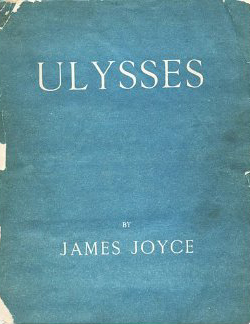
“a rose in my hair/ like the Andalusian girls…/ yes I will yes”/ should I change my name to Molly

ulyssesSemi-quoting, lifting words from the glorious ending of James Joyce’s Ulysses and using them in a tanka… I take my hat off to you Kath Abela Wilson. It’s genius!

Readers tend to become engrossed in the lives of Leopold and Molly, empathising with them over the loss of their son, their issues, their friendships, their passions. We ache to be brave enough to live as fully as they do.

But if Leopold Bloom functions as a sort of Everyman, then Molly functions as every woman, a strong woman, an ardent woman who does not want to let life pass her by. There is more than one reason for a woman yearning after ‘Mollyness’; the two last lines capture that yearning.

In creating new poetry from the writing of another, the poet identifies in his/her personal way with the original author, and the new poem gives the original work an indefinable immediacy. Poets sense an underwritten suggestion, think ‘maybe I’ll go back to that novel too’. There, tanka writers, your work is done!


From literature to tanka, part 1

ribbons spring summerThe Spring/Summer 2015 issue of Ribbons, the Tanka Society of America Journal, highlights the theme of Novels.

The editor, Michael McLintock, introduces the theme with a memory of being a six year old walking out of the library with a real novel, his first. It was Stowaway to the Mushroom Planet by Eleanor Cameron (Little Brown and Company, 1956). He tells of his terror and excitement. I can remember that feeling the first time I was allowed to choose a book that was not in the children’s section. My book was Josephine Tey’s The Daughter of Time, and I took it home feeling very grown up though I was only ten.

We who love reading and poetry have often felt that excitement. It hangs around in our heads for a while, and we don’t want to let it go.

When we write a poem about a novel we’ve read, we get to relive that excitement and let ourselves fall back in time to the books that have changed ou lives or that were exceptionally memorable. It gives us a chance to get inside the book again, and create a new poem from inside the beloved pages.

Literature does many things for us but writing tanka or other literary forms from older literary works gives us a stake in the original story, taking us out of ourselves or deeper into ourselves. Either way, something new is made, and adds to the literature. The challenge is to put a whole novel into five lines.

catcher in the ryegorman tankaLeRoy Gorman has been a longtime supporter of visual poems. As editor of the Haiku Canada Review, he has accepted many such poems, aware of their visual impact and how a visual arrangement can affect the meaning of a poem. Here he arranges the lines into an upside-down A, but the lines step down carefully and deliberately to the possible result of a decision he has to make.

We don’t know whether the student’s work deserved an A, and this hidden aspect heightens the conundrum in this poem. We wonder if he did give her that mark, and the shortening of each line takes our breathing into account as we read it.

Because she loved J. D. Salinger’s fictional rebel in The Catcher in the Rye, possibly because she is one of his few students who actually read the book, Gorman wants to award her, ring the church bells, tell the whole world about it. The student became part of Holden’s life, and LeRoy Gorman celebrates a teenager’s realization of what a good book can do.

war and peace40 years later/ rereading War and Peace ―/ no longer Natasha,/ I’m old Drubetskaya/ fretting about her son

Angela Leuck becomes Tolstoy’s old Princess Drubetskaya fretting, as we all do, about our sons and/or our daughters. Once in a while what we are reading comes so close to personal experience, we stop breathing. At present, reading this poem, I fret about my son far away, and he is forty-eight years old!

Every woman wants to be the gorgeous Natasha. I like that ‘no longer’. She’s been trying to be Natasha in one way or another, perhaps in fantasy. To change, to suddenly prefer being an old poor woman because she knows love in the truest sense surprises the reader. The poem is full of empathy for the long suffering and the powerless. Creating new poetry out of that empathy honours the original work, and gets us thinking more about minor characters in literature and in our own lives.

farewell to arms

the last pages/ of Farewell to Arms/ so unbearably sad/ I play Moonlight Sonata/ again and again

Literature affects. Sometimes it touches so strongly, we have to do something about it. Immediately, right now, before we drown in the feelings the writing has stirred in us.  Luminita plays music, and she writes tanka.  She also has the gift of writing tanka that are concise and precise.

Key words are ‘again and again’, Moonlight Sonata after Moonlight Sonata until the sadness is driven away. Until we come back to earth and see that beauty can help counteract sadness.

Michelle L. Harvey loves the English classics:bronteausten

the old cow pasture/ where it meets the sky/ good enough for Austin and Bronte/ and falling in love

Harvey has entered the lives of the two writers by reminding us of scenes they would have encountered daily. The tanka puts us in a romantic mood, perhaps for some of us, our ancestral roots. It makes us want to go to that pasture and talk with the novelists, ask them how, from such rural settings, they thought to become writers.

I like the line ‘where it meets the sky’. It acts as a symbol of where the writers saw themselves and their writing. They escaped from the cows into worlds of their own making, far away from the everyday. Women of vision. Suddenly we want to go for a long rural walk, watch some cows, see if the cows will inspire us too.

a fine balance

for years I’ve sought/ relief from the seesaw/ of my life…/ today I finished reading/ A Fine Balance

How many of us go through what Dawn Bruce talks about in her first three lines. She’s just finished that novel and perhaps looks up, looks around her and realizes how fortunate she is. A Fine Balance is overwhelming; the lives of its characters are so difficult and they survive on so little.

Characters in the novel are caught up in the middle of great political and economic difficulties, and as always, it is the ‘little man’, the ordinary citizen who suffers the most.  In this novel, dignity is a silent character, its personal defining, its loss, its murder.  Dawn Bruce’s fine poem turns on the fourth line. The first three lines are a simple commonplace remark. The last two hint at awakening.

Dawn Bruce says a great deal in these eighteen words. We look around us stunned after finishing such a novel. How good our life is.  How small our see-saw of troubles in comparison.

The use of the word see-saw is perfect. We’ve been moved by a novel, or come face to face with some other desperate truth, and it’s human nature to look for a way to not let it interfere with what we have. We go out of our way to avoid the homeless, grump because they park themselves outside our favourite Starbucks and we don’t like feeling our uneasy feelings as we exit with our lattes. Some publications of this novel show an image of a balancing act on the cover, but we are the ones balancing.

Poetry as a state of grace, as Susan Stewart says. In writing the tanka above, poets have caused books and literary characters to come to life, to be organically connected with our own lives.

Grant’s clouds and etc/ a few haiku

Why write minimalist poems, poems using plain language that can be snapped up in a few seconds, and left, the way studies have shown that in an Art museum, the average time spent looking at a painting is about 5 seconds. Let’s consider the following poems from the book Their White with Them (2006, Bondi Studios), by Grant D. Savage.

Haiku is a funny thing. The best are simple, just being and seeing, or being and hearing, or being. Being and noticing and not having to say much about it. One of the best facebook posts I’ve received and shared lately says: A wise man once said nothing.

Grant’s haiku almost fall into this vein. There is nothing forced about them. He doesn’t explain what he meant to say, or explain the haiku’s hidden metaphors. Usually there aren’t any.bee grant

cloudless sky/ a bee buries its face/ in blue mint

In this poem, Grant notices a clear sky, full of calm and ‘nothingness’, notices too a very busy little bee working its striped buns off getting at the pollen in the mint.  He leaves us to see the contrast between stillness and busyness, the pure clarity of the sky and the furry body, the stripes and whirring wings, the ‘nosing’ from bud to bud.  Subconsciously, or consciously, he was aware of all those things, but he doesn’t tell you ALL that it meant to him, ALL that he noticed, ALL that went through his mind at that moment. The poem is simply the noticing and the noting what is noticed down in a few clear words.

A bee buries its face― so simple, but so perfectly descriptive of what is seen. We can’t see the collection of pollen, we do see the body wiggling away to get at the nectar. Grant doesn’t describe the wiggling; that would be redundant as we’ve all seen the movements of a bee collecting pollen, have an image in our minds of what that movement is.

A cloudless sky. A bee doing what it does. Simple but precise recording. the rest is up to you.

In Grant’s photo above, the bee is not in blue mint, but you can see how closely Grant will look at a bee or any other insect.

EPSON scanner image
raindrops/ the curve of the pink iris/ half open

raindrops/ the curve of the pink iris/ half open

I like the sense of what will come in this haiku, a wordless prediction: the pink iris will open fully, unless, unless. The wording of ‘half open’, can point to the famous ‘half’ saying that we all know: the glass half empty or half full. Too much rain might be the ruin of the iris, but the right amount will allow a perfect opening, a fullness.

There is something particularly vulnerable about a pink iris. Iris petals to start with are so fragile looking, and the pink is reminiscent of a dawn sky, a baby’s lips, an awakening. Little girls and big girls and many of the male persuasion are attracted to the colour. I am. Flowers are sexual in nature to start with, but the pink iris touches the woman in me ― the delicate parts of a woman, flaunted in the pink iris.

lady’s slipper/ a bumblebee too fat/ to fit in

A frustrated bumblebee. A less skilled poet would try to put that word into the haiku, say that it is important to the haiku. The way Grant does it is to ignore what you think you know about how the bee must ‘feel’, or what it is going through mentally, so to speak. He also ignores obvious connections to how we feel in maddening situations; he lets us see the straight funniness of the scene. Give it up bee, it’s not going to work. Neither will we fit into those jeans from ten years ago.

The poem also plays with the roundness of the bee’s body, and the rounded parts of the wild orchid. An artist would play with those shapes, as Grant has played with the image in words.clouds

dusk in the yard/ clouds and fleabane/ a deeper purple

A couple of things come together to make this a wonderful haiku. Yes, it is, again, simple noticing, but you have to be in the zone already to notice how certain things complete each other.

The word dusk has this feeling, and it’s also a physical feeling in the throat. Say it, and feel the tongue meet the palate for the ‘d’, hear puff of the ‘uh’ in the middle, the sweetness of the ‘s’ and finally the ‘k’ , feel the back of the tongue meet the rear of the palate. The word itself is satisfying to the body.

Then there is the name of the plant. Grant knows plants, knows it is nothing else but fleabane. He notes the purple tints in the clouds, links it with the purple in the fleabane. There is a feeling of him sitting quietly, just watching as the purples deepen.  It is another example in which we get a sense of time; it takes more than a moment, but not much longer than that, to see everything he sees…

What it doesn’t do is take for granted that North Americans, or anyone, would look for a different (and some would say deeper) meaning given that fleabane is the symbol of exorcism, protection and/or chastity, in the way that Japanese readers of haiku might feel they understand a haiku better if they know all the references a certain word brings to mind. Nor is it important to this poet that its name derives from a belief that this plant repels fleas. We are merely expected to see what Grant sees and experience that with him.

light in the wings/ of the shadow/ of a dragonfly

Here attention is given not only to a dragonfly, its wings, and its shadow, but the poem points out that even in the shadow of the dragonfly’s wings, there is light. He may be describing notes of brilliance, reflections from water… but whatever kind of light he sees, he leaves it up to you to imagine. The poem is a direct invitation to look beyond surface, to look through to find whatever may be subtly hidden there.

Apart from the concrete aspect of the poem, in the progression of its three phrases: in the wings, of the shadow, of a dragonfly, the first preposition leads to a word of one syllable, the second to a word of two, and the third… you see where I am going. Grant may not even have noticed what he has done, he does it so naturally.

There is lightness, fragility in the wings in the first line, almost a dance.The ‘sh’ of shadow in the second almost tells the reader to be still. The poem is rounded off with the very solid ‘d’ sound of dragonfly to ground it. I’ve always thought there should be a different word for this ethereal insect. ‘Dragonfly’ has a certain whimsy to it, I admit. But in this poem, that heavy ‘d’ sound is well placed. The poem aurally goes slowly from light words to a ‘heavier’ word.  I say slowly, because it seems like this is a slow poem, that Grant sat or stood watching for a while, and eventually went away. Satisfying.

Here is a last, for now, haiku ― another summer poem:

quiet afternoon/ only the silent growth/ of cloudscloudmountain DSC_0099Each part of the haiku points both to the physical aspects of our world/universe and to the self, written by a quiet man ( for the most part) with his quiet views of the world that expand, renovate, and intensify experience.

All the photographs in this post are by Grant D. Savage, a man of many talents.

Connections

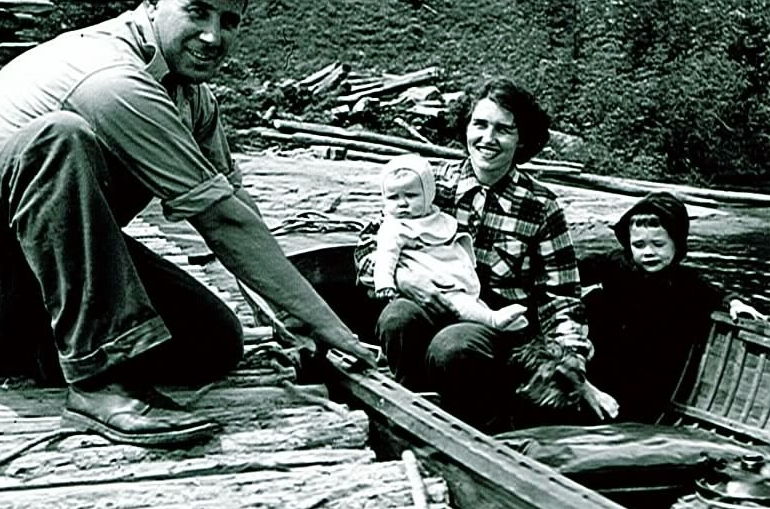
len and muriels and childrenPhoto: Len Budgell, his wife Muriel and their two oldest children while on a Northern Hudson’s Bay posting, mid 50s.

When Len Budgell and I met in Winnipeg, there was an immediate connection. I asked him in for tea on the winter afternoon when he’d delivered a friend to our house from the airport.  He accepted, and that was the beginning of many hours of conversation, visits, getting to know each other and each others’ families. The letters came later, once I moved away.

But as our friendship galloped along, we found we were connected in many odd concrete ways, as well as our love of nature, of reading, of writing…

In a new collection of his stories I am putting together, there is one called ‘Mercy Mission.’ In August of nineteen-forty five, shortly after the end of World War Two, a small vessel, the Fort Severn, left Churchill, Manitoba, bound for Repulse Bay some six hundred miles north. Repulse Bay was then a tiny settlement sitting directly on the Arctic Circle and the only non-native residents were the HBC Post manager and his wife, Dave and Margaret Drysdale, and two Roman Catholic priests, Father Henry (French Oblate missionary, pronounced like ‘Henri’)  of “Kabloona” fame and Father Bazin.

The Drysdales were supposed to go south on the Severn, as they were expecting their first child, and her time was getting close.  Optimistically,  and because there had been no interruption in the sea-lift from Churchill in the previous twenty-seven years, Drysdale had no reservations about depleting his supplies at Repulse Bay in order to stock a Trade Camp about one hundred miles south. Accordingly a Peterhead boat was loaded and dispatched to Wagar Inlet in August, leaving the shelves at Repulse Bay bare in readiness to receive the new supplies then enroute from Churchill.

However, that year the usual supply ships, Severn and Neophyte  could not get through the ice, leaving the Drysdales stranded without food or medical help, without fuel. As the winter deepened, they started to break up the furniture for the stove.

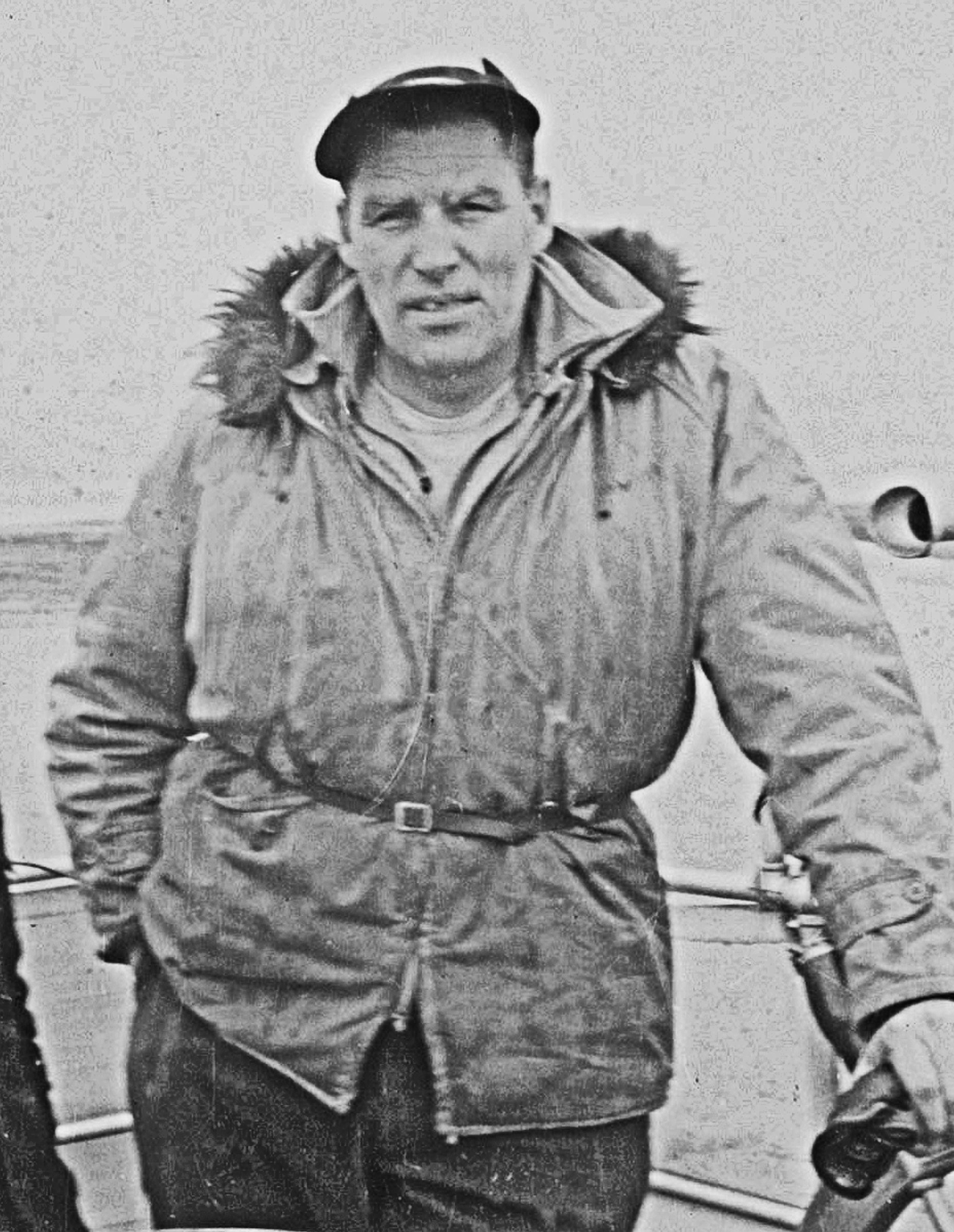
The Hudson’s Bay Company was fortunate in that it had, in the person of Harry J. Winney, a very experienced bush pilot who was willing to fly to the Arctic in bad weather.H J Winney pilotThe personnel manager of the H.B.C. Fur Trade Department wanted Len to go with the plane to Repulse Bay, stay there till the following summer, and return to Winnipeg via the supply ship in the summer of 1946.

Len’s account of this journey is remarkable. The weather was as bad as it could be and they had to make two attempts, losing time because of storms, and having to wait in Churchill. Their aircraft was a Noorduyn Norseman, a wooden framed aircraft covered by canvas and doped against the elements, a fragile barque in which to brave the Arctic.

Once they got there (without the instruments available today…) the engine caught on fire, destroying the canvas cowling…How they got back to Winnipeg with the plane is this condition is worth waiting for the next collection of Len’s writing. For this story alone, the new collection is a goldmine.norseman repulseHere is that same Norseman in Winnipeg waiting for repairs.  But that’s not what I started to talk about.

Connections: Well, it turns out that my mother most likely had sewn the canvas onto the wing of that very plane when she worked at Noorduyn Aircraft Ltd in Cartierville, Quebec.  This is a photo from the Montreal Star. Because it was 1943 and Canada was at war, neither the name of the Aircraft company nor its location, are mentioned in the caption. My mother is sitting, looking up at a co-worker.scan0002What’s more, my fatherwho also worked at Noorduyn’s, had probably sprayed the layers of dope onto its wings.  I have photos of my father standing beside a Norseman as one of the crew that built her.

The connections didn’t end there: twenty years later, in the late 50s, my father went to Baffin Island with the Shell Oil Company, where he met, and became friends with, the same Father Pierre Henry mentioned above.  One of my father’s treasured possessions, and now mine, was this photograph given to him by Father Henry which shows the missionary Oblate shaking hands with Pope John XXIII. On the reverse side of the photo, Father Henry has written a personal message to my father.Father Henri with pope John 23rdThere were other thing that made us close, deeper connections based on more subtle things, most of which could never be photographed.  The ones I’ve written about here would never even have been discovered had we now embarked upon such a long and deep friendship.

Len liked to write and he liked to yarn; he liked writing so much that he would be up at 5:30 nearly every day of his life writing to someone, not only me. Several people have let me know they have bundles of letters from him. Len was pleased that his letters and stories might sometime see the light of day but from the start he was content knowing that someone else loved what he loved, and the places and people and nature he cared about.

How I would love to be back in time waiting at the post box for his next 20 or 30 or 70 page letter. Writing back. Connecting.

Photo credits to the Budgell family and the Hudson’s Bay Archives, Manitoba.

Above the Hum of Yellow Jackets

Above the Hum of Yellow Jackets, Carol A. Stephen (2011, Bondi Studios)cover hum carol your sideswipe smile, thin lips only/ no eye involvement/ just enough to bait your trap/ no longer enough to spring it/ lost widows and orphans control

Here is a chapbook to delight. You know someone just like she has described above, don’t you. And don’t you wish you’d written a poem about him/her…Carol’s deft word choices, facility with metaphor and connections to the here-and-now make her poems comfortingly precise and on point.

The excerpt above is from her poem ‘no eye involvement’ from this chapbook; I love its perfect title. Carol lives in Carleton Place, a small town, our small town, but her poems encompass the places she has been, her neighbourhood, her garden, as well as emotion, description and philosophy.  When she takes you to a place, you will discover something you never knew or never noticed before.  Or you will discover it anew from inside yourself.

From ‘I enter the Museum of London expecting the usual mummies’.

Chill bathes my arms in wonder /so strong I catch my breath / Here are roots of family and / history: this place, this city where / ancestors walked. Connection. / My shoulders soften into the / sense of yes, of coming home.

There’s a sense of reeling, of changing your preconceptions, the relief of finding what you’ve never known you’ve lost, the ‘yes’ of self recognition.

She uses sound to enhance that physical rounding of shoulders: bathes, arms, so, strong, roots, history, place, ancestors, shoulders, soften, sense, yes… all the ‘s’ sounds and the soft ‘c’.  She is recognizing ‘home’ in the London Museum, but home also finds its place in her.

carol author photoCarol can also be funny and political in the same poem, this poem for example: ‘Concrete saints are lining up along the curb’:

…of garden gnomes no longer ornamental but / spiritual leaders in the suburban sprawl of // disillusioned former employees displaced by / off shore workers paid in rupees or pesos…

I am particularly fond of a poem in which she describes that neighbour in every neighbourhood , the busybody, the know-all with the eagle eye and ear, but you will have to get a copy of Above the Hum from Carol by connecting with her blog, Quillfyre, in which Carol collects and disperses poetry, along with information about what is happening in the Ottawa Region poetry world.

I am very pleased to have been one of Carol’s first publishers. Carol has since published other chapbooks: Architectural Variations, (2012), Ink Dogs in my Shoes (2014, Nose In Book Publishing, B.C.) and a third with J.C. Sulzenko, (2015, Nose In Book Publishing).

https://quillfyre.wordpress.com/

More on taking risks in haibun

Jane Hirshfield writes that to read a haiku is to become its coauthor, to place yourself inside its words until they reveal one of the …shapes of your own life. If the listener/reader can do that, can settle with those few words of a haiku, listen to them, curl them around in her mind, live with them for longer than a few seconds, climb inside them, consider their flavours, then the poem may begin to affect a life the way a great piece of music does.

celesta's writing croppedHaibun offers the chance to do that, but also to understand how the prose is affected by the haiku, how the two parts reflect off each other, changing the meaning of each part, or enriching it, backwards and forwards.  When either part is unusual for one reason or another, we get to think about that, about why the writer put those two parts together, decide whether the pairings work, and why or why not.  When a respected poet does something outrageous, we accept that something completely new is in the making.

When in Drifting (2014, catkin press) Marco Fraticelli set out to create haibun from a ragged set of papers, bills and journals, written by an unknown woman in the early 1900s, he did exactly that. He got to know Celesta Taylor so well, first by reading every scrap she left in that abandoned cabin, and then by paring her words down to the few that best told her story.  It is as if he became Celesta, until her story began to merge with his own life, until she and he were ready to coauthor the haibun in Drifting.

One might be surprised that a man wanted to take this on, or feel that a man would miss the subtle parts of what she chose to record, not only her emotions, but the details like canning tomatoes, doing the mending, her thoughts about God. However, to read the excerpts he has chosen tells us he understood her well and thoroughly in 1905 and through the following 11 years, felt close enough to Celesta to feel what she did, see what she did, and act as she did. He becomes Celesta. There’s a feeling of conversation between the Celesta who was and the Celesta he has become. This is me, Marco, wanting to communicate with you, Celesta Taylor.  I feel I know you. It’s a conversation that begins:

Henry gave me this diary/ an old one of his/ so I like it better than new. (November 6, 1910), a haiku he has created from her own words.

Celesta’s diary begins in 1905 when she writes about her teenage sons away at school, about going to the doctor about her arm, and reporting that the mill caught fire. The mill belonged to the man and his daughter that she was housekeeping for. Each of these entries a month apart were marked with a mysterious ‘X’. Half the world’s population will get this right away.

The haiku following these three entries, written by Fraticelli, form links with her words, yet also with his own life, for this is something he himself has also done:

I sprinkle ashes/from the woodstove/onto the compost pile

After a difficult month, Celesta barely mentions Christmas, 1905:

December 18, 1905: Henry’s surgical operation.

December 20, 1905: Henry sat up a few minutes.

December 21, 1905: Grandpa died.

December 25, 1905: Christmas. Ploding about as usual.  (Her own spelling)

Marco responds with: boxing day/I light the fire/with wrapping paper

Using found material in any poetry can be risky. Yet in Drifting, Celesta Taylor becomes real, and her story mesmerizing, for these are her own words, her own experience, her own feelings, and her lover’s ultimate betrayal. Drifting is a collaboration happening across a century.

In his further investigations in using haibun, Fraticelli has put together a small chapbook of selections from Fragments, a work in progress.
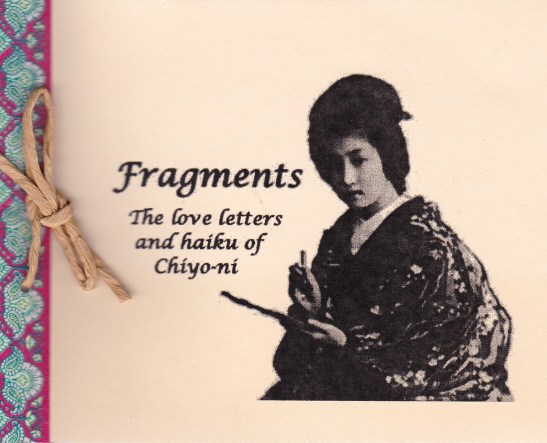
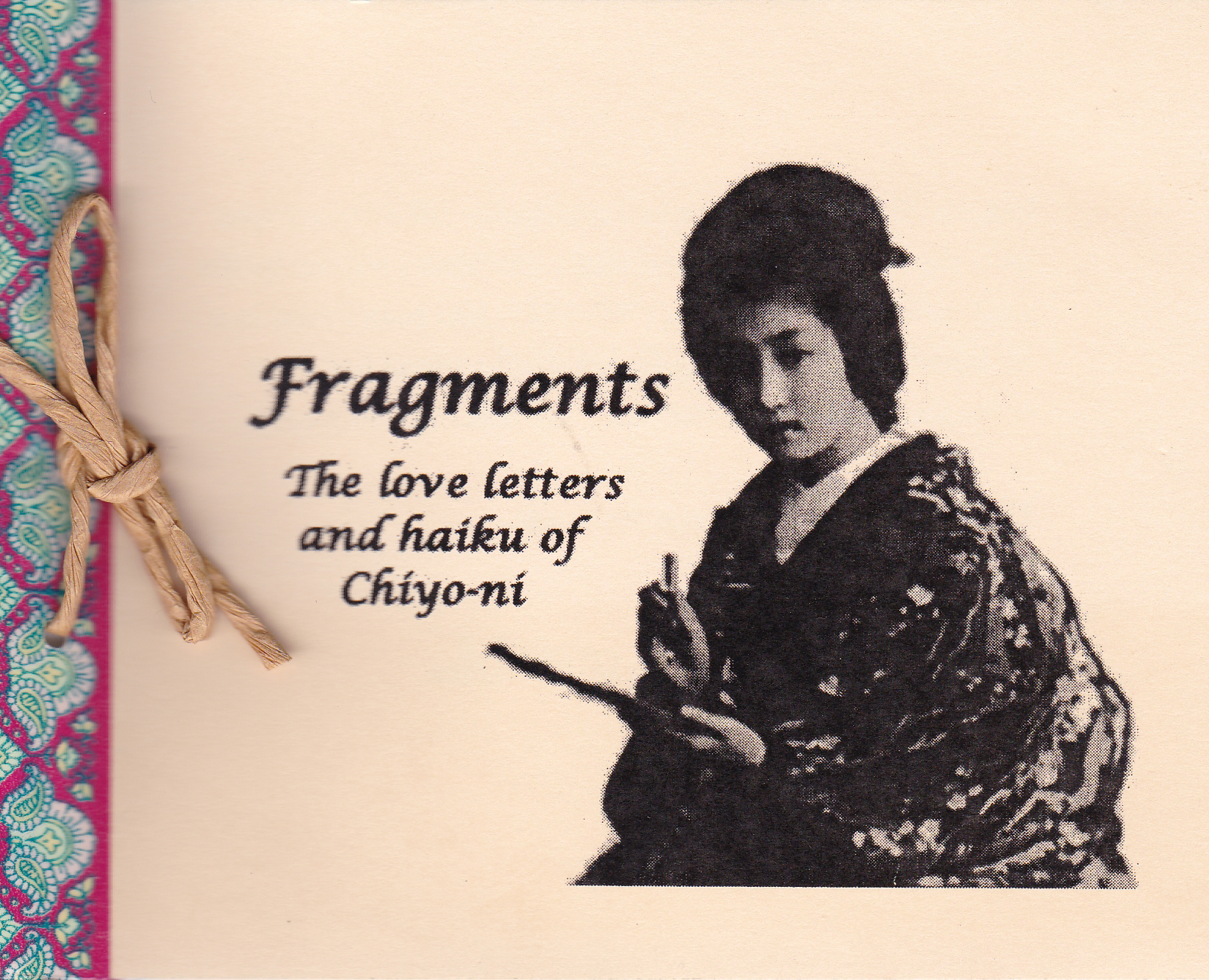
fragments cover Also called Fragments, (2014, King’s road Press) in these chapbook poems he works backwards from Chiyo-ni’s haiku, creating the prose in Chiyo-ni’s voice. The imaginary premise is that letters written by Chiyo-ni have been found in a Buddhist temple. Marco ‘edits’ these invented letters, and follows the prose with one of Chiyo-ni’s haiku:

I can’t imagine that I will actually ever send these letters to you. It is more likely that they will be found under my pillow one morning when I do not return from my final dream of you.

 I also saw the moon/ and now, world/ “yours truly…”

Recreating a poet from made-up letters, now that is amazing, Mr. Fraticelli.

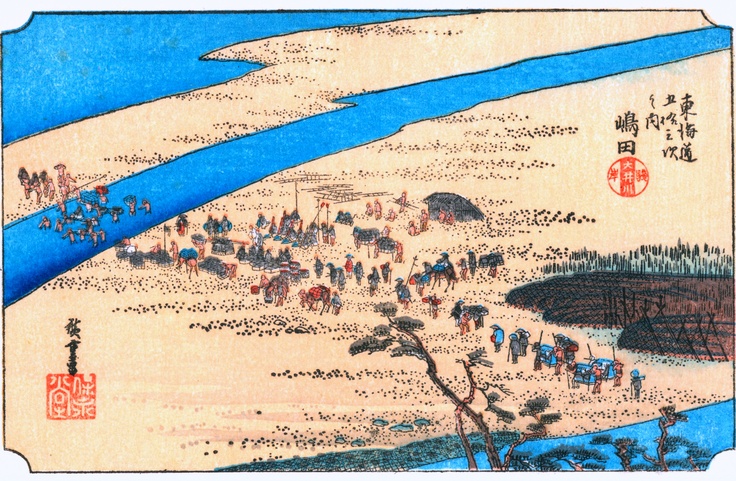
Terry Ann Carter of Victoria, B.C., is writing haibun from another unusual perspective. For a long time she has been in awe of the set of woodcut prints known as The Fifty-Three Stations of the Tokaido, for which Hiroshige (1797 – 1858) painted the originals.

shimada

Widely recognised as one of the true greats of ukiyo-e art, Hiroshige was a prolific artist who specialised in painting landscapes and adopting Western techniques such as perspective.

Hiroshige was not a printmaker. He painted the pictures which were then used as guides to be pasted onto woodblocks by the woodblock carver and his apprentices. One block was needed for each colour, and sometimes as many as twenty or thirty blocks were needed. A carver would train for over twenty years before he was allowed to touch the finer parts of a block.

Then the blocks were off to the printers. Each finished print was the outcome of registering each of the many carved blocks over the previously printed colour so that the lines and colours fell in exactly the right place. It was a complicated system of keeping the papers damp, and having highly developed complex colour and printing skills, knowing about changes in pressure, in the brushing, variations in the proportion of pigment to paste, in the way the pigment pools subtlely at the edge of the printed shapes, in the types of brushes used. Hiroshige had the easy part, though he is the one who gets credit for the prints, just as Picasso did.

The Tokaido was one of several important roads constructed by the Shoguns to increase their control over the country. In 1832 Hiroshige made the trip to Kyoto as part of a delegation sent on behalf of the Shogun. Upon his arrival back in Edo he immediately began work on a series of prints that would become known as The Fifty-Three Stations of the Tokaido.

All that to explain the fascination of the prints from an artistic point of view.  Ms. Carter sees this side of the prints, and has envisioned Hiroshige as he walks the Tokaido, putting herself into the mind of the painter, but linking it to her own world. We shift from 1832 Japan to 2015 Canada in these poems.  Although Hiroshige was looking and sketching landscape, he could not escape his own concerns, such as how to survive as an artist and maintain his own political integrity.

In her haibu, she walks the path with the painter and suddenly realizes the world crashing in on her meditative or reflective state. In this haibun, she and Hiroshige arrive at Station 23:

Station 23: Shimada

How Best to Cross a River or a Stream

You always said try holding it together for a change. But I’m battling depression. My body a tripod with the help of a walking stick. A hiking manual deleting the part about shallow water. Your answer to everything…elliptical. A poet writes about being a kid. Seeing his neighbour drown a sack of kittens one cold November night. That river too wide to cross. Does anyone listen to Little Walter anymore? My eye surgeon cutting into the heart of me. All that I see. My father crossing North Africa. 1943. Rommel on the run. These trajectories at the lookout, north of Black Mountain College. On the North Carolina switchback they call Blue Ridge.

triptych/ painting of a chair/ a chair and sumi-e

I once was at a weekend workshop in Connecticut with Jane Hirshfield and Robert Bly. The simplicity and honesty in their approach to poetry was remarkable. My respect for what she writes tripled, and it was mighty to begin with.  She writes: To plunge one thing into the shape or nature of another is a fundamental gesture of creative insight, part of how we make for ourselves a world more expansive, deft, fertile, and startling in richness.

Here we have seen Terry ann Carter and Marco Fraticelli ‘plunging’ into the lives of others, creating, through ‘sympathetic magic’, opportunities for the rest of us to experience those lost rich worlds.


A Magical Writer

KONICA MINOLTA DIGITAL CAMERA
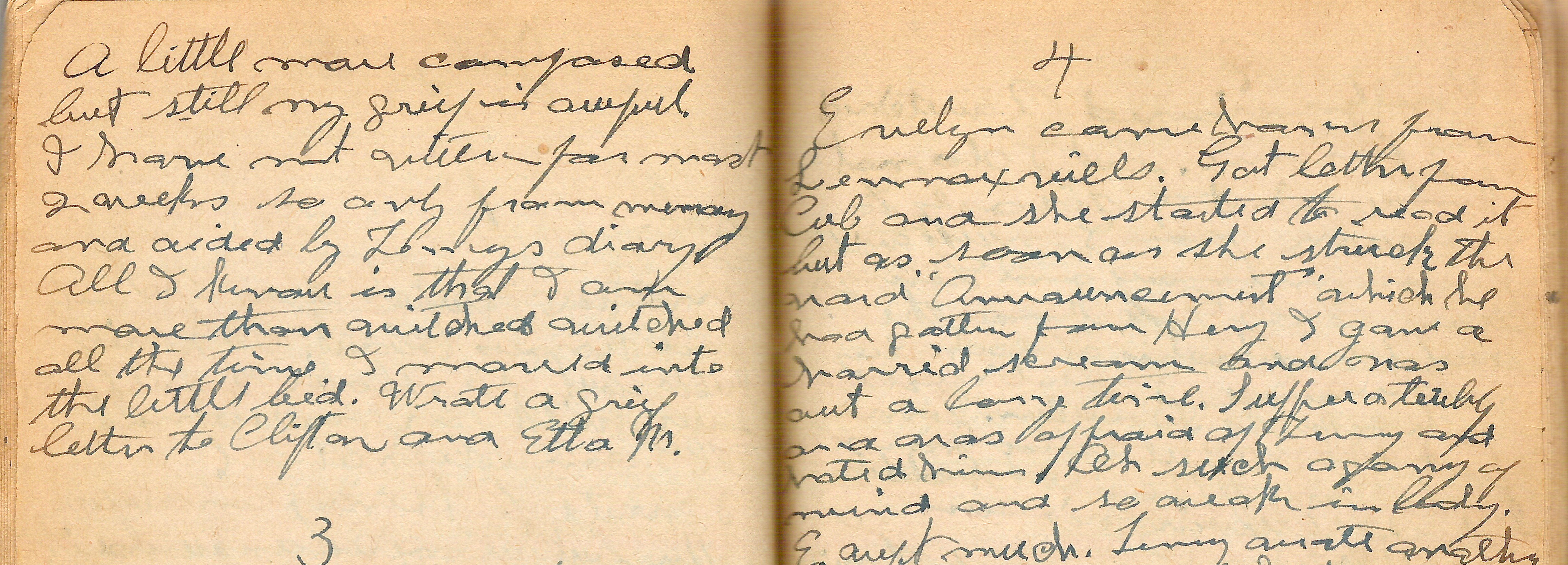
Leonard Budgell’s handwriting

Catherine Whiteside, an early reader of the Arctic Twilight manuscript, wrote:

“…Len often argued that the Arctic is the most beautiful place on earth, despite the barren, stagnant perception it has suffered from. In his descriptions of a walrus breaking the surface, or of an osprey soaring in the skies, Len really brings this beauty to the reader, convincing us that he is right in thinking so.

While the stories found in these letters are often gripping, it is the beautiful, whimsical nature of Len’s prose that really sets this book apart. Even the simplest of circumstance is given the most evocative of stylistic treatment, turning the ordinary into the extraordinary. For example, when describing Montreal in winter, Len says that “Montreal wept all the while. She was grey and foggy and her streets were dripping. She had nice white petticoats on Mount Royal, but her downtown linen was soiled and she hated it.”

He was as precise in describing the men and women he grew up with, trappers, ship captains, the men and women at the trading posts and small communities or in the ‘bush’, as well as on the ships he worked. Here, in short, is John Blake:

And John Blake, the one-armed skipper of our little schooner. He could do what any other man could do, including go aloft in the masts. He could square a lot as true as any man using only his one hand, which handled that heavy broad axe like a chipping hammer.johnblake003

Len knew how to tell a story, and he tells this one about his canny father, and John Blake who also trapped. Both Leonard and his father admired the trappers who came to Rigolet and North West River, and felt they should get their due. Here you can see how his father George, the Hudson’s Bay Post Manager, could do some setting up of his own:

Once I remember a trapper who badly needed the money, who came in with a choice silver fox when the price was a thousand dollars or more, before the fox ranches. Looking at the skin, my Dad discovered that the ears were tainted. The fox had been buried in snow and so preserved, but the ears had projected above the snow and it was a bad case of fur slip. My Dad told the trapper that the damage would discount the pelt quality, and advised him to hang on to the skin till one of the travelling fur buyers came by. (fur buyers who were in competition for the furs.)

One did, quite soon, and as usual he came to our house. At supper he spent a lot of his time telling my Dad that HBC traders were too conservative, scared to risk exceeding their tariff. He said, “I can buy any HBC man under the table.” So my Dad sent a note to the trapper, told him to bring his fox to the house and ask for the travelling buyer.  When the trapper came, my Dad pretended to be surprised and demanded a chance to value the skin.

Of course, Len’s father, pictured below, outwits the travelling fur buyer. The full story is in Twilight.

George Budgell

As to the Bill Cobb whose name you can see in the handwriting photo above, here he is, more completely, as the story appeared in the manuscript. You can see how Len was able to portray character in a few words, and how well he could remember the exact words of a conversation:

Blair Fraser, who was an editor of Maclean’s Magazine before it became an echo and a copy of Time, came to Sandy Lake once. He stayed with us and remarked that Canada seems to have a record of fifty years of trying to get rid of the native population by neglect, then fifty years of trying to get rid of them by overindulgence. He was accompanied by Bill Cobb of Hudson’s Bay Co.  Bill was a clerk with my Dad when I was a little shaver. He’d been around among natives for years, and so had I.

Fraser, when he first arrived, was a real white man. As he said, he felt like an evangelist when he came to places like Sandy, we knew so little of what went on outside. And he discussed Indian Affairs and the people he knew in the department and what they planned. All the while I could see Cobb’s neck get redder and redder and I knew that mine was too.

Fraser, who was no fool, stopped talking and said, “Do I feel a resistance to what I am saying?”  The dam broke and we hammered the poor man unmercifully, he whose weekly political broadcasts were listened to by thousands of Canadians. Finally when he got a chance he said, “Could I, could Ottawa, be so wrong?” and I’ll never forget that Cobb said: “If you live for forty more years you will see just how wrong you are. You will see the destruction of two ways of life, two native peoples, in that time.” 

The story happened sometime in the 40s or 50s. Bill Cobb knew then what was going on. He and Len saw what was happening to the native peoples they knew and respected. It broke Len’s heart as the years passed that the damage was not being rectified, or even acknowledged. In some ways it is good that he is not around to see how little has been done to ensure that aboriginal people in Canada can lead the lives they deserve.