Sunset at Thunder Cove

Never think Japanese Poetry doesn’t get you anywhere…I offer proof that it can offer glorious unexpected gifts.

If I hadn’t been a Japanese-form poet I would not be part of a most amazing family: Haiku Canada, with sisters, brothers, and cousins one with the aim of writing the best of Japanese forms.

Deep connections allow for the most elegant challenges available in any poetry, along with all the help one needs to learn to write it and/or enjoy it.

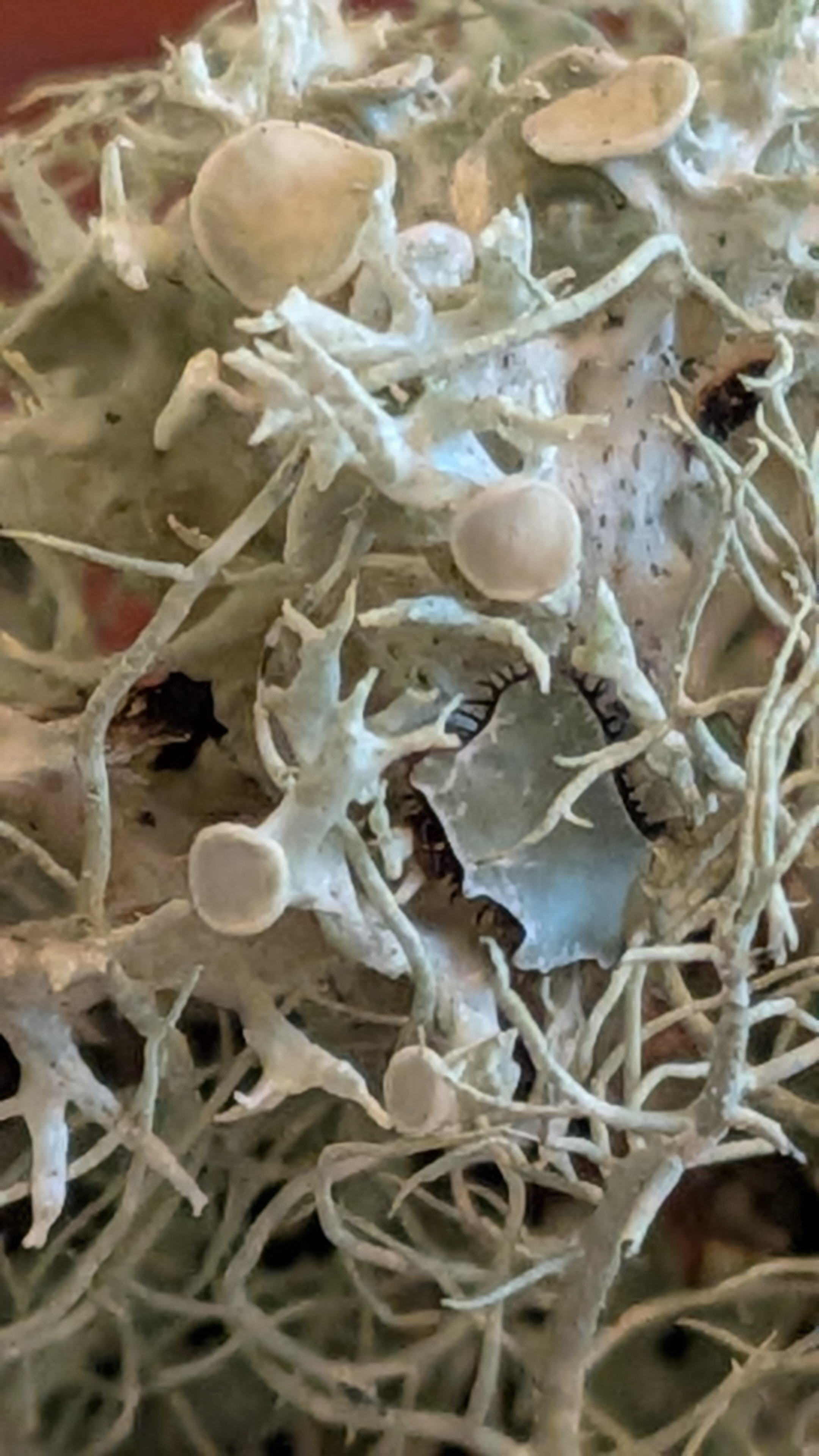
It’s like Graphis scripta, the lichen that is like the secret writing of trees. You have to know about it. Getting to know Haiku Canada people, well, it’s the best secret ever, but one we love to share.

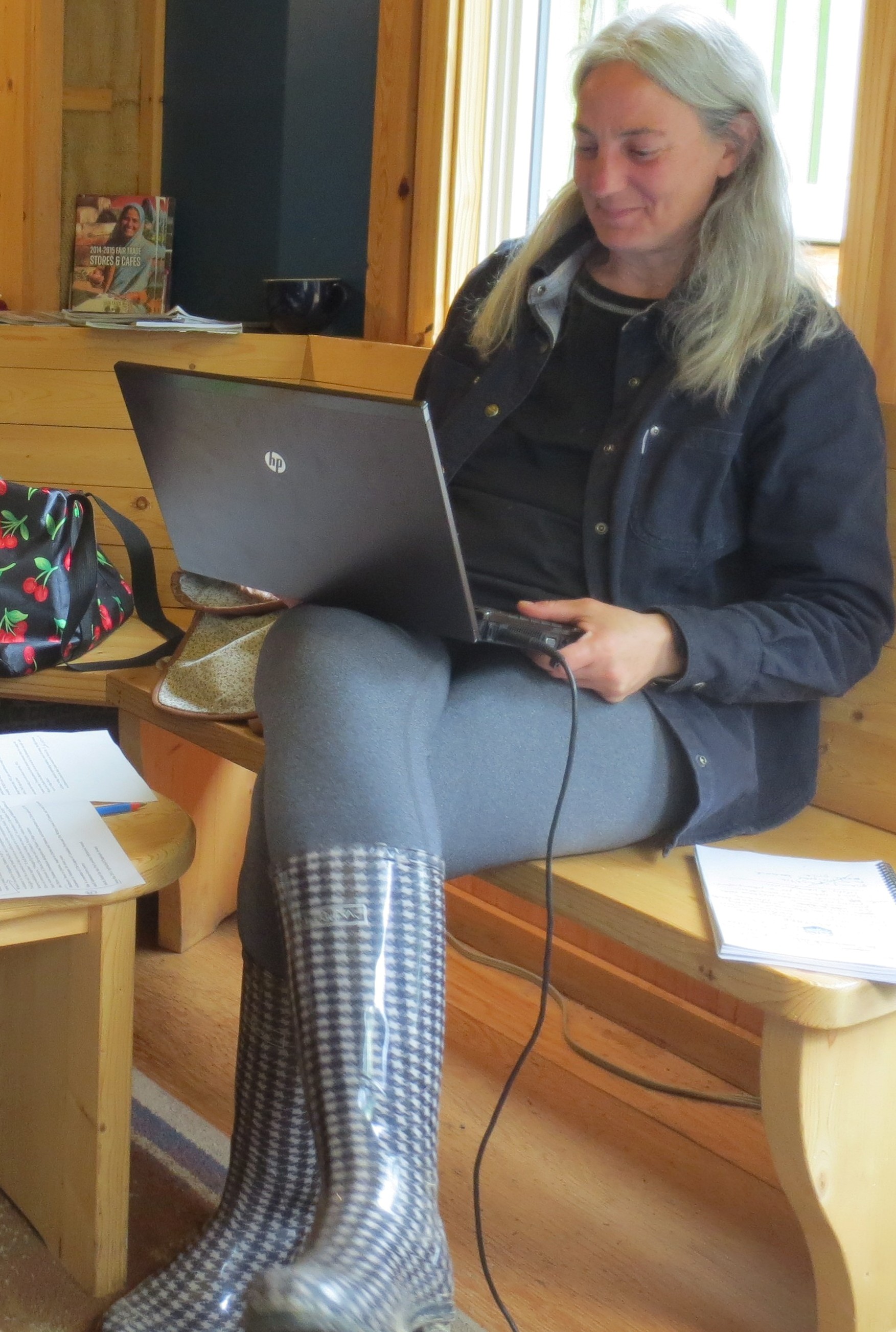
Things happen to make this happen. Every year there is a ‘conference’ held somewhere in Canada, and everyone is invited. But this current year has offered even more opportunities to experience, learn, and/or share these forms. It’s like having access to magic. The coffee, for instance, was magical when some of us met afterwards at Yukon’s Bean North.
Haiku Canada this year was in Lennoxville, Quebec, at Bishop’s University. The presentations were interesting even to long-time poets. For personal reasons, I left early, so I won’t say much about it here, but I would say that you should come to the next one which will be held in Kingston, Ontario. I’ll add a tag to this post.

This year further invitations were extended to join a Maritime Haiku Getaway at St. Stephen’s University in St. Stephen, New Brunswick, and to a Haiku Day in Charlottetown, Prince Edward Island. I was grieving but the best place for me at this time would be with my poetry family. With poets, you mean? Not only poets, I say, but haiku poets.

Mike Montreuil and I would fly to Saint John, rent a car, drive to St. Stephen, planning to drive on to Prince Edward Island for the second event.

Some of us got there early. We just had to go to the local diner, Carman’s. Loved the juke box on the table and the billboard at the parking lot. The food was pretty good and the service wonderful!


At the University there would be some planned presentations but most of us went into the weekend with open minds as we know that events involving Japanese forms are always stimulating no matter what happens. Participants ranged from long-experienced poets to newer writers. We were offered choices of zeroing in on haiku, tanka or haibun. It gave us the chance to go deeper into a form, spend three or four hours on it, or move around to check out a different form.
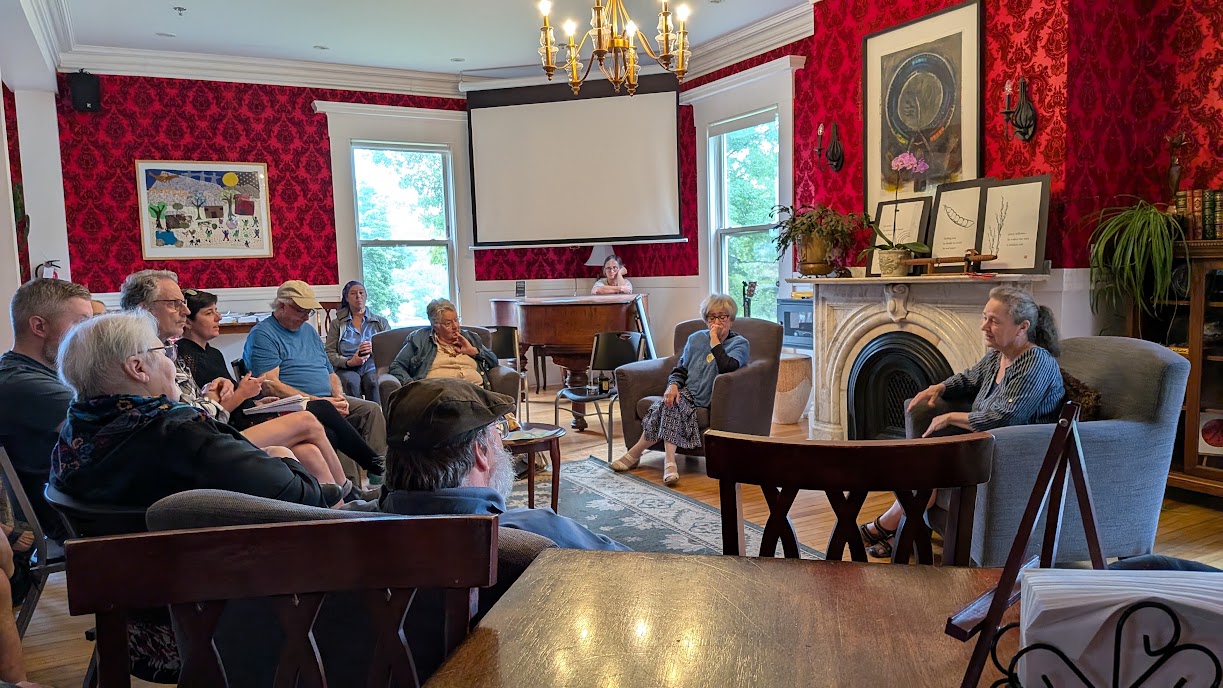
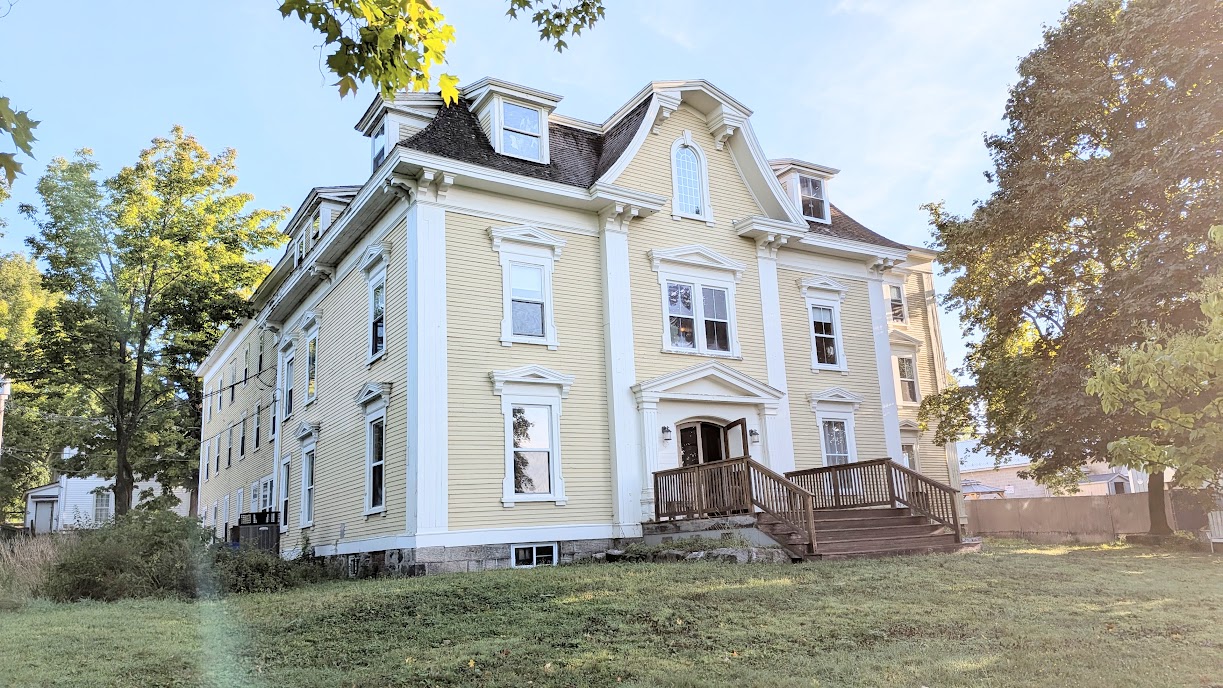
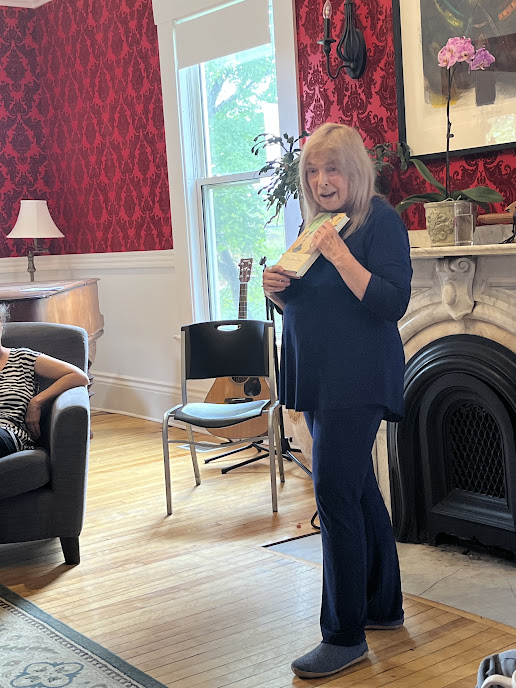
The building itself was so beautiful to work in, and the town so beautiful for casual roaming as well as for a gingko walk. A dynamic presentation by Angela on haiga, a combination of haiku and Art, encouraged us all to try it.

Some of our best poets and organizers were also the best cooks, dishwashers, and servers as this particular weekend was a communal affair, with lots of time for getting to know the other participants, whether over a meal, or hanging out in one of several comfortable nooks. So What if the stove took an hour to cook pasta, So What if I had to wing my presentation because I’d left the PowerPoint file at home. We laughed a lot and discovered each other.
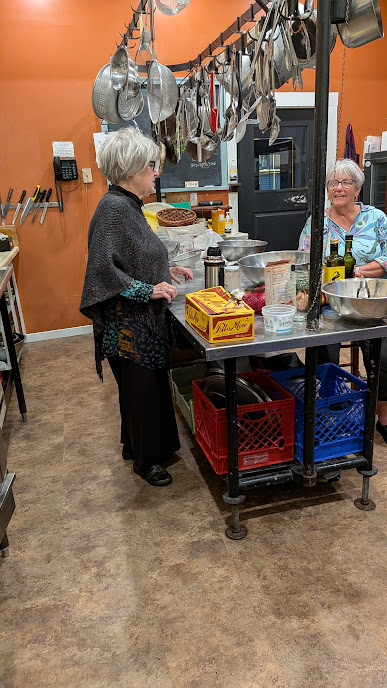
haiku poets at lunch/ an enthusiastic discussion/ of Winnie the Pooh

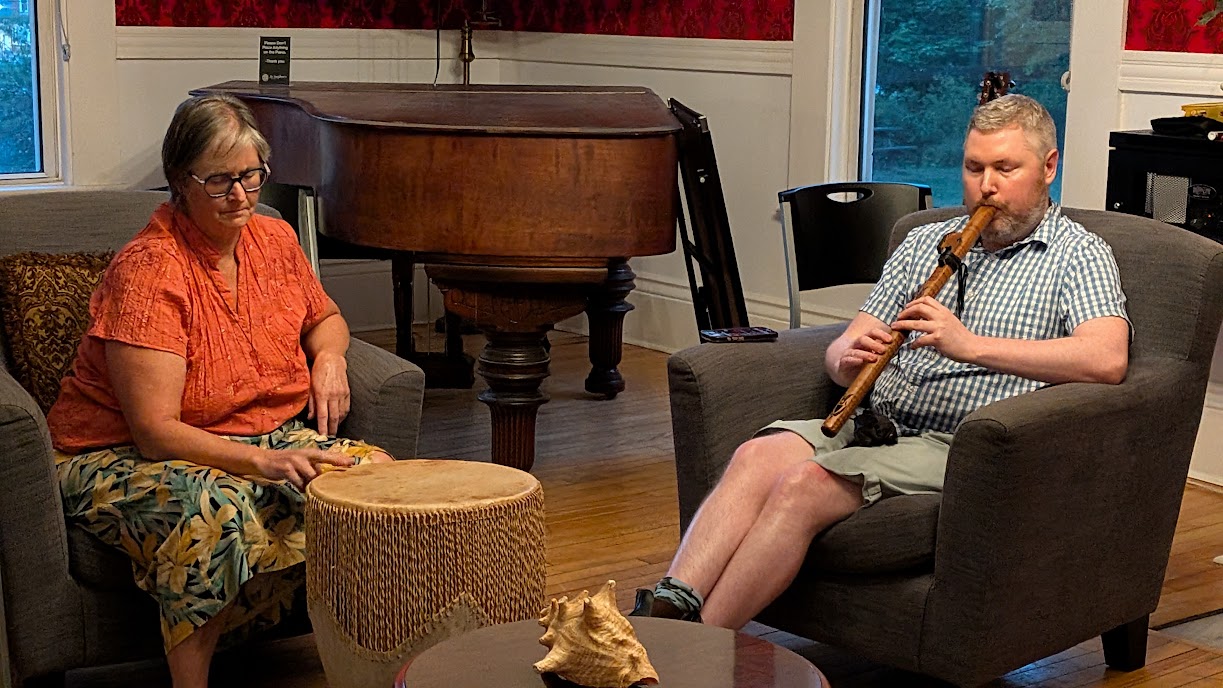
A few of us let down our hair after hours, joining Hans, with guitar, Rob, Sandra, Brendan, and others with flute, drum and tambourine, to belt out hilarious renditions of songs like Ob la Di Ob La Da.

Mike and I then drove through the autumn beauty of Southern New Brunswick, stopping by the water at Grand Manan.

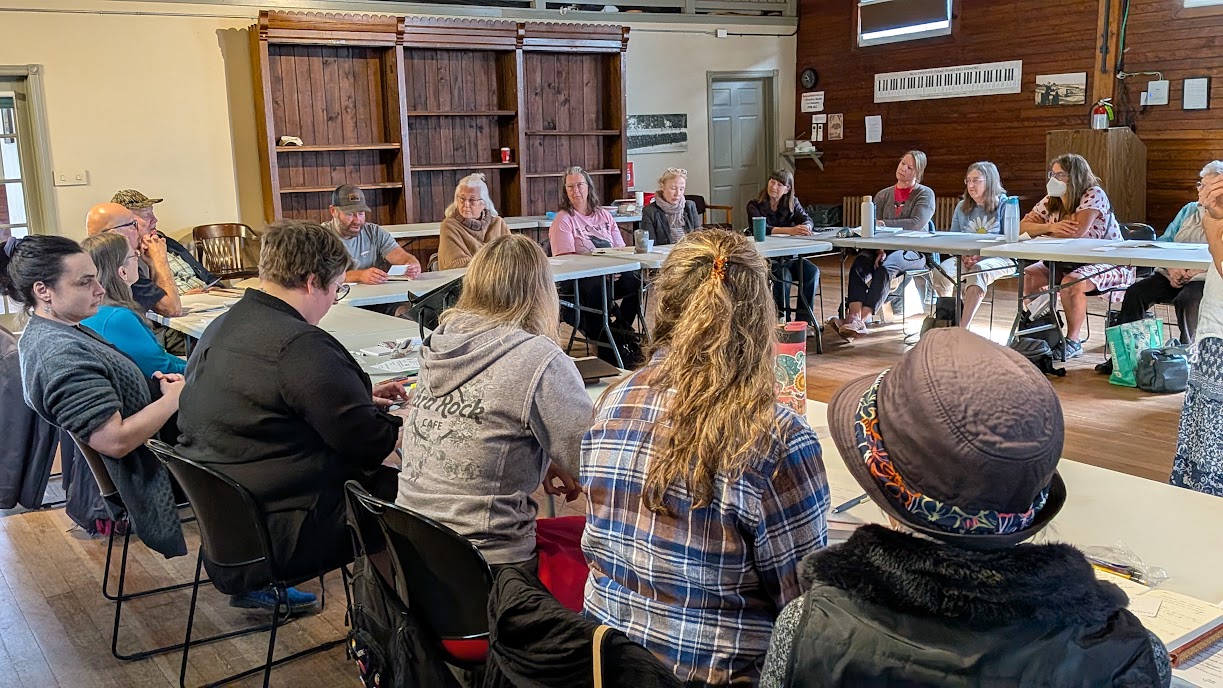
Mike, and some Xanthoria parietina on the rocks at Grand Manan.

We crossed the Confederation Bridge to Prince Edward Island. It was nostalgic for Mike as he’d worked on that construction. Nostalgic for me as I was last there crossing on a ferry more than fifty years ago with my little boy.

This is where the ‘coming close to Nirvana’ kicks in. Nancy and Peter Richards hosted Angela, Caroline and Carole in their home and offered me and Mike a chance to stay in their cottage at Thunder Cove.

They had collaborated with Angela, Caroline, Carole, Mike and me to present haiku for a day to mostly new writers of the genre. As the only two known haiku poets in the province, Nancy and Peter had organized space at the historical Coach House in Charlottetown, another beautiful building. Expecting a few participants, they had to keep adding tables and chairs as early on, the room started to fill up with people INTERESTED IN HAIKU! Sessions on haiku, haibun and tan-renga were presented. It seems these poets plan future meetings in person or on Zoom. A Win-Win situation!
You see, this is the kind of unexpected gift, the Nirvana that Japanese poetry might offer! Thunder Cove was a magic place, the beach long and red with only a few people exploring it. Mike worked a lot on The Haiku Canada Review; we both wrote for hours. I spent hours on the beach in all kinds of weather, even before and after sunrise, and at sunset. 

Sunrise and sunset and lichens (Ramaline dilacerata) …there’s nothing more to ask.

From this post you may gather that I am interested in lichens. The identifications may not be perfect. But lichens are similar to the organisers mentioned throughout this post, the participants of these two events, and the haiku world of poetry itself: perfect jewels that continue to surprise with gifts.  

They are here!!! They are here!!!

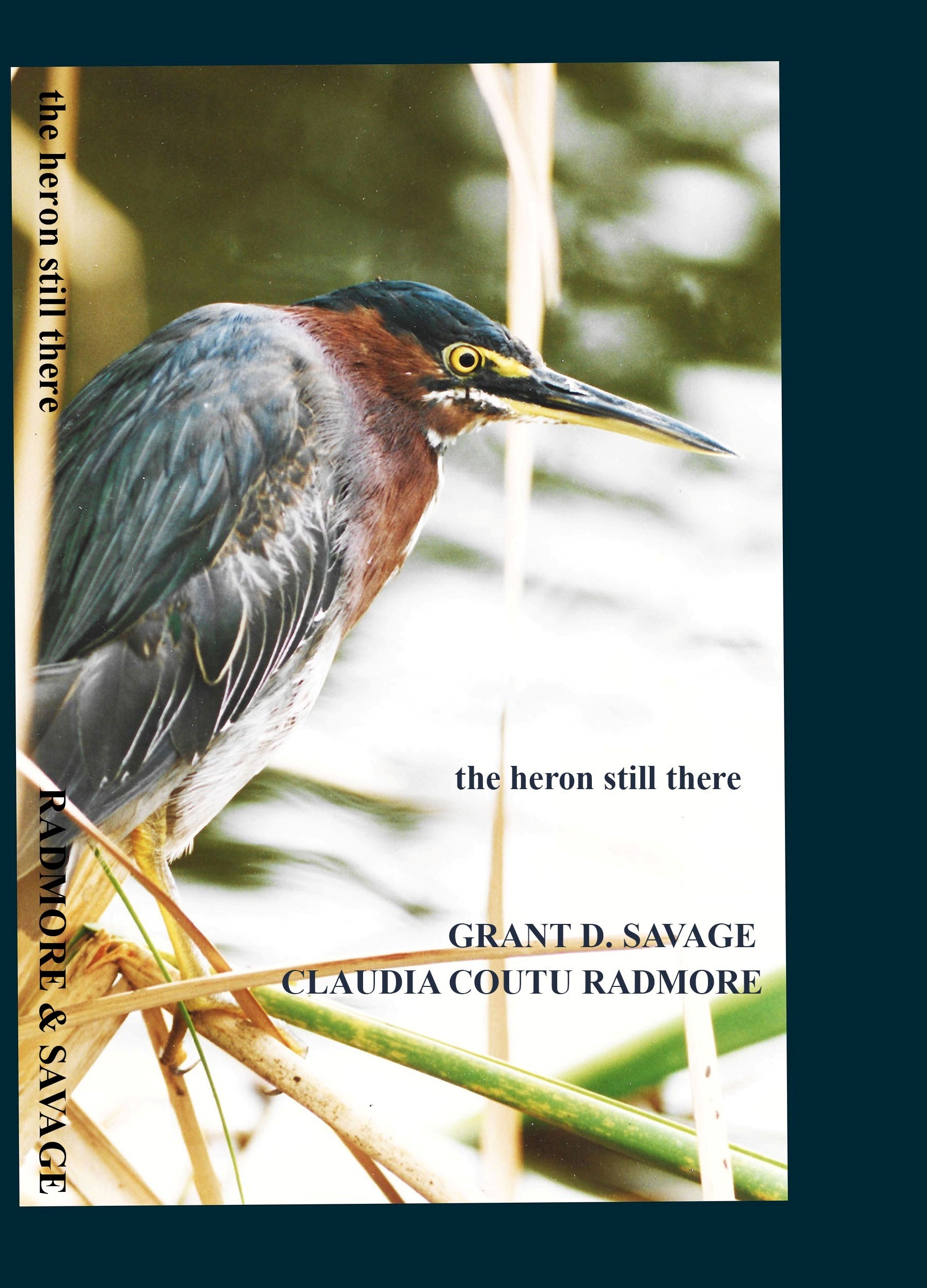
You’d think by now, a new book out would not be exciting! But this time there are two books just out! Sweet Vinegars: Wildflower poems (Shoreline Press, Montreal) and the heron still there, with Grant D. Savage, 500 tan renga poems linked. (Éditions des petits nuages, Ottawa)

To quote from a cover blurb by Greg Santos, “… this mighty collection blooms with playful, surprising, thoughful, and magical observations.” Thank you so much Greg. I’m chuffed to have this from a poet I so admire.

I am so pleased that John Rayner of Carleton Place let me use his photograph of Butomus umbellatus, Flowering rush bareroot, for the cover! When I saw it on Facebook years ago, I hoped that the poems would one day be published with this cover.

From a blurb by Susan Gillis, “Playful or sombre, sometimes both―and more― the poems (like bees after pollen) go to the heart of what it is to be human now, in a world where so much is at stake.” Thank you, Susan, for these treasured words.

The other collection, the heron still there, comes from a year-long collaboration with the fine Ottawa haiku poet Grant D. Savage. (Cover photo by Grant!) Its publisher, Éditions des petits nuages, is one of Canada’s leading Japanese-form poetry publishers. Grant and I are so fortunate that Mike Montreuil took on this unusual collection. Thank you Mike!

These are linked tan renga (short linked) poems, and I am so in awe of Grant’s great all-round knowledge and erudition. I never knew what kind of link would happen as it could come from his Science, Math, literature, or poetry (and more) background. The idea of the tan renga is to add a verse that is linked to the previous one, but which veers in a different direction. It was so much fun, and a super challenge to write tan renga with him.

The form requires attention from a reader as there is a ‘game’ aspect in figuring out what the links are, and where the next verse is going. There are many allusions (mostly noted at the end of the collection), and many fun lines, always unexpected.

I hope readers enjoy all aspects of either/both collection(s). Sweet Vinegars is available through Shoreline Press, but also from me at claudiaradmore@gmail.com.

a year and more away from my blog

It’s not that it’s been a terrible year, in fact we’ve had the joy of a new grandchild, Callan, not yet two months old.

But there have been deaths, and sadness as well. Writing has taken a lower place on the ladder of life, but just for a while. I am proud to have published books and chapbooks with my Catkin Press, though fewer than usual.

‘Dérive’, by Marco Fraticelli is the French translation of his best selling ‘Drifting’, haibun based on the journals of Celesta Taylor, woman of many merits from the Eastern Townships of Quebec, whose story is unique and all encompassing. Copies of either are available from Marco. (marcofraticelli.com) (He’s also the author of ‘Dear Elsa’, another run-away best seller! ( The best introduction to haiku I know. It’s step-by-step clear, in a touching pen-pal correspondence between fifth graders, which will have you aching with laughter) (Red Deer Press | 2023/ $14.95. Available through Red Deer Press , or your favourite bookseller. His email is on his website.)

The next beautiful book, ‘Stone Garden,’ by Rich and Zo Schnell recounts the transformation of their garden into a spiritual place. As the second part of the title suggests, it is a place of meditation and poetry, with the work of many poets who write in Japanese forms. Truly beautiful in every way. Available at richschnell73@outlook.com

I asked Pearl Pirie if she had haiku lying around as I would like to do a chapbook, and of course, she did. This collection, so sensitive to her world, invites you in, and somehow you find yourself just settling in with the poems.

And Susan Atkinson was running out of copies of her haibun collection, ‘The Birthday Party: The Mariachi Player and The Tourist’, but asked for an edited version with her alternate choice of cover colour. It was ready for her to read from at the Manx, so many other fortunate people got copies.

I have been writing, writing, and meeting most weeks with the Ruby Tuesday poetry group. We have lost a dear member this year. I think of Jacqueline (Bourque) often. We miss her very much for many reasons, not least her poetry. Her posthumous collection will be coming out with McGill-Queen’s University Press, which made her very happy. She knew joy to the last.

I have been writing, though I can’t prove it as yet. My own book of wildflower poems, ‘Sweet Vinegars’ will be published in Devon, UK, in 2024, and editor Susan Gillis has been wonderful as I plow through the manuscript for ‘The House on Fanning Lane’. But I have been slow to send the second part. It’s all my fault.

Admitting this next project in a public blog will make it happen: a collection of haibun called ‘Désirée/ Life, Laughter, Loss’, (working title). It is written, in pencil, something I haven’t done for a while, and I hope I can read my writing in order to dictate it into Word. It was written day by day after my lovely little parrot died. It will be the third collection after ‘Désirée/ nude in sunlight’ and ‘Désirée/ air bone feather’. How much joy this gorgeous little lorikeet gave me and Ted over the past 23 years! (Is still giving us…)

I have also lost Cynthia French as a dear Poet friend in Nova Scotia. She was, with Les, a magnificent host, but more to the point, a lover of words who put them into poems I like to keep by my bed. ‘Remedy’ is a collection and a work of art ‘within and without’ to use the words of George Harrison, as it is printed on papers handmade by her daughter, Nancy French, (lindenleapapers.com).

I have been writing. I have. Keep checking this blog and please hold me to account.

I wish all of you a tremendous 2024 with a muchness of joy and creativity to help get through the harder bits.

À la prochaine…

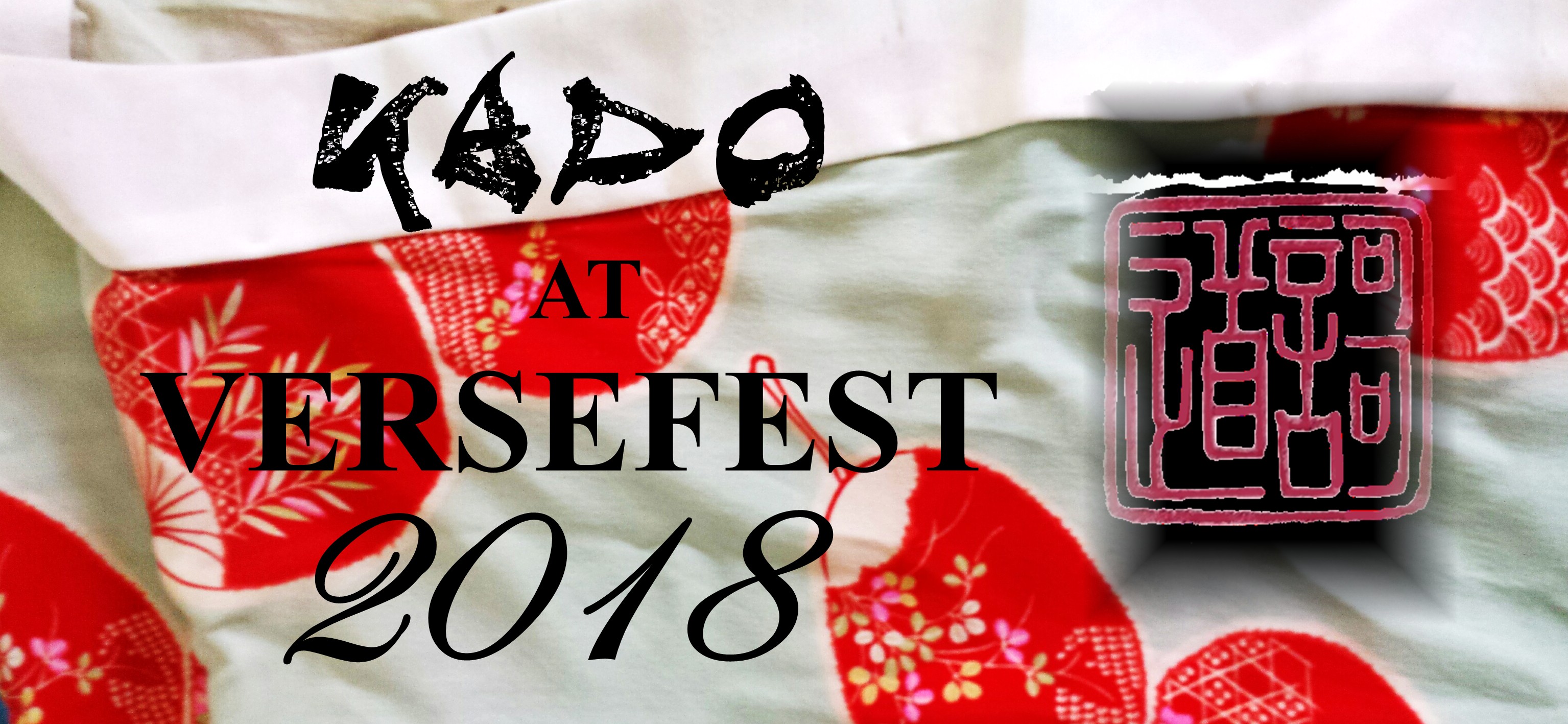
KADO AT VERSEFEST OTTAWA 2018

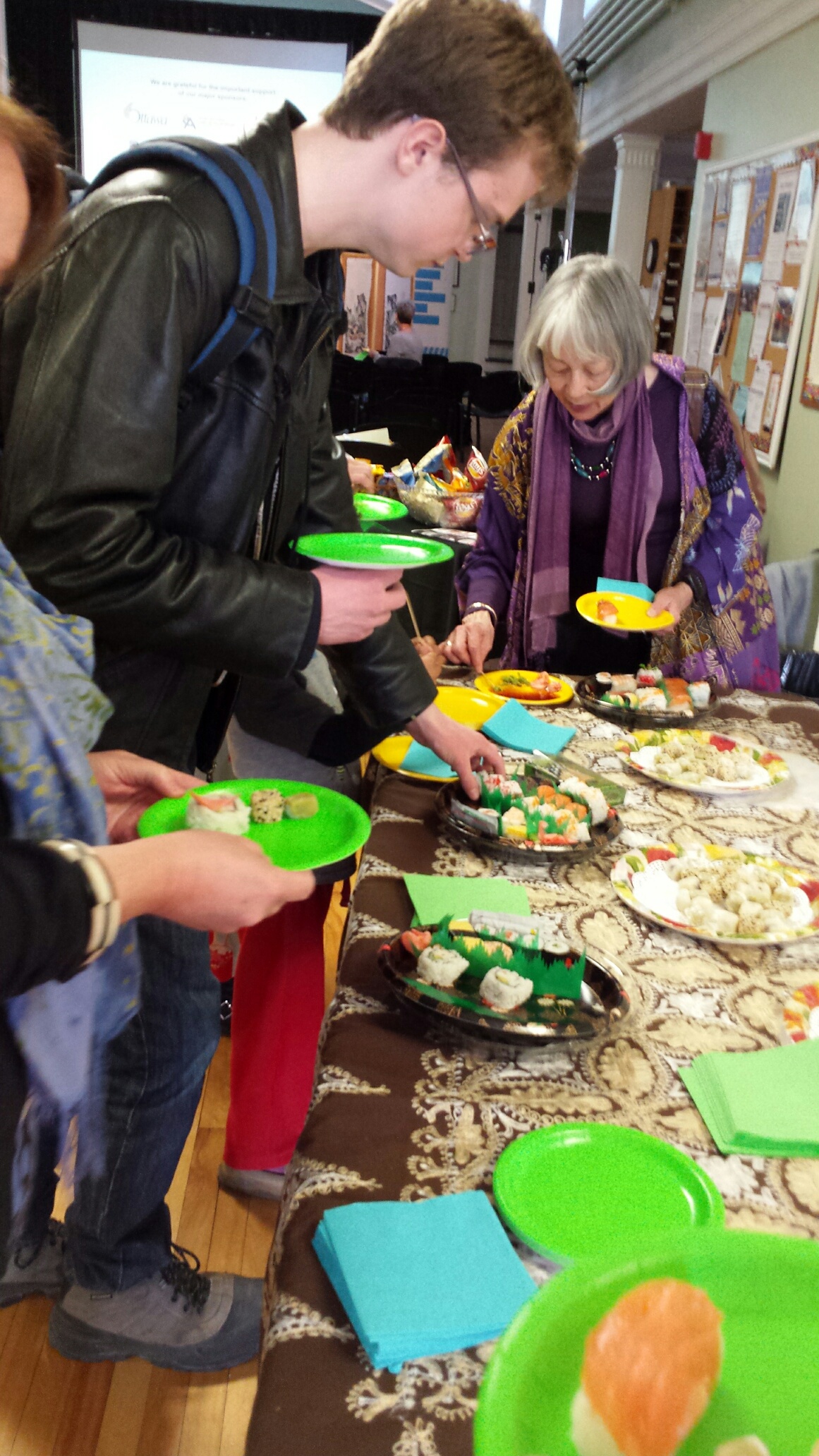
Our star performer poets of the afternoon presentation were Hans Jongman of Welland, Ontario, and Luce Pelletier of St-Bruno de Montarville, Quebec.  I asked them to come because I enjoy their poetry and because it would be an honour to have poets of such sterling reputation on the podium at Versefest. We had encouraged KaDo members to bring anything Japanese to the presentation, and what generous and imaginative poets we have! Special kudos to Betty Warrington Kearsley who picked up platters of sushi, and also mochi which is an Asian treat made of rice flour. Another hero of the afternoon was Bryan Cook, who brought four gorgeous painted scrolls and hung them on upright bulletin boards.  Betty also brought a vase containing branches, which the audience was invited to decorate with haiku tags previously made by Lesley Strutt for Japan Day at Landsdowne Park a few months ago. Members also brought various kimono and lay them on the stage. Guy Simser sent two, though he was not able to attend.

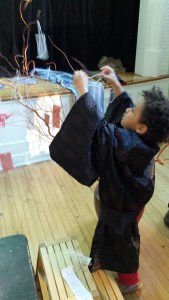
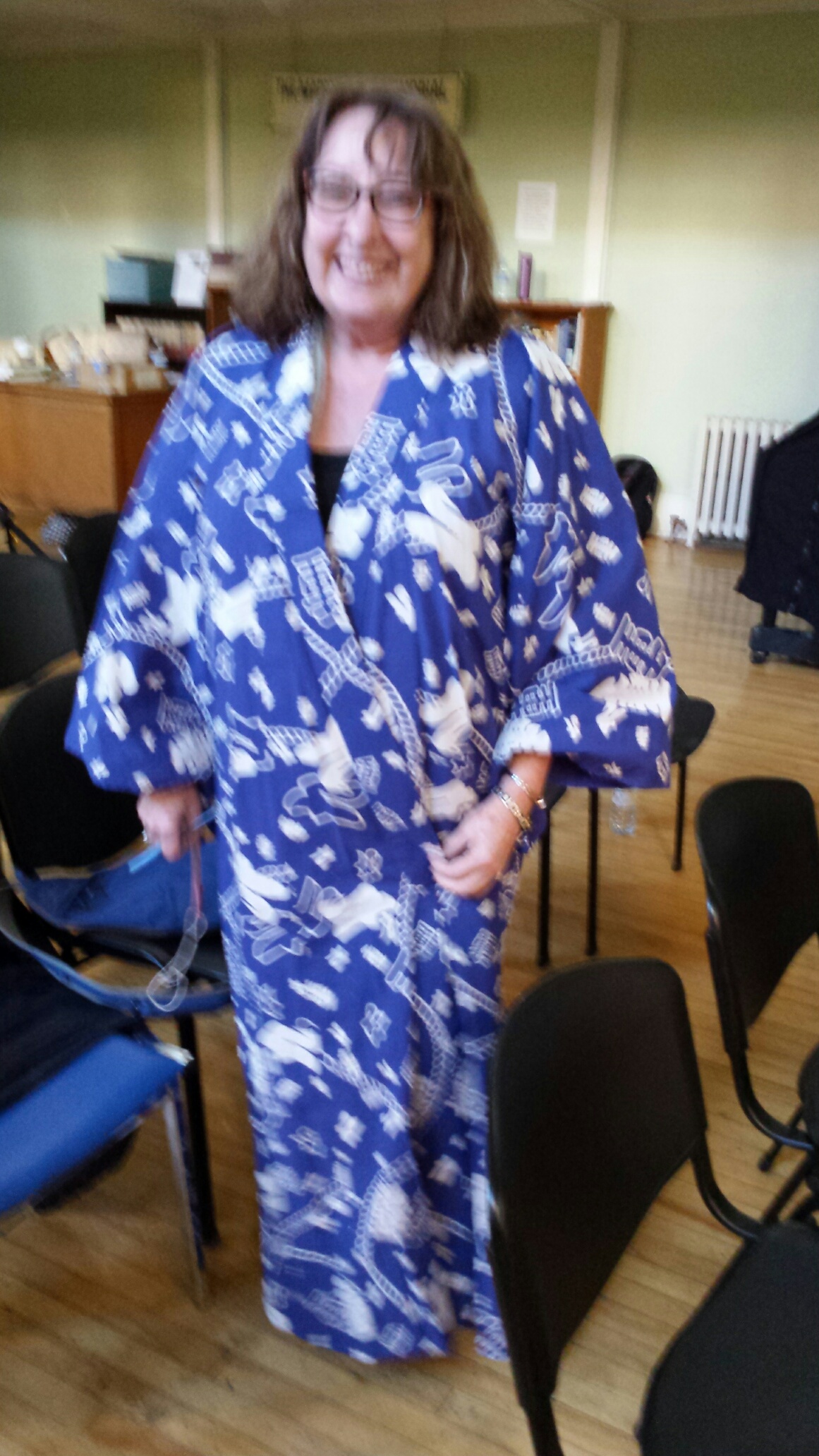
The audience was invited to try them on and have their photos taken if they wished.    Here are Maureen in  a blue-and--white kimono, and my apologies for the image not being clearer, and Forrest in a short black one, which I think he considered was a ninja outfit, and in which  he did a super job of decorating the branches. He is with his mom Sharelle. Forrest also helped with taking the covers off the treats, and making sure the napkins matched the plates. As you can see, thesushi, mochi and sake were a hit.


haven’t said  much yet about our presenters.  Hans spoke with a great and wonderful confidence, reading a wide variety of haiku on all subjects, several on war. He read haibun from both Swooning and Shift Change. Had it not been so late in the afternoon, and had we not been preceded by four packed and terrific hours of lyric poetry by local and American poets, more lyric poets might have been blown away by his poems, and those of M. Pelletier, who gave a presentation which was brilliant in content and in performance. Her bilingual poems, given in her calm clear voice were from Papier rose  pink paper, and, as luck would have it, her video presentation would not work, no matter what Jennifer Pederson (Bestest Hero of the whole festival) tried. However, she breezed through, and I hope people look her videos up on YouTube, where she has reached 7700 views.  Afterwords we hammed it up, Luce peeking out from the side of the bulletin board, and then the three of us doing the same thing.

KaDo would like to thank all its members, and the Versefest organizers for making a place for Japanese-form poems among all the other forms at the festival. We especially thank the intrepid audience members (you know who you are!) who stayed late on Sunday afternoon to participate in our Haiku Pop-Up.

Joining the Twenty-first century

caribou sign croppedI’m such a dinosaur!  Bucking this and ducking that, like using Twitter!  Years ago, my publisher for Arctic Twilight, said Get a blog! Get on Twitter! But no, I went on down my antediluvian path, trusting to the ether…and of course, not getting very far.  So, I’m kicking over a new leaf, or sloshing through the piles of dropped ones. Wish me well. Look for me on Twitter as well as on Facebook and tell me how clever I am, how modern, how glorious!  I look forward to connecting with everyone.   It sounds so strange to use a ‘handle’, like I’m home on the range somewhere, and lost. So that’s @claudiaradmore (On Twitter, don’t use the one with ‘leisale’ in the address…I had to start all over today with a new account…)

I’ll tell you now that I’m very pleased to be having The Alfred Gustav Press publish a chapbook of a selection of the Fogo island poems that ended up short-listed for Malahat’s 2017 Long Poem Contest! Hence, the image of the handsome fellow at the top of this post.

It’s been a busy time, working on four manuscripts at once and completing all of them before going to Santa Fe on September 12th.  My fingers are so crossed, but I am only getting younger in my mind…Again, wish me well. Dropping a comment to this post would be the best way.

book fair w catkin signIn Santa Fe we were welcomed not only by New Mexico State Senator Bill O’Neill, a poet in his own right, but also by Craig Quanchillo, Governor of the Picuris Pueblo. We were at The Santa Fe Hacienda & Spa which is owned by the Picuris Pueblo, and for the most part, staffed with people from that nation. It is a wonderful place, with a lovely open atmosphere.  This was the bookroom.  (There were $15,000 worth of sales overall in four days!) Way up in the top left corner of the photo, you can find my new catkin press signage!

My husband Ted and I continued on a tour of the state, and you may get to see more of it in further posts. Visiting pueblos and staying at Georgia O’Keeffe’s Ghost Ranch are some of the highlights. Oh, Abiquiu, how beautiful are your mountains!


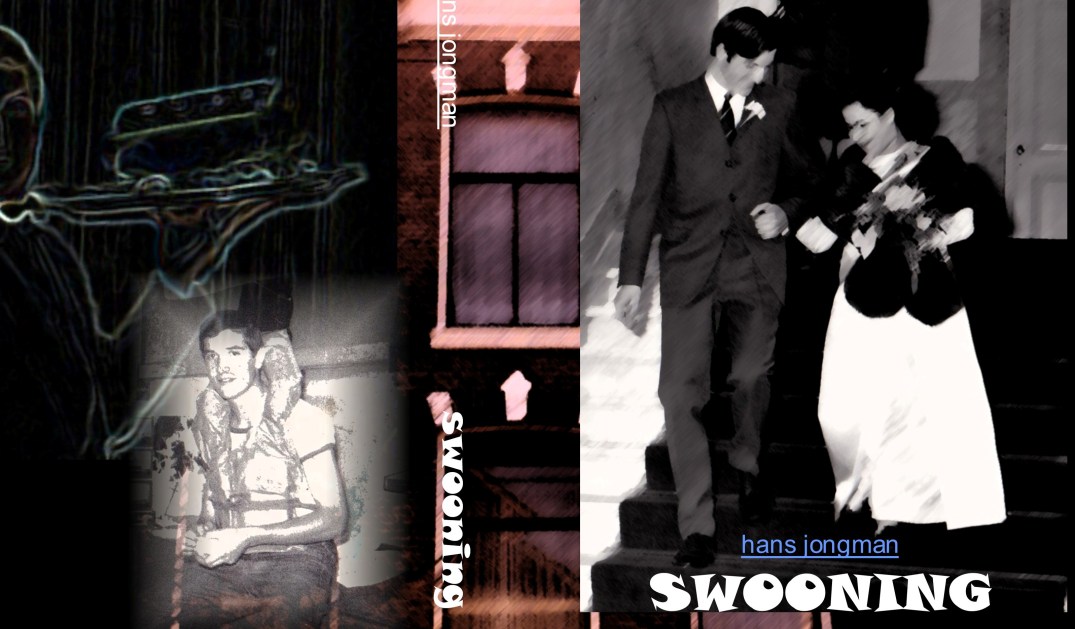
hans jongman’s ‘swooning’

I love the books I publish at catkin press. The latest is a wonderful memoir in haibun by Haiku Canada member Hans Jongman, with a section by his wife Farida.

As soon as I started to read the manuscript I knew I wanted this for a catkin book, but as I continued reading, I was captured by story, the haiku between the prose, the sense of a long deep relationship. It is punctuated with pathos and humour, and wanders all around the world. Photos enhance the sections well, as in this one in which all his sixteen-year-old hopes and vulnerability on his first sea voyage are apparent.

sailor hans

Farida’s written contribution (as opposed to her part in the overall story) leads to the later sections and the possibility of resolving a longtime situation.

I don’t want to say too much, except that it is mystery and a bit of treasure hunt for the things that really matter in life.

Hans’ peripatetic life began in Holland in 1951, and before eventually settling in Toronto, goes to sea, takes flights, car journeys. It keeps longtime friends, falls in love, has children and grandchildren, as many do. But his and Farida’s together make an extra intriguing literary intertwining.

He gets out of the haibun form all that Basho meant the form to produce; haibun adds lightness and space and the opportunity for the reader to breathe, and to add their own connotations. The text has several titled sections, such as one called “The Most Beautiful Eyes”, and another, “To Sea”

When Farida (the owner of the beautiful eyes) writes, the tale is succinct, easy to follow. eyes 2

Not haibun, just good straight effective prose. She says what she has to say, what she wants to tell, cleanly. No flounces or purple language here. Though not known as a writer, I think she should consider writing more in the future.

Read this book also for a picture of what it was to be a teenager in Holland in the 60s, for the situation of a young woman who loses her mother and is cut off from family. This book isn’t only for those who know the haibun form; anyone who enjoys a good read will love it.

On the extra benefit side, the haibun form may, because of SWOONING discover a new cohort of followers when they find what an accessible form it is and how subtly the haiku enhance the overall writing.


writing in the yukon

It comes to this: haiku poets travel to Whitehorse, Yukon, because they are poets, because they are curious about the Yukon, and/or want to meet other haiku poets, because they want to broaden their knowledge of the world of Japanese-form poetry, because they enjoy conferences, (and this will be The 2016 Haiku Canada Weekend!) because, just because they look forward to rubbing shoulders with members of Haiku Canada who are are the best people to be around, ever.  They’ve been to one of these Weekends, or more, and just have to be at another, or they are intrigued by the idea that poets will travel that far, from New York, Quebec, California, New Mexico, to spend a weekend based on poems that can be expressed in ‘one breath.’

True, we are a bit crazy, but we also know that secrets/surprises will unfold during this weekend, and we want in on them.  So here’s what happened: many people got there early or stayed longer to see the area around Whitehorse. Some got all the way to Skagway and Dawson City to drink a Sour Toe Cocktail, and to experience the Alaska Highway and Kluane National Park. Some went on Elisabeth Wiegand’s wonderful Black Bear Adventures Tours. Some rented a camper. Some were billeted by the most gracious and generous hosts. All that alone was worth the trip.

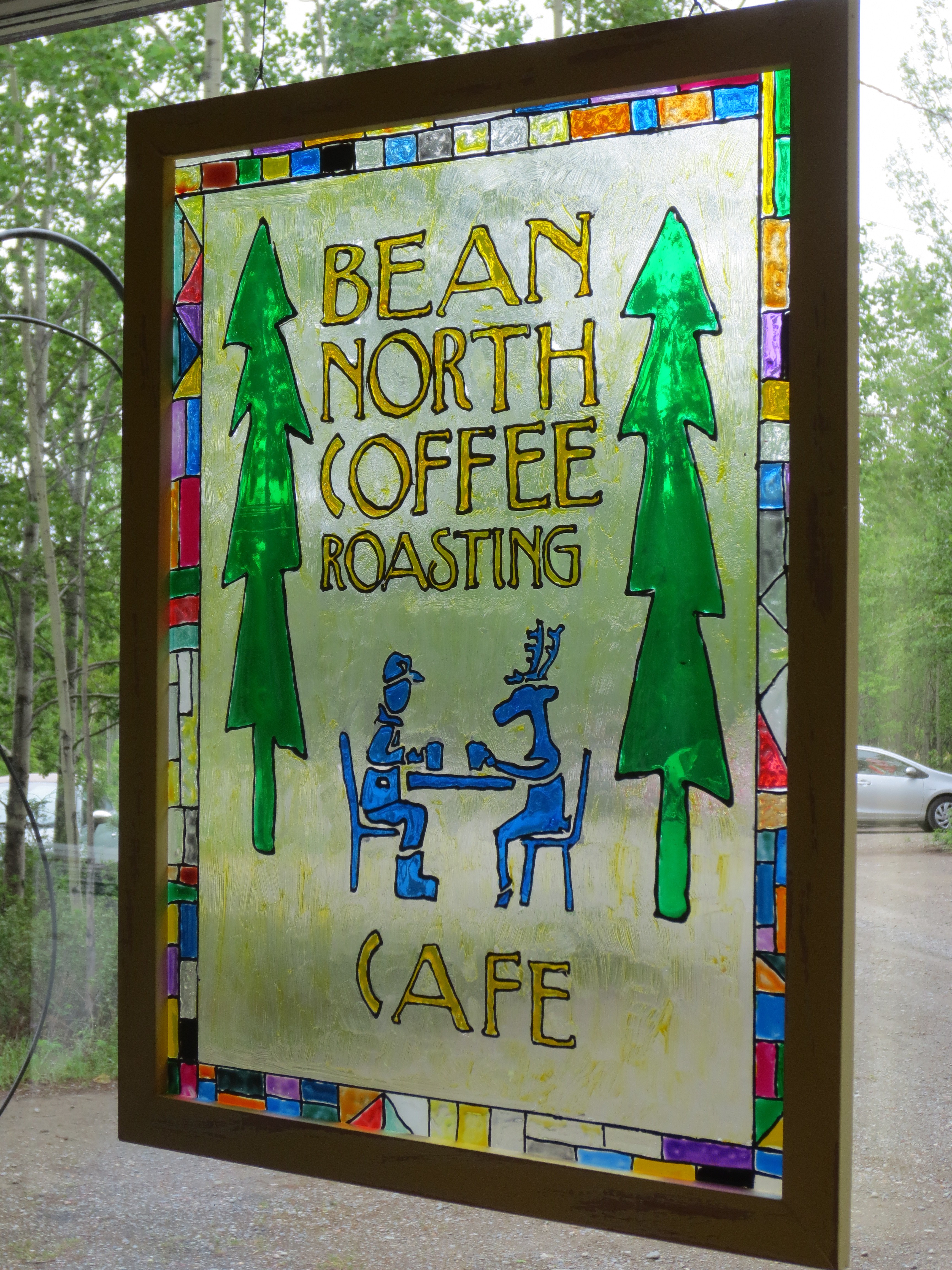
Highway sign to Bean North Coffee
Highway sign to Bean North Coffee Roasting on the takhini Hotsprings Road

But we are writers.  Writers who know the difficulty of putting such a weekend together. This time it was Kathy Munro and her team, many from her Solstice haiku group, many from the Bean North Wednesday Writers who meet way out in those bear-filled woods at Bean North Coffee Roasting Ltd., a delightful café that’s been going for about 15 years. You’d never expect to find such a place, complete with its own roaster, with organic food and Free Trade coffee and chocolate and simple lunches so good you might dream about them later.

Kathy Munro had written to The Commissioner of Yukon, Hon. Doug Phillips, requesting that the week be called Haiku Week in the Yukon; he signed a proclamation, and it was so. Haiku Week in the Yukon! The Cultural Services branch paid for all the ads in the papers! The City of Whitehorse got in on the act, getting out the trolley a couple of days earlier than usual so conference members could be clanged through town to the Northern Front Gallery. The MacBride Museum of Yukon History hosted a related reading, as did the Library, which also gave space for a display (more on this later…) and a reading; bookstores gave discounts and one gave super window space to a Haiku Book display; a coffee shop too, had discounts. Newspapers and radio gave space.  CBC on the radio and on CBC Yukon’s Facebook page gave information on the weekend. Everything seemed intertwined, the paper maker and the reporter attending the conference, the novelist putting copies of her novel Ice to Ashes on the ‘Free’ table. (Yes, haiku poets always have a ‘free’ table! Imagine!) Haiku Canada was everywhere.

The Wednesday group is known also as The Whitehorse Poetry Society and Local Writers, associated with Yukon Writers Collective, but members sometimes refer to themselves simply as The Bean North Writers.

Jessica Simon. reporter/novelist at Bean North
Jessica Simon. reporter/novelist
at Bean North

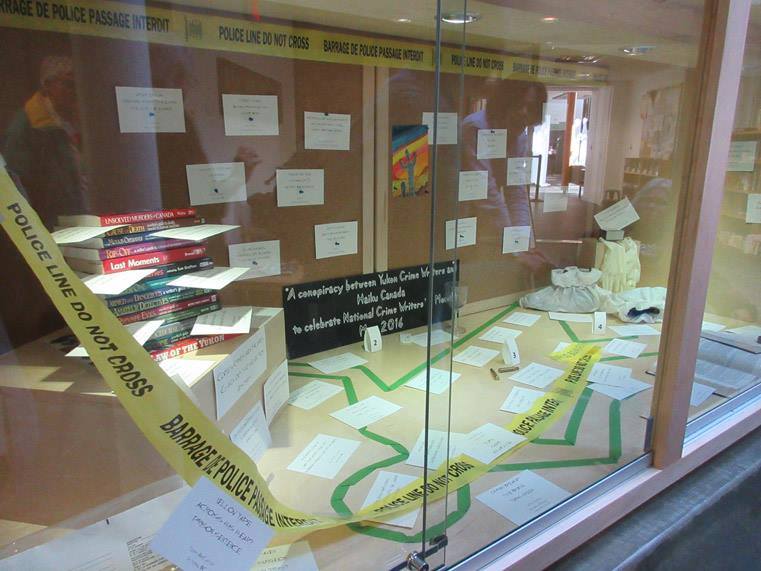
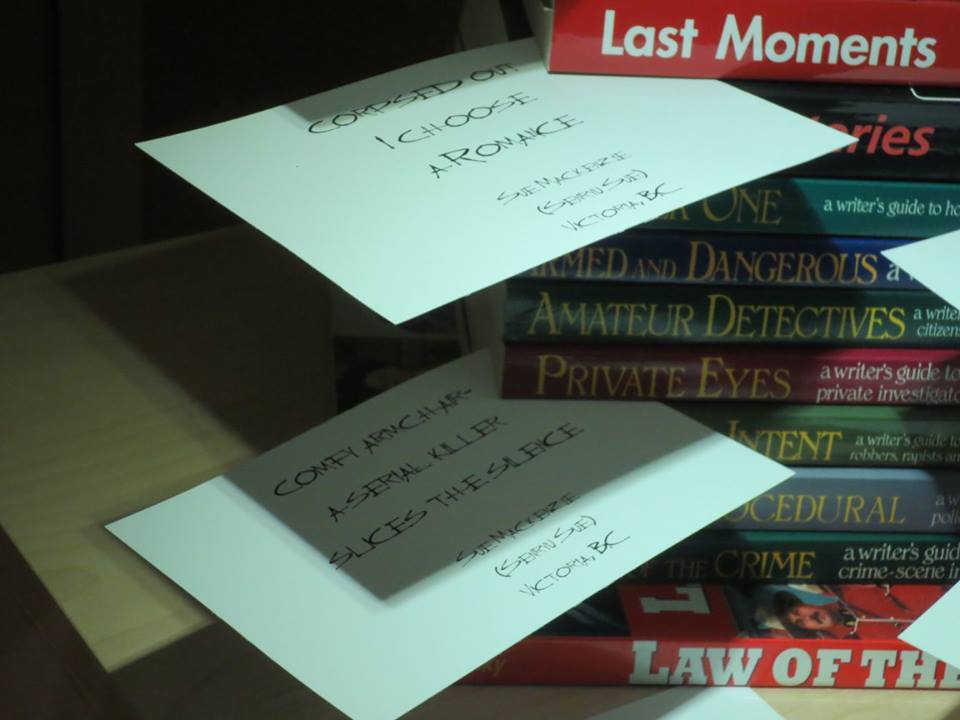
They gather, some with paper, others with laptops, in the little perfectly-chosen-blue room up front, with big windows that bring that Big North Feeling into the room, into the writing. Haiku writers work on Japanese-form poems, prose writers work on novels and short stories and newspaper articles. Plans get hatched. Two writers, reporter/crime novelist Jessica Simon, and Kathy Munro came up with one of those ‘extras’ that made the weekend extraordinary: Why not send out a call for ‘crime haiku’ and display the results in the Whitehorse Library. No sooner hatched, the path to realization had begun. The final display on ‘Killer Ku’ was magnificent.

crime pic 2 vancouver haiku group

So there was a team, and all the parts of the Weekend came together. I haven’t started, and won’t because this is a blog and not a book, to mention all the people and the planning that made the Weekend happen. And a report of everything that happened at the conference, as well as the agenda, will soon be up on the Haiku Canada website.

There are a few quiet volunteers and donors who might be missed though; Laurel Parry, calligrapher par excellence, who also made opening remarks for the conference, gave hours to making calligraph, name cards on the spot, putting them into name-tag holders scavenged by Kathy’s husband at a geology conference, holders that are much more chic than what we normally call name-tags.

Helen O’Connor, paper artist, who curated an exhibit called Words at The Northern Front Gallery, (handmade paper art that included poetry or other word applications) was another team member as she and Ms. Munro collaborated to have the show opening sync with the conference and three haiku poets had pieces in the show. Ms. O’Connor also gave us paper-making, calligraphy and book binding workshops. She also donated hand-made paper for the name tags…

stinging Nettle Knickers, byHelen O'Connor
stinging Nettle Knickers, by Helen O’Connor, image from the WORDS exhibition catalogue

But I wanted to zone in on the writers who meet regularly, their spirit and the way they connect at Bean North, and how central they can be to setting cultural atmoshpere in a far away northern city. When they get together in that blue room, writing is simply in the air; you can almost see it, and you can certainly feel it. I was only there for a couple of hours, but the ease of camaraderie among these wordsmiths reminded me of that famous house in Toronto where members of the Group of Seven painters had their studios, how they would work, but also roam around, comment on each other’s paintings, have coffee.

This writers’ group acts as a think tank, some of the creative people of Whitehorse, who interact in various ways, who are connected through words, through Art, through book clubs. My feeling was if you have anything to do with writing, newbie or seasoned, you’re invited and included as part of the group. Whitehorse is an ‘alive’ place to be an artist or a writer, and since live things grow, and are dependent on supports of various kinds, this is the place to be on Wednesdays. The best part is that, though it is not formally a critique group, that can happen if a writer is looking for input.  So there’s no stress involved. You don’t have to ‘come up with something’ to share. But if you have something to share, you’re in the right café.

And if you want to know how to get things done, writers often have the skills and connections to make something happen, as witnessed by the whole of Yukon in the papers and on the radio. In all my years with Haiku organizations in North America, the Whitehorse experience made more use of the media, including social media, and of the cultural and physical aspects of an area than ever before, including respect and appreciation for the use Whitehorse citizens have of First Nations Land.

That ‘Killer Ku’ exhibit at the library will likely become a book, for example; the writers are already working on that project. So I would suggest, if for any reason you are going to Whitehorse, and are a writer, that you connect with this group. You never know what will come of it, and the least that could happen is that you meet some amazing people who happen to write. And if you are lucky, you will connect with Haiku Canada at http://haikucanada.org whether you write haiku or not.

I for one, recommend going to Whitehorse for many reasons, and my best dreams would be of being quiet among those sacred mountains. With all the creative and hospitable people that live there.


.

Luna Moth

IMAG1023_1Every once in a while I get an idea for a book that takes way too long to make, but I am stubborn, so I decide to make it anyway.

I was gifted (thank you Terry Ann Carter) a stack of odd-sized tissue-like paper and it has been simmering in my mind for a few years. My commercial printer could not print on it, so if it would be a book one day, it was up to me to print the pages on my home printer.

I am glad that I began five months before the conference in Schenectady where it was to be on the book table.

There are not many pages; it meant putting each of five sheets of paper into the printer twice. I won’t bore with the whole tale, but some of the lowlights were having the printer jam several hundred times even though I only made 17 copies of Luna Moth. I ran out of ink, and had to print a couple of pages twice (four passes x 17 pages through the printer) because I found errors and wanted perfect books. Besides that, each time I printed a page, I had to print it as a single copy. If I could have demanded that my printer simple print say, 10 copies, that would have been much too easy. Trying this was not clever as ten or twenty pages would stick to each other, bound and determined to go through the printer together. So for each pass-through, I had to give the system four separate commands. That would be, let’s see, about eight hundred individually printed pages, or 3200 commands. I may be exaggerating, but only slightly.

Then I assembled and sewed the pages with my sewing machine, which wasn’t too pleased with working on paper and retaliated by not ever giving me a perfect tension. Three rows of stitches for each book, leaving the threads long, in a kind of tassle effect. The I was ready to insert dried fake bamboo touched up with gold paint through the sewn channels, so that I could put gold ‘thread’ hangers on these hang-up books. A couple of turquoise beads to anchor the threads. A snap.

But the grasses didn’t all fit through the sewn channels (I had to hunt for some more svelte members of the fake bamboo clan), the threads were finicky when I was fitting the end loops over the grasses, the beads were upset at being stuck down with a glue gun…they kept jumping from my fingers in revenge, arranging for said fingers to get burned by the hot glue while I fumbled. But the results are worth it. Here are some poems from Luna Moth:

tangerines/bursting/ with/ themselves

after rain/ a rinsed light, over the hills

milkweed blossom monarchs fold into each other

earthbound luna moth/ its rain-soaked/ transparent wings

plum
bloss
oms
fall
in
to
pink

on her skin he writes
invisible love letters
each word
a little warmer
than the next

i remember/ the moon/ in shades of raw silk/ and everywhere/ the music of water

Now I embark on another of the same kind of mission. I’ll use the same transparent paper. It will jam the printer. But I’ll feel great winning a few battles with my technology. Won’t I?


Poetry with nine and ten year olds

Although I have been in the teaching profession all my life, it’s been a while now since I’ve been in a classroom. I love teaching though, so when asked, I said yes, I’d teach poetry to an elementary school class. While waiting for the class to start I began writing words from ‘Jabberwocky’ on the whiteboard. MIMSY  BRILLIG FRUMIOUS VORPAL MANXOME MOME SLITHY… and as I printed, I could hear the students sounding them out, curious.

I began the session by reading ‘How to Paint a Donkey’ by Naomi Shihab Nye. The discussion became a bit warm as to whether a real donkey was being painted, or whether it was about a painting of a donkey. If we’d had time, we might have written that second version together. But they’d all been put down some time in their short life, and they empathized with the child speaking in the poem.

I’d made booklets up with poems about supernovas, the teeth of a shark, the first bright spark; we talked about rhyming and where rhymes might be in a poem, about the look of a poem and the sounds in poems, about what a poem could be about. Once we’d studied the words on the whiteboard, imagined what they might mean, I read Jabberwocky to them, brought up that they could even make up words if they wanted to.

We had more fun with a poem I wrote called ‘ode to the land down under’. Once we pinned down that it was about Australia and an interesting true vocabulary that Australians habitually use, I read them a poem full of place names like ‘woolloomooloo’, ‘toowoomba’, and ‘wahroonga’, phrases like ‘in the land of the barking frog’, and ‘pozzies, mozzies and cozzies’, but the sections they liked most were:

in the evening the macropods come out
wallabies
padmelons
potoroos
tree kangaroos

and:

where a cackleberry means an egg
for your brekkie
there could be a chook on the barbie
and if you’re sitting on your acre
you’re sitting on your own backside
well you’d have to get up
at sparrowfart mate to find anything else like it
this purler of a place
a true ridgy didge

They all wanted a chance to read a poem, so some got read twice. I had to drag out my notes on supernovas so they would believe the part about us all coming from stardust. I could hear the exhaled awe on that idea, which pleased them a lot.

One thing I wanted to talk about was that some of the biggest places were inside of them, that their imaginations were the biggest of all, so I asked about big places, what they could think of, and got castles, and the Canadian Tire Centre and space, galaxies… and then one quiet little redheaded girl put up her hand and literally breathed out the word ‘heart’…Well that was making my morning.

I had four haiku at the end of the booklet. What were these poems. None had heard of a haiku, which was wonderful, because I could start them off the right way, not counting syllables. I explained what many people thought, that a haiku meant 5 – 7 – 5, but told them about the difference between languages. I told them about living in a country where our word ‘piano’ meant nothing to them as most people there had never seen one. In Bislama, they called a piano wan-samting-blong-waet-man-we-i-gat-waet-tut-mo-blak-tut-mo-taem-you-kilim-hem-hemi-criaot-olsem-wan-puskat (which means ‘something that belongs to a white person that has white teeth and black teeth and when you hit it, it cries out like a cat). They seemed to get the idea of poems in seventeen Japanese syllables needing fewer words in English.

They were interested in the idea that haiku usually had a season word. We looked at the four poems in the book so they could get an idea of what that meant. The fun for me was that when I said we sometimes called haiku one-breath-poems, they all had to try that out. I could see them saying poems to themselves, seeing if that was true.

The haiku I presented were these:

November skies/ jellyfish hide/ inside themselves

singing night/ into day/ blackbirds

in the throat of the lily/ a spider/ wraps a fly

plum
bloss
oms
fall
in
to
pink

They wanted to know why they were poems, and what the one about plum blossoms meant. We acted that one out, the pink flowers falling onto those that were already on the ground. I am very glad I left these haiku to the last, because once we got on the theme of jellyfish, that was the end of everything else.  Jellyfish and Mexico, stingrays and swimming with jellyfish. We could have gone on for hours.

This was all part of Arts days, a two day happening in St. Mary’s Catholic School in Carleton Place. Artists, dancers, and writers came in for these artistic culture enrichment days. My thanks to Arts Carleton Place for asking me to be part of the fun. I’d certainly do it again. Thank you Inara Jackson for organizing this two-day experience, and to the school and its staff who were wonderful hosts, and the students were bright and simply terrific.


Grant Savage/Masud Taj

grant x h-masud-taj-532-600

rainy day
on the floor a puzzle piece
of blue sky

Today a puzzle piece takes over.  It’s the perfect poem for today as the sun has relented a little and we are not sweltering, but upon my opening Taj’s masterful rendering of Grant’s poem, the sky has become blue again.

This time Taj received four poems and chose this one. I have no idea how his minds works to create such a thing of beauty, whether he ‘sees’ the haiku in this form from the start or whether it develops as he puts writing instrument to paper. I like to imagine his process, though I realize how useless it would be to try.

Except for the aura of peaceful concentration that must hover about him as he begins.

The poem itself, with its economy of words the nouns ― day, floor, piece, sky. This is where the master haiku writer shows up. The nouns are modified by only two words ― rainy and puzzle. Then two prepositions and an article. From these ‘word puzzle pieces’ describing what he saw, he lets us into the picture. He takes us out of one weather situation into another, possibly of the mind, a neat trick.

There’s a turn in the poem after the second line, and Taj picked that up and literally ‘turned’ the third line, making it look like a reflection. That says that this is a poem to reflect upon. It says remember those too-long summer days when we were (are) locked inside, and the things we do to make the day pleasant. This poem is all the stored boxed games of our youth. It is getting together with friends or family, it is competition on a grand play scale. It is what we can do instead of taking our mood from the weather, it is our ability to metaphorically make our own days sunny, and so of course, to stop puddling around in our ‘miseries’ and do something about our life in general. It is a haiku that reinforces what Rilke wrote: You must change your life.

That short last line does so much, in words, and now in this graceful rendering of the haiku. What I truly love about this poem and its beautiful interpretation is that both are brief, that artist and poet simply set out to do their job as artist and poet, but that they have done so much more.

That Taj is a magical poet in his own right would have given him insights that moved his hand and his mind to create such a moving piece to match this poem. That delightful physical expression of ‘rainy day’ falling so perfectly into the rest of the poem.

Grant D. Savage is an Ottawa poet and photographer.

H. Masud Taj is a roving poet and Adjunct Professor at the Azrieli School of Architecture & Urbanism, Carleton University, Ottawa.