writing in the yukon

It comes to this: haiku poets travel to Whitehorse, Yukon, because they are poets, because they are curious about the Yukon, and/or want to meet other haiku poets, because they want to broaden their knowledge of the world of Japanese-form poetry, because they enjoy conferences, (and this will be The 2016 Haiku Canada Weekend!) because, just because they look forward to rubbing shoulders with members of Haiku Canada who are are the best people to be around, ever.  They’ve been to one of these Weekends, or more, and just have to be at another, or they are intrigued by the idea that poets will travel that far, from New York, Quebec, California, New Mexico, to spend a weekend based on poems that can be expressed in ‘one breath.’

True, we are a bit crazy, but we also know that secrets/surprises will unfold during this weekend, and we want in on them.  So here’s what happened: many people got there early or stayed longer to see the area around Whitehorse. Some got all the way to Skagway and Dawson City to drink a Sour Toe Cocktail, and to experience the Alaska Highway and Kluane National Park. Some went on Elisabeth Wiegand’s wonderful Black Bear Adventures Tours. Some rented a camper. Some were billeted by the most gracious and generous hosts. All that alone was worth the trip.

Highway sign to Bean North Coffee
Highway sign to Bean North Coffee Roasting on the takhini Hotsprings Road

But we are writers.  Writers who know the difficulty of putting such a weekend together. This time it was Kathy Munro and her team, many from her Solstice haiku group, many from the Bean North Wednesday Writers who meet way out in those bear-filled woods at Bean North Coffee Roasting Ltd., a delightful café that’s been going for about 15 years. You’d never expect to find such a place, complete with its own roaster, with organic food and Free Trade coffee and chocolate and simple lunches so good you might dream about them later.

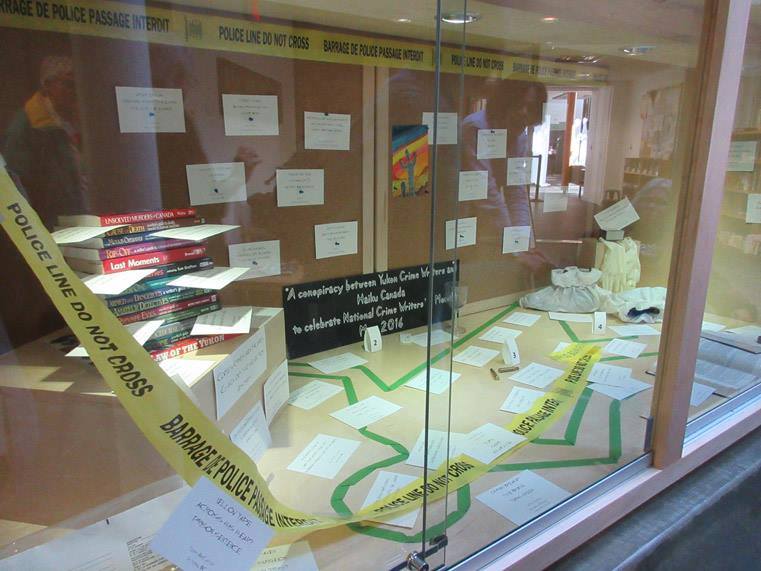
Kathy Munro had written to The Commissioner of Yukon, Hon. Doug Phillips, requesting that the week be called Haiku Week in the Yukon; he signed a proclamation, and it was so. Haiku Week in the Yukon! The Cultural Services branch paid for all the ads in the papers! The City of Whitehorse got in on the act, getting out the trolley a couple of days earlier than usual so conference members could be clanged through town to the Northern Front Gallery. The MacBride Museum of Yukon History hosted a related reading, as did the Library, which also gave space for a display (more on this later…) and a reading; bookstores gave discounts and one gave super window space to a Haiku Book display; a coffee shop too, had discounts. Newspapers and radio gave space.  CBC on the radio and on CBC Yukon’s Facebook page gave information on the weekend. Everything seemed intertwined, the paper maker and the reporter attending the conference, the novelist putting copies of her novel Ice to Ashes on the ‘Free’ table. (Yes, haiku poets always have a ‘free’ table! Imagine!) Haiku Canada was everywhere.

The Wednesday group is known also as The Whitehorse Poetry Society and Local Writers, associated with Yukon Writers Collective, but members sometimes refer to themselves simply as The Bean North Writers.
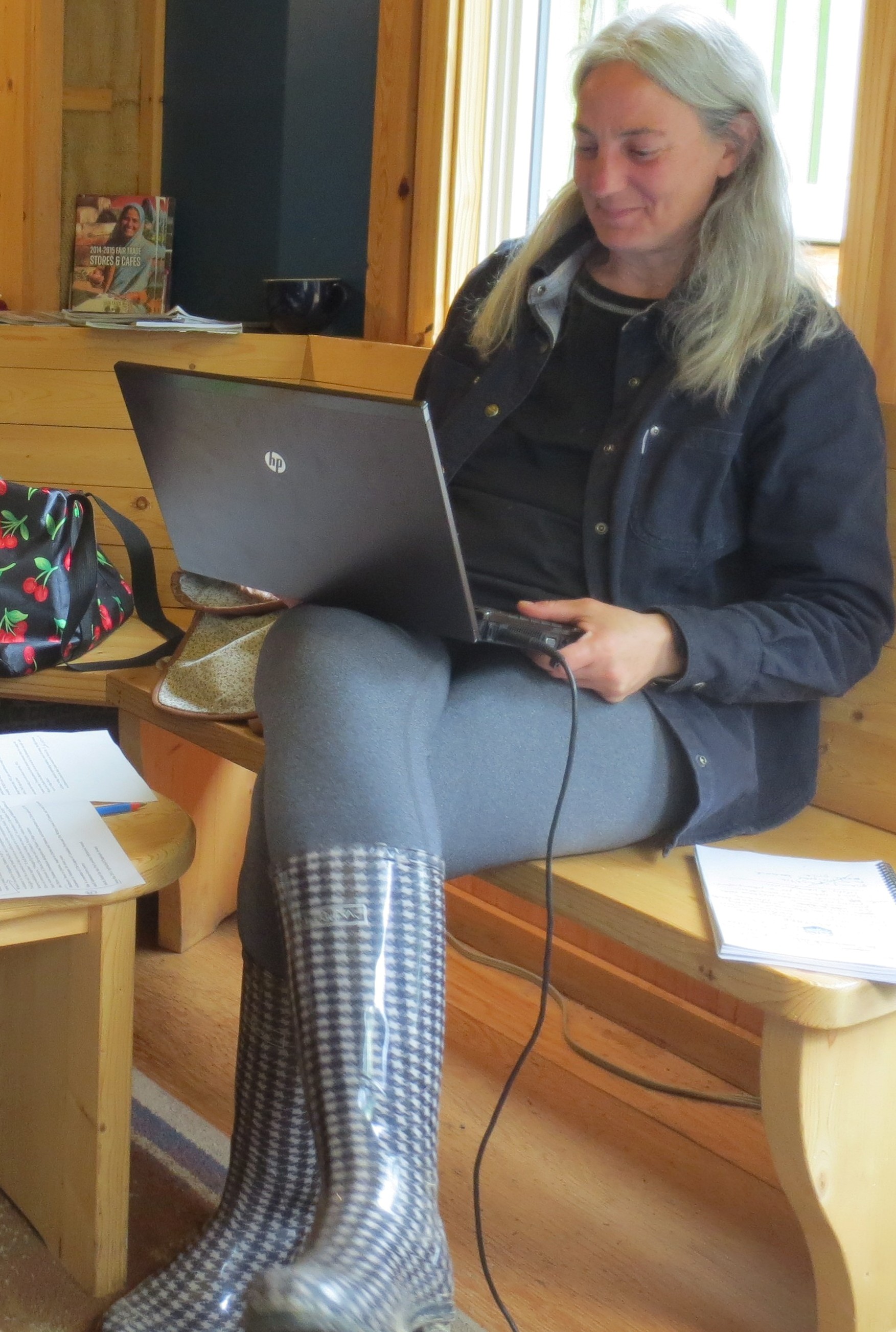
Jessica Simon. reporter/novelist at Bean North
Jessica Simon. reporter/novelist
at Bean North

They gather, some with paper, others with laptops, in the little perfectly-chosen-blue room up front, with big windows that bring that Big North Feeling into the room, into the writing. Haiku writers work on Japanese-form poems, prose writers work on novels and short stories and newspaper articles. Plans get hatched. Two writers, reporter/crime novelist Jessica Simon, and Kathy Munro came up with one of those ‘extras’ that made the weekend extraordinary: Why not send out a call for ‘crime haiku’ and display the results in the Whitehorse Library. No sooner hatched, the path to realization had begun. The final display on ‘Killer Ku’ was magnificent.
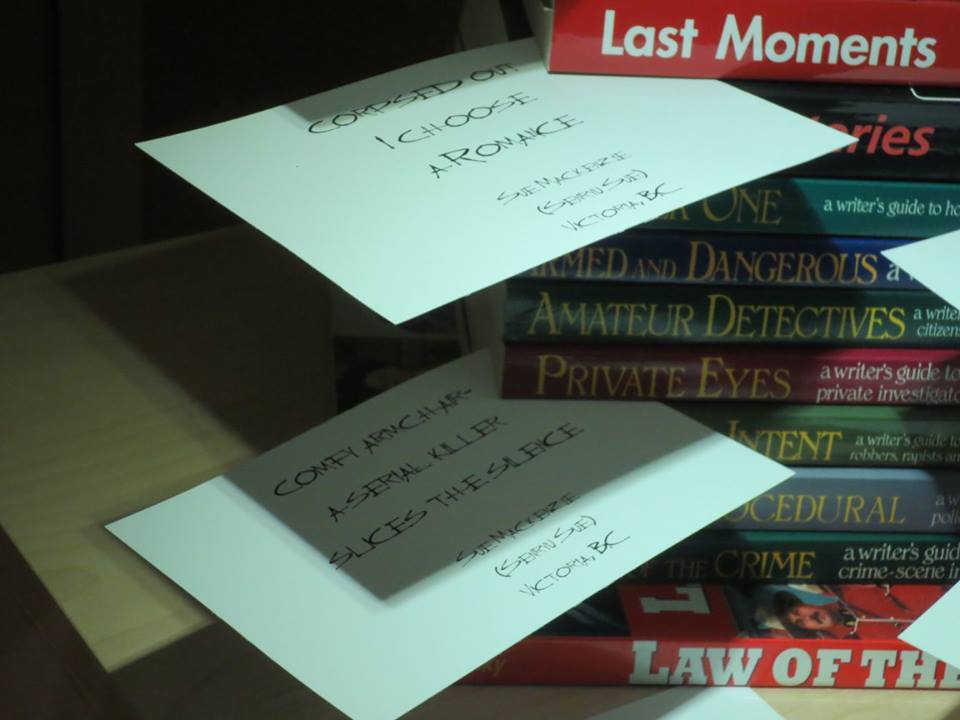
crime pic 2 vancouver haiku group

So there was a team, and all the parts of the Weekend came together. I haven’t started, and won’t because this is a blog and not a book, to mention all the people and the planning that made the Weekend happen. And a report of everything that happened at the conference, as well as the agenda, will soon be up on the Haiku Canada website.

There are a few quiet volunteers and donors who might be missed though; Laurel Parry, calligrapher par excellence, who also made opening remarks for the conference, gave hours to making calligraph, name cards on the spot, putting them into name-tag holders scavenged by Kathy’s husband at a geology conference, holders that are much more chic than what we normally call name-tags.

Helen O’Connor, paper artist, who curated an exhibit called Words at The Northern Front Gallery, (handmade paper art that included poetry or other word applications) was another team member as she and Ms. Munro collaborated to have the show opening sync with the conference and three haiku poets had pieces in the show. Ms. O’Connor also gave us paper-making, calligraphy and book binding workshops. She also donated hand-made paper for the name tags…

stinging Nettle Knickers, byHelen O'Connor
stinging Nettle Knickers, by Helen O’Connor, image from the WORDS exhibition catalogue

But I wanted to zone in on the writers who meet regularly, their spirit and the way they connect at Bean North, and how central they can be to setting cultural atmoshpere in a far away northern city. When they get together in that blue room, writing is simply in the air; you can almost see it, and you can certainly feel it. I was only there for a couple of hours, but the ease of camaraderie among these wordsmiths reminded me of that famous house in Toronto where members of the Group of Seven painters had their studios, how they would work, but also roam around, comment on each other’s paintings, have coffee.

This writers’ group acts as a think tank, some of the creative people of Whitehorse, who interact in various ways, who are connected through words, through Art, through book clubs. My feeling was if you have anything to do with writing, newbie or seasoned, you’re invited and included as part of the group. Whitehorse is an ‘alive’ place to be an artist or a writer, and since live things grow, and are dependent on supports of various kinds, this is the place to be on Wednesdays. The best part is that, though it is not formally a critique group, that can happen if a writer is looking for input.  So there’s no stress involved. You don’t have to ‘come up with something’ to share. But if you have something to share, you’re in the right café.

And if you want to know how to get things done, writers often have the skills and connections to make something happen, as witnessed by the whole of Yukon in the papers and on the radio. In all my years with Haiku organizations in North America, the Whitehorse experience made more use of the media, including social media, and of the cultural and physical aspects of an area than ever before, including respect and appreciation for the use Whitehorse citizens have of First Nations Land.

That ‘Killer Ku’ exhibit at the library will likely become a book, for example; the writers are already working on that project. So I would suggest, if for any reason you are going to Whitehorse, and are a writer, that you connect with this group. You never know what will come of it, and the least that could happen is that you meet some amazing people who happen to write. And if you are lucky, you will connect with Haiku Canada at http://haikucanada.org whether you write haiku or not.

I for one, recommend going to Whitehorse for many reasons, and my best dreams would be of being quiet among those sacred mountains. With all the creative and hospitable people that live there.


.
The beauty of short tanka

These tanka are from the Spring/Summer 2016 issue of Gusts, Canada’s Tanka magazine. I have a preference for shorter poems, revel in how so few words can say so much, and find longer tanka are often poems to which not enough thought has been given.

only had
one dream about
my father—
he walked
right past me

Stanford Forrester

sunlight
in between storm clouds
there is hope
for a sunny day
with you

Mike Montreuil

just
for a heartbeat
let me breathe-in
the scent
of his hair

Huguette Ducharme

sharing
the glass—
a taste of lipstick
just before
the taste of wine

Colin Bardell

I’ll bury it
moon deep for now—
this longing
for a lover
like you

Paul Smith

another
child dies
of cancer
clouds shape shifting
white to black

Pamela A. Babusci

Emptying trash
the letter
I threw away
I throw away
again

Carol Purington

a contrail
stretching straight
toward the sun
I was watching it
until I felt lonely

Kozue Uzawa

Shinoe Shôda, who died herself in 1965 from an illness caused by the atomic bomb, depicts the tragic death from the bomb of children and a teacher who tried to protect them:

the big bones
must be
the teacher’s
the little skulls
are amassed nearby

Hiroshi Homura’s skillful and unexpected juxtapositions carry a powerful message of radiation and the fallibility of the human body:

at ground zero
of the atomic bombing
I’m
unwrapping soap
at night, naked

Yoshiko Takagi describes how children are given tablets to protect them from radiation of the thyroid after the Fukushima nuclear plant disaster in 2011:

how cruel—
on a child’s
palm
one pale red tablet
of potassium iodide

Sanford Goldstein says that variations keep readers alert—and appreciative:

tonight’s relief: /pie /deep /in a cafeteria/ booth         Sandford Goldstein

this child
sick
night after night
and still
the stars

Christina Nguyen

beachcombing
I feel at home
perhaps
in another life
I was a seagull

Joanne Morcom

you came back
little swallow
look
I am here
too

Huguette Ducharme

long line
at the coffee shop—
the perfect place
not to meet
anyone at all

Robert Piotrowski

wet
yellow leaves
grey sky
the drip drip
of time passing

munira judith avinger

little by little
my yoga poses
improving—
little by little
I get to know him

Kozue Uzawa

listening to
the Missa Solemnis,
I try to imagine
Beethoven’s
orphic silence

Mary Kendall

haiku weekend
silk jammies
channeling
the narrow road
to the interior

Tom Lyon Freeland

only had
one dream about
my father—
he walked
right past me

Stanford M. Forrester

The image at the top of the post is a detail from the cover of a novel about Murasaki, early Japanese novelist and tanka poet, by Lisa Dalby.

To Vanuatu With Love

TO VANUATU WITH LOVE

ni-vanuatu women
walk upstream
stone by flat stone
water sloshing at their ankles
to vanuatu with love

crunch click giggle
the sounds of snails
just-plucked and eaten raw
their cheerful symbiosis
with the natural world

cascades
down the cliff
into deep blue
the women’s fearless dives
into their own element
§
having floated certain leaves
over the reef
the old woman pulls out
from deep in the coral
the octopus she has stunned
§
Pentecost
the island of land dives
an old chief
gives me
a curled pig’s tooth

in another village
the greatest gift
for an honoured guest
a white clucking chicken
I hold it nervously
§
made of corrugated tin
the village guesthouse
a warning to lock windows
against devils
and men who ‘creep’

openem windo blong yu
he whispers at my window
me wantem creep yu
he wants into my bed
according to custom

sori tumas, mi bin talem
be mi marrit finis
mi marrit tu he says
be tede waef blong me stop
long narafala aelan

which means:

I am sorry, I say
but I am married
I am married too, he says
but today my wife
is on another island
§
the wise man, or cleva
is called to determine
who stole the money
it is, he said
a woman from Mele village

she admits the theft
of her fellow students’ money
she need the vatu
to buy me, her teacher
the carved dolphin
§
I will not make
another student return
to her husband
I unwisely say
to the Chief of Police

she must go he says
she and her children
are the property of her husband
deep purple bruises
on her brown skin
§
she names her child
Claudia after me
but uses my full name
when the child
talks too much

the small girl
i would have adopted
oh to have been
strong then
said yes to a partner’s no

The image is of Nelly from Ambae, a child stigmatized because of having an American soldier for a grandparent. I would have adopted her, and tried later when I no longer was with that partner, but she’d been adopted by then.

Stone Circles: Labrador

len cropped

Stone Circles: Labrador
This set of poems is in memory of Leonard Budgell who was born in Labrador
and who wanted to show it to me. After he died I did get to see many of the places he loved.

this is where you lived
among hebron’s hills
here the garden
the graveyard
its picket fence

the torngat mountains rear
like mythical monsters
skies of lemon
and salmon
take away their bite

storm clouds lift
on the beach at iron strand
roseroot sedum glistens
the shorewater
settles

caribou scapula
by an iron-red pool
in this valley
stone circles that anchored
thule hide tents

fine bundled hay
the scat of a bear
that has lunched on grass
an ursine artifact
song of the day

at saglek harbour
no one left now
to listen for
the almost noiseless feet
of caribou on muskeg

glacier worn mountains
one behind the other
you spent evenings
absorbing the order
in this solitude

languish languid limpid livid
you loved words
they came tripping out
like spring brook water
lively

you spoke of henry and charlotte
how they collected
stone and bone scrapers
sculptures carved
from dog’s teeth

and of big millik
competent and honest
the way his face would break up
up into a hundred
heart-warming smiles

in a small cave at hebron
you ate with a friend
it was dark
all you could see were
his strong inuit teeth

you must have noticed
and forgotten to say
how water drops on horsetail
form perfect globes
capture the lowering sun

how i envy
whoever is in this stone grave
on the Iron Strand
who will never have to leave
labrador or these sunsets

len henry charlottehenry Voisey

Len Budgell, Charlotte Voisey, and Henry Voisey

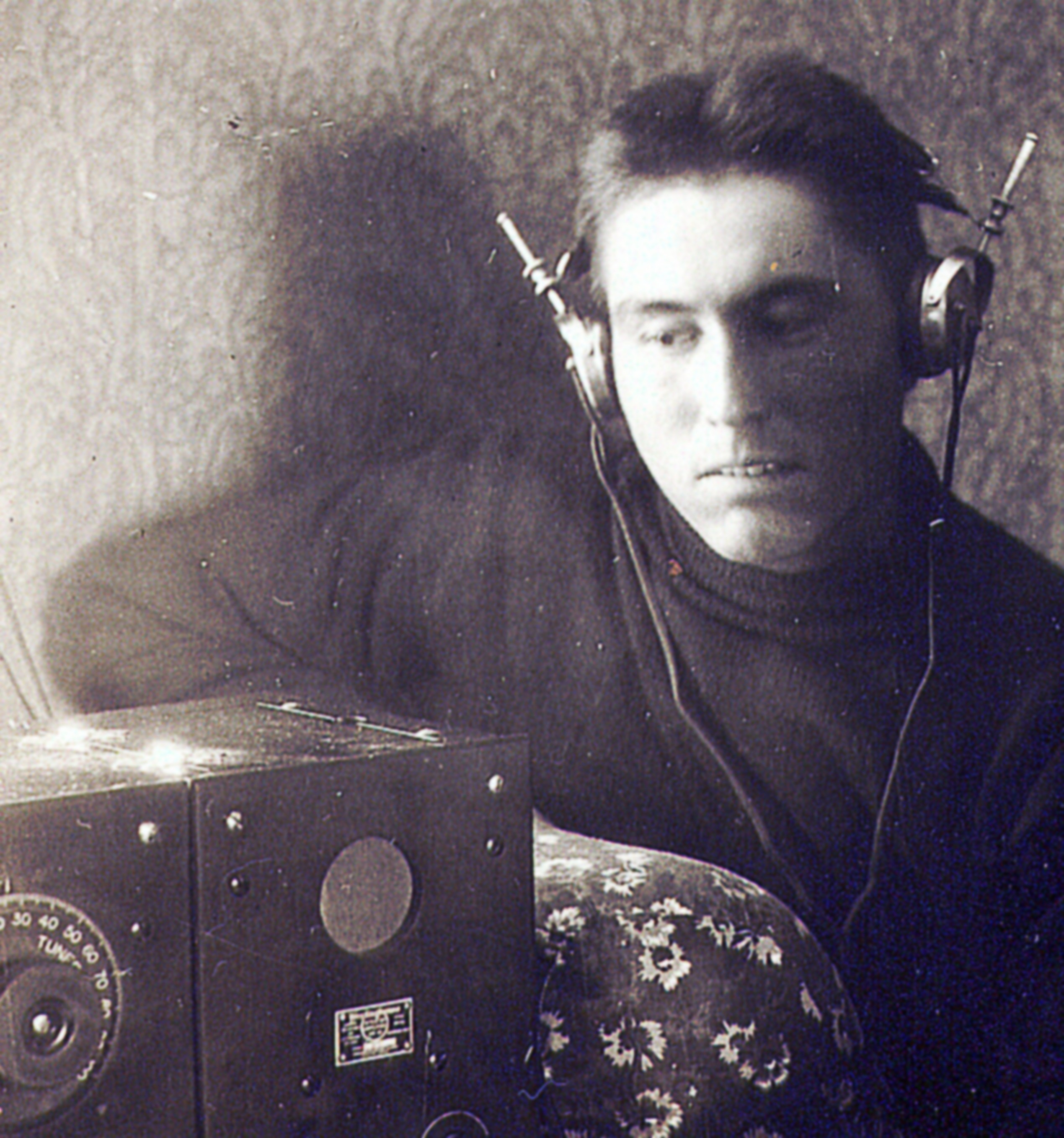
Henry and Len both did radio work in the thirties and forties for the Hudson’s Bay Company in the North. Len and he remained friends all their lives.

Stone Circles was published in Skylark, UK, Issue 4, 2013

Dreams of Fogo Island

Ever since Leonard Budgell wrote to me of being a child on Fogo island, it has seemed a mystical place. My dear friend wrote of roaming Fogo, of how he walked and played there, developed his love of seagoing vessels, participated in boyish shenanigans, made friends with schooner captains, and experienced in Mary Harnett’s parlour (under the full gaze of the minister) his first very innocent sexual understanding.

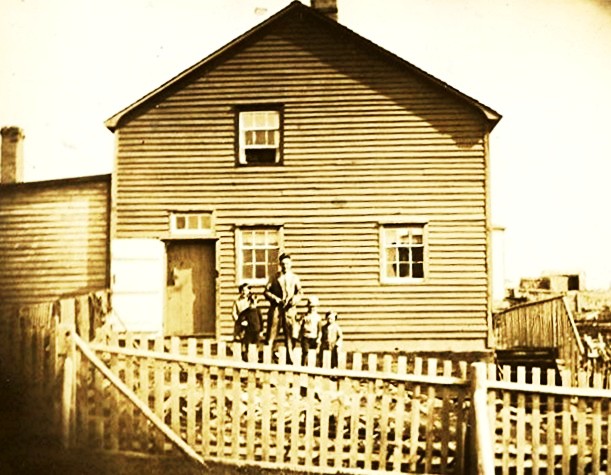
His ancestors came to the island with the fisheries, probably in the eighteenth century. He told me there were two branches of Budgells that came to Fogo and the Change Islands from Devon. His uncle John had a house at Wild Cove, so that is where his father took his family on what we would now call a year’s sabbatical. We think this photo is his uncle’s house, and that he is one of the children.

Of course, Fogo was only one place he made me yearn for, and I have been able to be in many places he loved in Labrador. But Fogo hovers, and I would love to go.

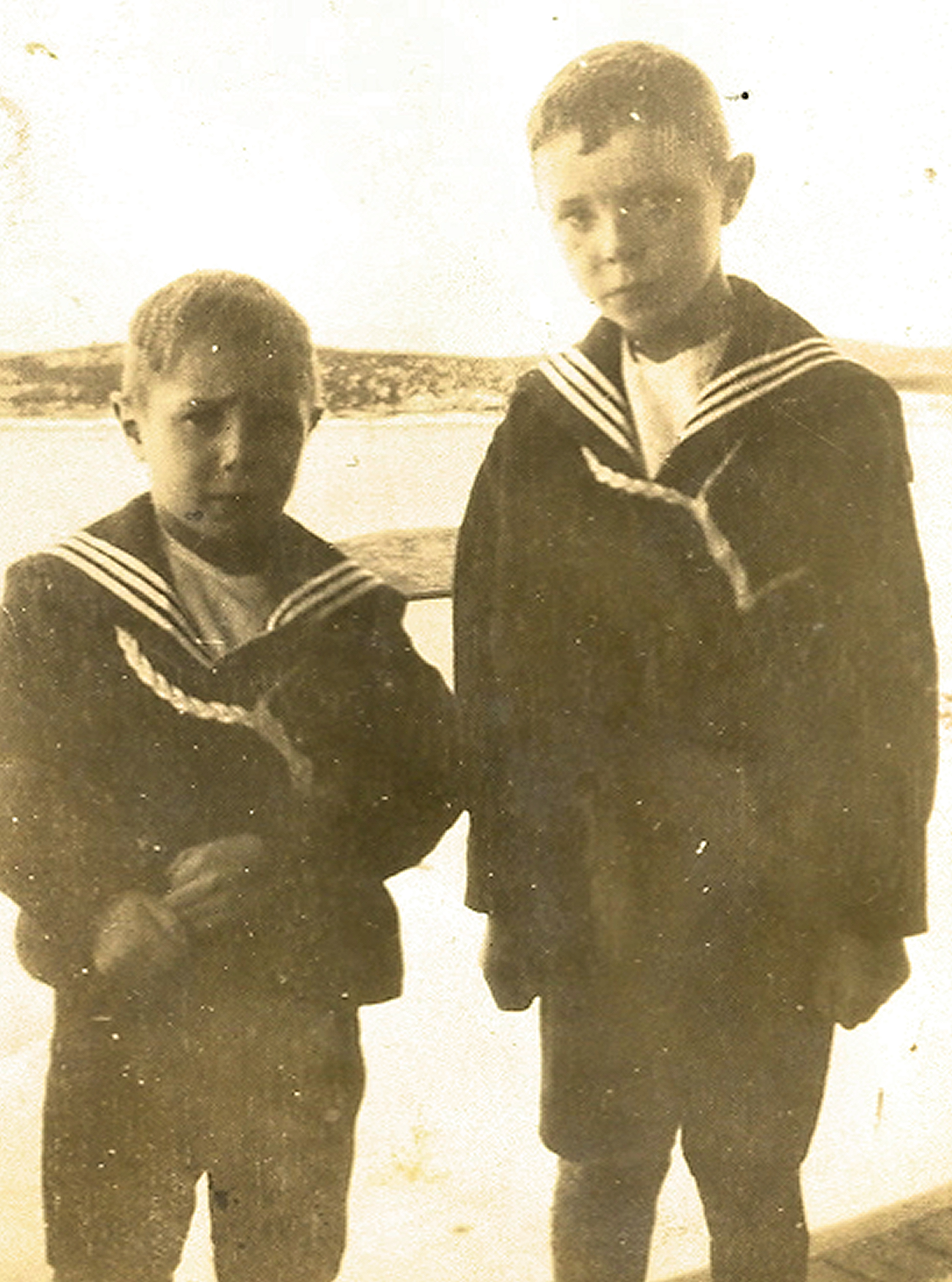
len and maxThere aren’t many photos of Len or his siblings when they were young. This is a five year old Len apprehensive about going off to boarding school with his brother Max, but he was a person whose looks changed little, even to a photo taken a year or two before he died. So I can imagine his ten year old face, and delight on it as, at a Captain’s request, he climbed to replace a flag halliard at the top of a mast. Here are his words:

It’s about when I was ten and in awe of ships, and anything to do with the sea.  Once I was on the deck of a little schooner and her owner wanted to replace a flag halliard.  He threw one end to me and said, “You’m big enough, go aloft now and reeve he in the main pole for me.”

I took the end and hardly breathing, fear and pride mixed, I climbed into the backstays. 

He once said he wanted to show me all the places he’d been to. He had the gift of making them all so interesting. The landscape of island at the edge of ocean had always intrigued him, but it was the people he loved most. In fact, I had to track down where his uncle lived by searching for people he wrote about, especially Mary Harnett. Harnett, Budgell, Ackroyd, Coffin, Walbourne, Sheppherd… These people and more. He remembered them all, to the kind of boat engines they use; here are a few paragraphs from a letter:

No two engines made the same noise.  We knew them all in the dark as well as in the daylight.  Mr. Ackroyd away up in the upper harbour had a big old Meanus and it would go bellowing ill-temperedly out the Wester tickle.  Caves’ eight Acadia with its slow tiny bark would go straight out the middle tickle, Taylor’s Hubbard had a wheezy note.  It seemed that the man and his engine bore one another a resemblance.  Cheerful Mr. Walbourne and his chuckling Adams were nearly always first away.

Coffin had a quiet little Perfection, perfectly matched to its owner.  He fished alone.  He didn’t talk much, but every morning he’d cut close to the wharf, standing up with the tiller between his knees.  He’d take the pipe out of his mouth and give me a wink.  If my mother wanted a fish for supper, I’d stand on the wharf in the afternoon and Coffin would throw a fat cod or a small salmon deftly at my feet.  The little Perfection seemed to slide that boat along by magic.  There was almost no bow wave, no wake, but it was one of the fastest boats in the harbour.

Sheppherd was nearly always last to get going.  He had a compulsion to be one of the first out past the harbour islands but he hardly ever made it.  He had one of the most modern engines on the whole island.  Maybe too modern, it was a six N.P. Acadia.  Unlike all the other dependable old Acadia make-and-breaks, Sheppherd’s was a jump-start affair.  Though faster than the other types, it was affected by dampness.  The trembler coil and sparkplug would be wet with condensation every morning and the high tension spark would short out in all directions.

I’d hear Sheppherd cranking his engine.  He lived only a few doors down the harbour.  Crank, prime, crank, prime, curse, crank until finally it would emit one sulky bang and die…

He wrote of the divide on religious lines, the minister’s name, the arrival of the Bishop, and Guy Fawkes bonfires that he wasn’t supposed to go to… So I think I hear Fogo calling. I’d find a bit of Leonard there, and probably a bit of myself.

Luna Moth

IMAG1023_1Every once in a while I get an idea for a book that takes way too long to make, but I am stubborn, so I decide to make it anyway.

I was gifted (thank you Terry Ann Carter) a stack of odd-sized tissue-like paper and it has been simmering in my mind for a few years. My commercial printer could not print on it, so if it would be a book one day, it was up to me to print the pages on my home printer.

I am glad that I began five months before the conference in Schenectady where it was to be on the book table.

There are not many pages; it meant putting each of five sheets of paper into the printer twice. I won’t bore with the whole tale, but some of the lowlights were having the printer jam several hundred times even though I only made 17 copies of Luna Moth. I ran out of ink, and had to print a couple of pages twice (four passes x 17 pages through the printer) because I found errors and wanted perfect books. Besides that, each time I printed a page, I had to print it as a single copy. If I could have demanded that my printer simple print say, 10 copies, that would have been much too easy. Trying this was not clever as ten or twenty pages would stick to each other, bound and determined to go through the printer together. So for each pass-through, I had to give the system four separate commands. That would be, let’s see, about eight hundred individually printed pages, or 3200 commands. I may be exaggerating, but only slightly.

Then I assembled and sewed the pages with my sewing machine, which wasn’t too pleased with working on paper and retaliated by not ever giving me a perfect tension. Three rows of stitches for each book, leaving the threads long, in a kind of tassle effect. The I was ready to insert dried fake bamboo touched up with gold paint through the sewn channels, so that I could put gold ‘thread’ hangers on these hang-up books. A couple of turquoise beads to anchor the threads. A snap.

But the grasses didn’t all fit through the sewn channels (I had to hunt for some more svelte members of the fake bamboo clan), the threads were finicky when I was fitting the end loops over the grasses, the beads were upset at being stuck down with a glue gun…they kept jumping from my fingers in revenge, arranging for said fingers to get burned by the hot glue while I fumbled. But the results are worth it. Here are some poems from Luna Moth:

tangerines/bursting/ with/ themselves

after rain/ a rinsed light, over the hills

milkweed blossom monarchs fold into each other

earthbound luna moth/ its rain-soaked/ transparent wings

plum
bloss
oms
fall
in
to
pink

on her skin he writes
invisible love letters
each word
a little warmer
than the next

i remember/ the moon/ in shades of raw silk/ and everywhere/ the music of water

Now I embark on another of the same kind of mission. I’ll use the same transparent paper. It will jam the printer. But I’ll feel great winning a few battles with my technology. Won’t I?


Poetry with nine and ten year olds

Although I have been in the teaching profession all my life, it’s been a while now since I’ve been in a classroom. I love teaching though, so when asked, I said yes, I’d teach poetry to an elementary school class. While waiting for the class to start I began writing words from ‘Jabberwocky’ on the whiteboard. MIMSY  BRILLIG FRUMIOUS VORPAL MANXOME MOME SLITHY… and as I printed, I could hear the students sounding them out, curious.

I began the session by reading ‘How to Paint a Donkey’ by Naomi Shihab Nye. The discussion became a bit warm as to whether a real donkey was being painted, or whether it was about a painting of a donkey. If we’d had time, we might have written that second version together. But they’d all been put down some time in their short life, and they empathized with the child speaking in the poem.

I’d made booklets up with poems about supernovas, the teeth of a shark, the first bright spark; we talked about rhyming and where rhymes might be in a poem, about the look of a poem and the sounds in poems, about what a poem could be about. Once we’d studied the words on the whiteboard, imagined what they might mean, I read Jabberwocky to them, brought up that they could even make up words if they wanted to.

We had more fun with a poem I wrote called ‘ode to the land down under’. Once we pinned down that it was about Australia and an interesting true vocabulary that Australians habitually use, I read them a poem full of place names like ‘woolloomooloo’, ‘toowoomba’, and ‘wahroonga’, phrases like ‘in the land of the barking frog’, and ‘pozzies, mozzies and cozzies’, but the sections they liked most were:

in the evening the macropods come out
wallabies
padmelons
potoroos
tree kangaroos

and:

where a cackleberry means an egg
for your brekkie
there could be a chook on the barbie
and if you’re sitting on your acre
you’re sitting on your own backside
well you’d have to get up
at sparrowfart mate to find anything else like it
this purler of a place
a true ridgy didge

They all wanted a chance to read a poem, so some got read twice. I had to drag out my notes on supernovas so they would believe the part about us all coming from stardust. I could hear the exhaled awe on that idea, which pleased them a lot.

One thing I wanted to talk about was that some of the biggest places were inside of them, that their imaginations were the biggest of all, so I asked about big places, what they could think of, and got castles, and the Canadian Tire Centre and space, galaxies… and then one quiet little redheaded girl put up her hand and literally breathed out the word ‘heart’…Well that was making my morning.

I had four haiku at the end of the booklet. What were these poems. None had heard of a haiku, which was wonderful, because I could start them off the right way, not counting syllables. I explained what many people thought, that a haiku meant 5 – 7 – 5, but told them about the difference between languages. I told them about living in a country where our word ‘piano’ meant nothing to them as most people there had never seen one. In Bislama, they called a piano wan-samting-blong-waet-man-we-i-gat-waet-tut-mo-blak-tut-mo-taem-you-kilim-hem-hemi-criaot-olsem-wan-puskat (which means ‘something that belongs to a white person that has white teeth and black teeth and when you hit it, it cries out like a cat). They seemed to get the idea of poems in seventeen Japanese syllables needing fewer words in English.

They were interested in the idea that haiku usually had a season word. We looked at the four poems in the book so they could get an idea of what that meant. The fun for me was that when I said we sometimes called haiku one-breath-poems, they all had to try that out. I could see them saying poems to themselves, seeing if that was true.

The haiku I presented were these:

November skies/ jellyfish hide/ inside themselves

singing night/ into day/ blackbirds

in the throat of the lily/ a spider/ wraps a fly

plum
bloss
oms
fall
in
to
pink

They wanted to know why they were poems, and what the one about plum blossoms meant. We acted that one out, the pink flowers falling onto those that were already on the ground. I am very glad I left these haiku to the last, because once we got on the theme of jellyfish, that was the end of everything else.  Jellyfish and Mexico, stingrays and swimming with jellyfish. We could have gone on for hours.

This was all part of Arts days, a two day happening in St. Mary’s Catholic School in Carleton Place. Artists, dancers, and writers came in for these artistic culture enrichment days. My thanks to Arts Carleton Place for asking me to be part of the fun. I’d certainly do it again. Thank you Inara Jackson for organizing this two-day experience, and to the school and its staff who were wonderful hosts, and the students were bright and simply terrific.


anacoluthon

I came across this word again in The Poetics of Space by Gaston Bachelard (1958, 1994 edition, Beacon Press, Boston). ‘Anacoluthon’: a syntactical inconsistency, usually in a sentence, but often used as a technique in poems. (I loved the variations, from ‘anacolutha’ as one of its plurals, to ‘anacoluthically’ as an adjective…) It made me think of the correlation between certain styles of poetry, and collage.

A few years ago I made a set of twelve small collages, almost miniature, 4″ x 5″, containing, along with images, both phrases and puzzle pieces. I’ll be putting them on the table at the upcoming Arts Carleton Place Art Show and Sale on November 28th.

This is a ‘found’ poem based on one of the collages, using the words, and descriptions of some of the images, anacoluthically…

four stages

four girls holding hands
cut from newsprint

your slotted spoon
begins its new career
Tuesday, July 29th

while pondering all this, you might consider the following:
the wrong shoe

When does
an ordinary
object
become
a work of art?

eating

Chinese

food

naked

remove this label
before using

he glares at the word ‘naked’

and then each morning
I would say
Is this the birthday party day?

A collage is something anyone can make, but it’s the decisions involved, a use of humour, imagination and poetic sense, as well as a pleasing visual arrangement that attracts me to the form. Finding a poem afterwards among these juxtapositions is the icing.

Making very small, you could say cluttered, pieces, is an opportunity to portray the immense in the small. Underlying the words about a work of art is a particular time. There is a date that might suggest questions about ‘why’. Words and images thrown together encourage us to imagine connections between them. They are put together in the spirit of fun, but accidents happen. Everything is connected.

I’ll be posting more anacolutha in the next few days before they leave home and go out into the wide scary world..


in the days after

On Friday the 13th, my sister and I were driving in heavy rain along the 417. We just wanted to get home and be safe. As we’ve seen, some places are not safe.  When we found out what had happened in Paris, we were stunned.

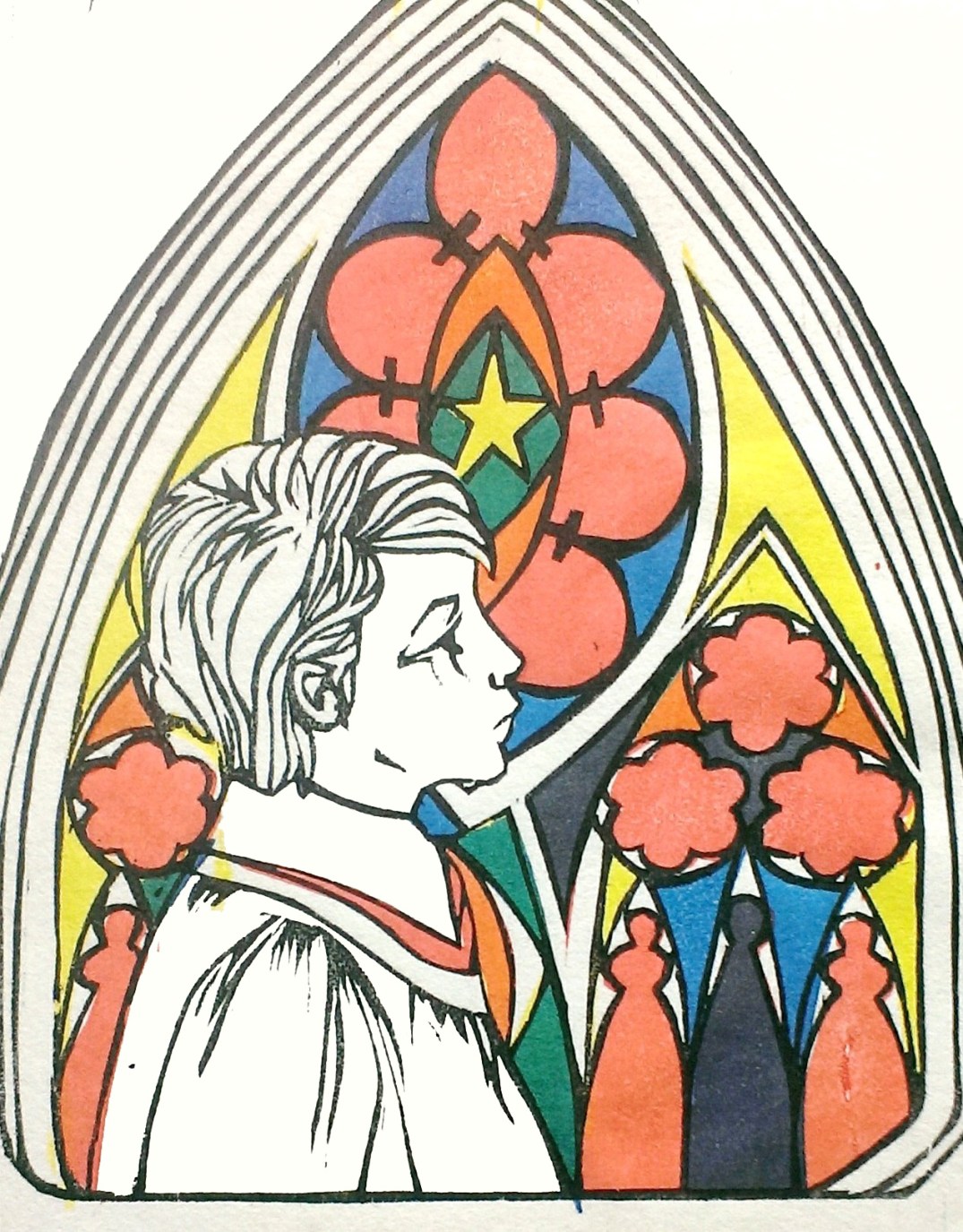
This morning, it’s cold and clear. I hear the sound of crows dimly through window glass. Soon we’ll be entering the festive season in various cultures.  And while I’m not religious in any formal sense, the face of this choir boy speaks of the innocence of so many in our troubled world.

This is a small woodcut I made years ago. The woodcut is about 4″ x 5″.  I was learning how to make prints in the traditional Japanese manner, using a different block for each colour.

morning light

through new jars

of wild grape jelly


A collaborative piece: lyric poems, haibun and woodblock print

IMAG1026_1Terry Ann Carter, Penny Harter and I went to the Haiku North America 2015 conference in Schenectady, New York, last weekend. Most of the presentations were at the beautiful and serene Union College, and several were at the Desmond Hotel in Albany.

The three of us decided not to stay at the Desmond but at an AirBnB in Schenectady, in the Old Stockade area. It was a beautifully kept old home on the Mohawk River in which we had the upper apartment. Terry Ann arranged everything and suggested that since she and Penny had written about the Tokaido using Hiroshige’s woodcut prints, I might make a collage or ‘something’ to commemorate our stay in Cucumber Alley.  I wrote a poem about Hiroshige to go with their poems.

Years ago I studied how to make woodcut prints in the traditional Japanese manner, so I decided to dig out the tools and make a two-block woodcut based on a section of Hiroshige’s print for Station 23, Shimada.  It was simplified and small, three inches by four, which I printed in blue and gold. After such a long time there were many proofs, and a great many throw-aways, but eventually I rescued four or five of them, and attached the poems printed on fine tissue-like paper.

Here are the poems that were attached to the print, all presented in an accordion fold which could be framed flat, or, because of the stiff Japanese paper, left to stand on a shelf.

Shimada: Penny Harter, New Jersey

Porters crowd the Oi River,
swarm on the riverbank.
Horses balk, feed, nibble
at their hides.

the daimyo’s archers sit
on the damp ground, vermillion bows
in their hands. Other retainers
sit together on crates.

Some sedan chairs
open to the air
bring up the rear
of the procession.

The sun is hot. From the hills
above the beach two pines
bend over a few teal boulders
in the sand.

How Best to Cross a River or a Stream: Terry Ann Carter, Victoria, BC

You always said try holding it together for a change. But I’m battling depression. My body a tripod with the help of a walking stick. A hiking manual deleting the part about shallow water. Your answer to everything…elliptical. A poet writes about being a kid. Seeing his neighbour drown a sack of kittens one cold November night. That river too wide to cross. Does anyone listen to Little Walter anymore? My eye surgeon cutting into the heart of me. All that I see. My father crossing North Africa. 1943. Rommel on the run. These trajectories at the lookout, north of Black Mountain College. On the North Carolina switchback they call Blue Ridge.

triptych
painting of a chair
a chair and sumi-e

Hiroshige on His Life’s Work: Claudia Radmore

my hours are spent
painting my travels
my best works
pasted down on blocks
then rubbed away

little of me is left
not even a finger smudge

despite the finest carvers
and printmakers
who never listen
to my colour suggestions

my paintings merely fill
my stomach
they match spring kimonos
fuel bored imaginations
of more value to me
are the cast-offs that

people on the street buy
for a few coppers ―
my truest works
pasted on their walls
keep out drafts

Terry’s poems came out of  reading Penny’s series on the Tokaido, and deciding to use the haibun form, of which she is a master, interweaving her contemporary life, history, and memoir with that of the artist. My experience with Japanese forms, woodcut techniques and Japanese aesthetics, and our common background with lyric forms all came together for this project.

The title of the overall result is: HNA 2015, Cucumber Alley, Schenectady.  Many thanks Terry, for the suggestion, and to both poets for their poetic contributions. Staying in Cucumber Alley together was a wonderful experience, well worth commemorating!